Why Older Chaska Garage Doors Struggle Once Winter Sets In
Chaska homes span 1954 to 2006, many built before doors carried real insulation. In a cold-severe climate, that gap shows up fast. Here's what's happening and why.
Chaska sits in a cold-severe climate band, and that matters more for a garage door than people think. A door isn't just a moving wall - it's the biggest uninsulated opening most houses have, and if it went up before insulation became standard in door construction, you're looking at a single layer of steel or a slab of wood with nothing behind it. Cold sinks straight through. Metal contracts, and a track that was true in July starts binding in January. Condensation forms on the inside face of an uninsulated panel overnight, and by morning it's frozen to the weatherstrip. You crack the opener trying to force it, or you break a cable that was already brittle from the temperature swing. None of this is dramatic - it's just steady wear that an insulated door with a foam core doesn't get. The houses most exposed to this are the ones at the early end of Chaska's build range, put up before anyone was thinking about door R-values at all. Newer doors in town, even the ones without foam core, at least came out of a manufacturing era that assumed cold winters. The old ones didn't.
The Seasonal Bit
Chaska's housing stock runs from 1954 to 2006, with a median build year around 1986. That's a fifty-year spread, and the door on a house built in the mid-1950s has almost nothing in common with one built in the mid-1990s, even if both look fine from the driveway. The older doors were built for a house that didn't have air conditioning and wasn't insulated to today's standard either - the door matched the house. As those houses got upgraded over the decades - new furnace, new windows, added insulation in the attic - the garage door often got skipped, because it still opened and closed. It just never got asked to do the job an insulated door does: hold a stable temperature swing through a Minnesota winter and a humid Minnesota summer. That mismatch is what shows up as a stiff spring in February or a door that sweats in July. It's not damage exactly. It's a door doing 1965 work in a 2024 climate.
What Is Going On
"Before insulation rules" isn't a single date - it's a description of a door built with no thought to R-value, because at the time nobody built them that way. A hollow steel skin, or a solid wood panel, no foam, no thermal break at the frame. That door works. It opens, it closes, it keeps out weather in the basic sense. What it doesn't do is stop heat loss or resist the freeze-thaw cycle that a cold-severe climate throws at it every year. Across the wider area - the 41 named communities in this part of the service territory - most homes actually date to the 1980s and 90s, which is a slightly better era for this but still mostly pre-insulated-door as a default option. The tell is usually the panel itself: thin, a little bit of oil-canning in the sun, cold enough to the touch in January that you notice it through a glove. If your door has that flat, uninsulated feel, it's original or close to it, and it's been losing you heat since the day it went up.
What It Costs
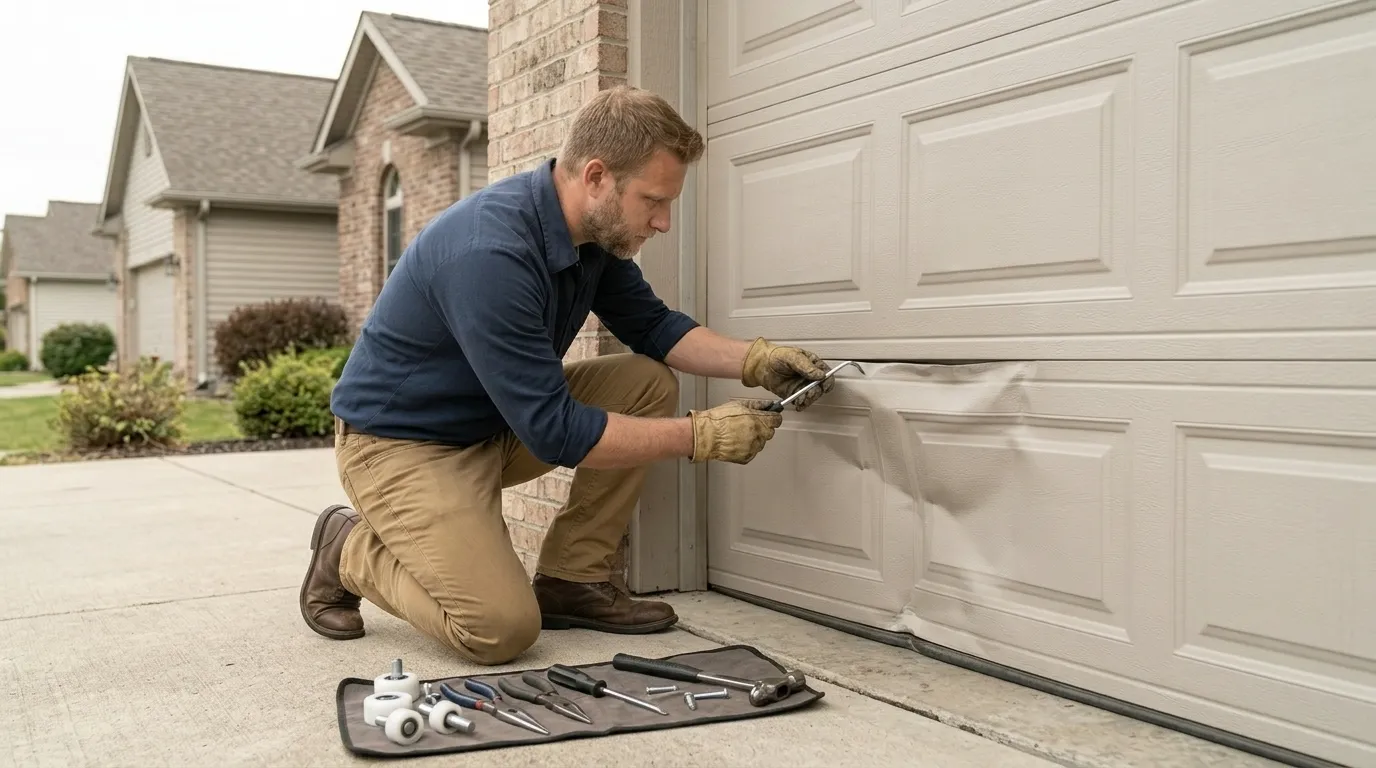
I'm not going to put a number here I can't back up - every job is different depending on the door size, whether the track and opener are salvageable, and what you're replacing it with. What I can tell you is how to think about it: with a median household income of $116,500 in this area, most owners here are in a position to replace rather than patch when a door is genuinely at the end of its life, and that's usually the better call once a door is old enough to have no insulation at all. Patching an uninsulated panel doesn't fix the underlying problem - it just delays the same conversation. If your door still runs smooth and just feels cold, weatherstripping and a bottom seal can buy you time. If the panel itself is warped, cracked, or the steel's gone thin, that's a replacement conversation, not a repair one. Ask for a real look at the door before committing either way.
How it works
From “it’s stuck” to “it’s fixed”
01
Tell us what’s wrong
Describe the symptom - won’t open, loud bang, opener runs but the door won’t move.
02
On-site diagnosis
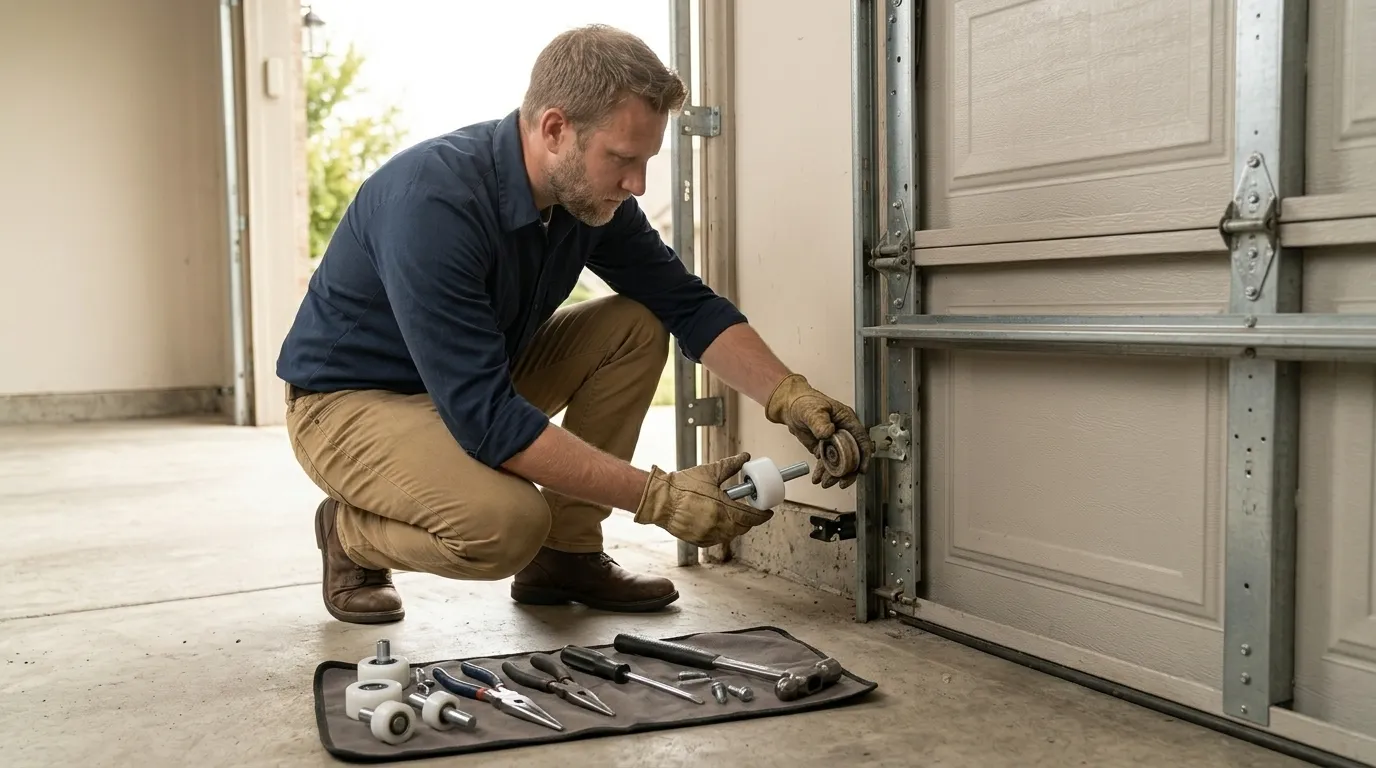
A technician tests the door under power and by hand and finds what actually failed.
03
Clear, up-front plan
You get the fix that’s needed and what drives the cost - before any work starts.
04
Repaired & tested
The repair is done, the door is set true and tested, and the work area left clean.
Serving Chaska, MN - tell us what your door’s doing and we’ll take it from there.
How do I know if my garage door has any insulation at all?
Look at the back of the panel from inside the garage. An insulated door has a foam or fiberglass backing and usually a white or light-colored inner skin. If you're looking at bare steel ribs or exposed wood, there's no insulation, which is common on the older end of Chaska's housing stock.
Is it worth insulating an old door instead of replacing it?
Sometimes. Insulation kits work on doors that are still structurally sound - no warping, no rust-through, hardware still true. If the panel itself is failing, insulating it just delays a replacement you'll need anyway. Worth a look in person before deciding.
Why does my door feel stiffer in the cold?
Steel contracts as it cools, and an uninsulated panel cools faster and further than an insulated one. That changes how it sits in the track by a small but real amount, which is enough to make an opener strain or a roller bind on the coldest days.
Does the age of my house tell me anything about my door?
Roughly, yes. Chaska homes span 1954 to 2006. Houses on the older end of that range are more likely to still have an original door with no insulation, since that wasn't standard when they were built.
Ready to get your garage door sorted?
Tell us what it’s doing and where you are in Chaska - we’ll take it from there.