Garage Door Maintenance for Mound Homes, 8 Miles from Chaska
Mound sits eight miles from Chaska with a 1971-median housing stock. Here's what maintenance actually costs, looks like, and fixes on that older hardware.
A maintenance call to Mound means eight miles of two-lane road out of Chaska, not a quick loop around the block. That distance doesn't change what a tune-up runs, but it's worth saying up front because it's part of how the job gets scheduled - Mound calls usually get grouped with other stops on that side of the lake rather than squeezed in between closer jobs. What does change the bill is what's actually on the door. A house built around 1971, which is the median age for Mound, usually still carries its original torsion hardware or a first-generation replacement, and lubricating, adjusting, and balancing that gear takes a different set of steps than servicing a door installed in the 1990s. We price the visit based on what we find once we're on site, not a flat number quoted over the phone. If a spring or cable needs replacing during the visit, that's a separate line item from the maintenance itself, and we'll tell you before we touch it.
How It Shows Up
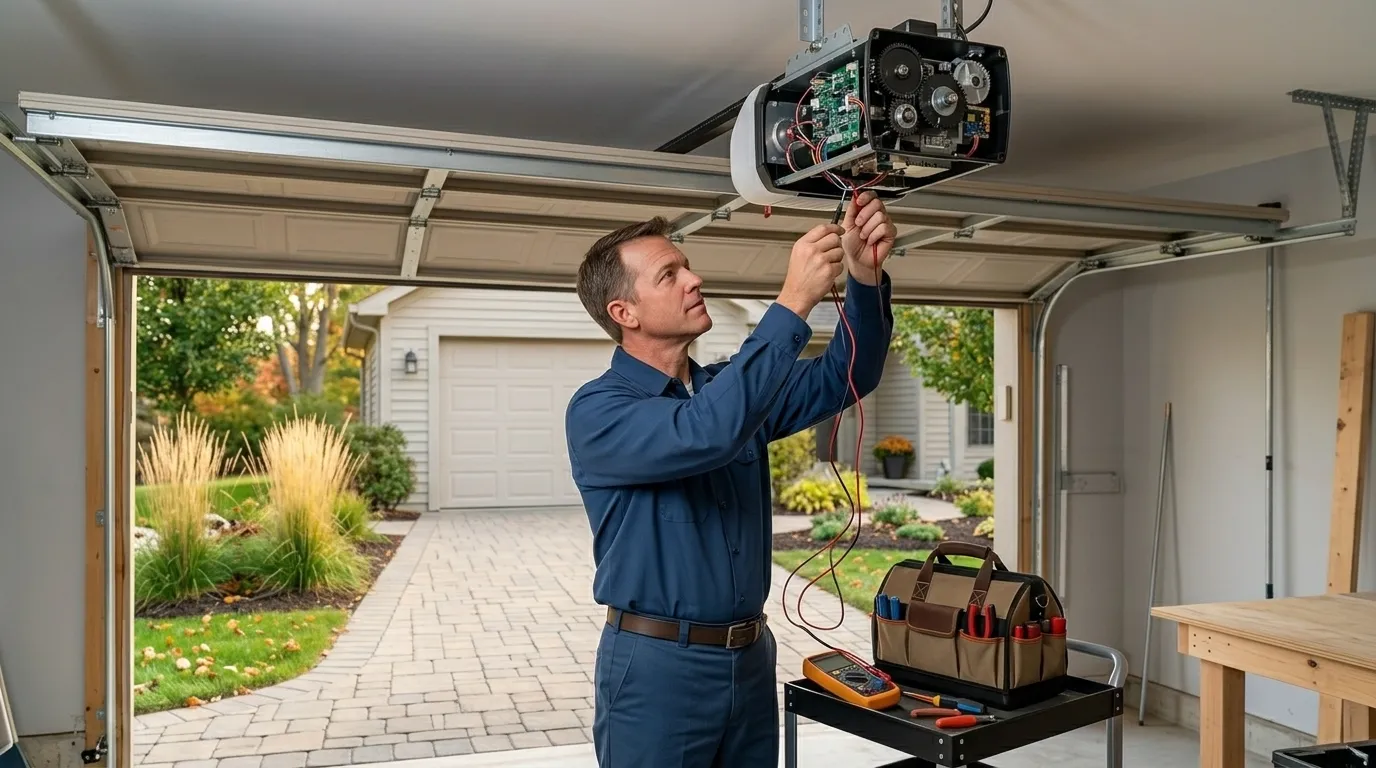
On a door this age, trouble rarely announces itself as a total failure. It shows up as a grind on the way up, a shudder partway through the cycle, or an opener that runs longer than it used to before the door actually lifts. Owners in Mound often describe a door that used to close in one smooth motion now catching or bouncing near the bottom panel. That's usually the roller track or the bottom bracket working loose after decades of use, not the opener itself, though the opener gets blamed first because it's the part making noise. Some doors here still run on the original chain-drive units from the 1970s or 80s, and those tend to develop a knock in the middle of the cycle that a newer belt-drive opener wouldn't. None of this means the door is about to fail outright - it means the hardware is old enough that small slack adds up faster than it would on a door installed in the last fifteen years.
What Causes It Around Here
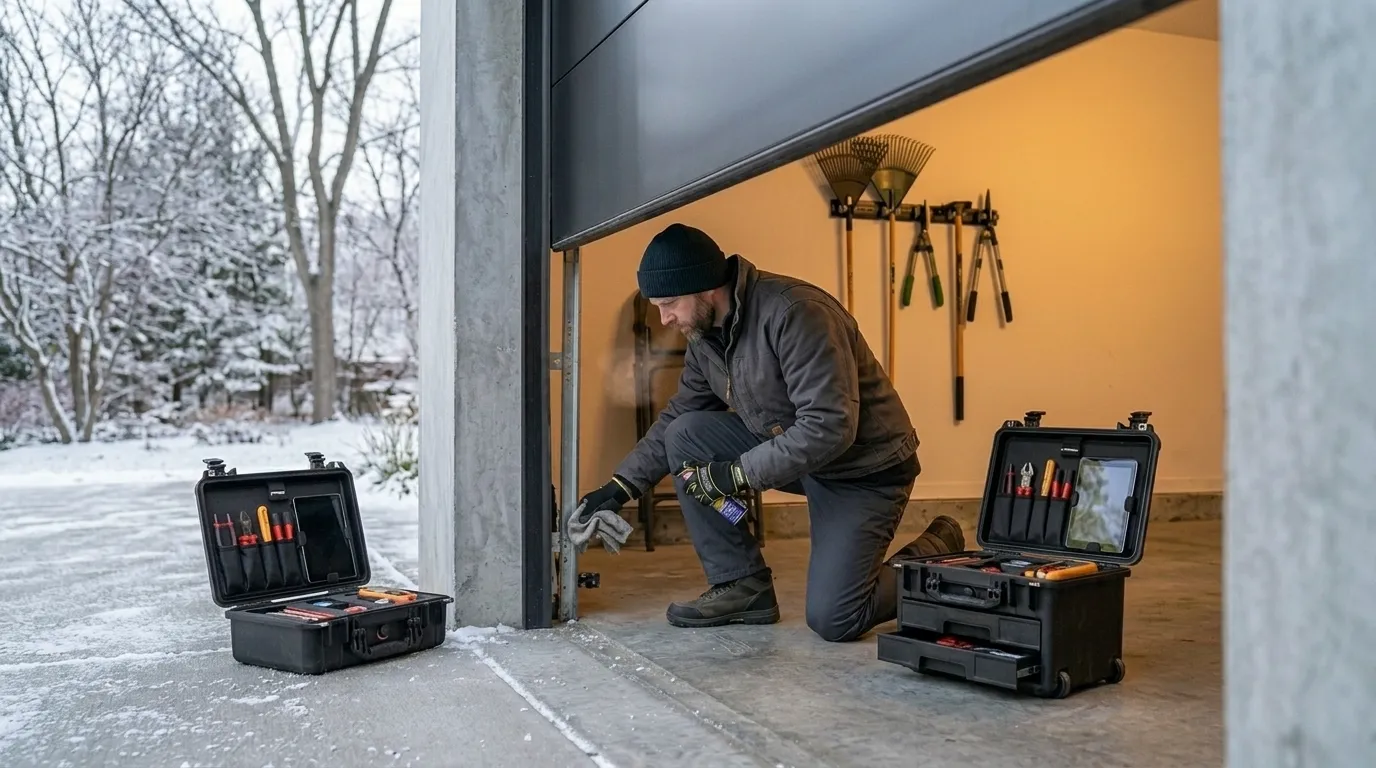
Minnesota winters are the backdrop, but on a Mound house the age of the door matters more than the cold alone. With a median build year of 1971, a lot of these doors are running steel track and hardware from an era when galvanizing and weatherstripping design were both a step behind what's standard now. Cold makes old grease stiffen and old rollers seize a little faster than they would on newer gear, and that combination - original hardware plus severe winter swings - is what actually drives most of the maintenance calls we see from this side of the lake. It's also why a door that's been fine for years can suddenly start sticking the first hard cold snap of the season: the hardware was already worn, and the temperature just exposed it. Houses built more recently, closer to the service area's 1986 median, tend to have galvanized track and sealed bearings that shrug off the same cold without the same fuss.
What the Fix Involves
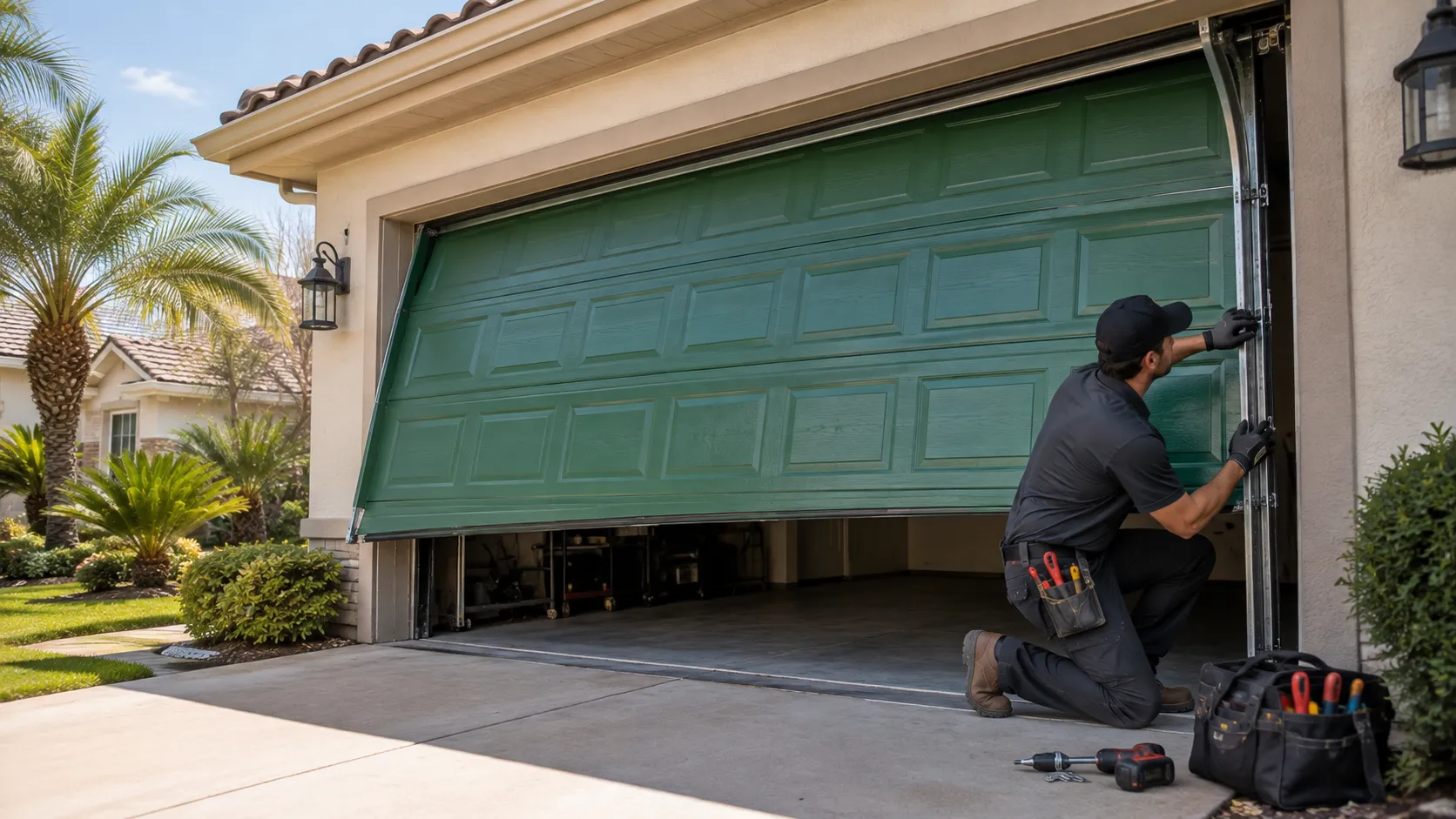
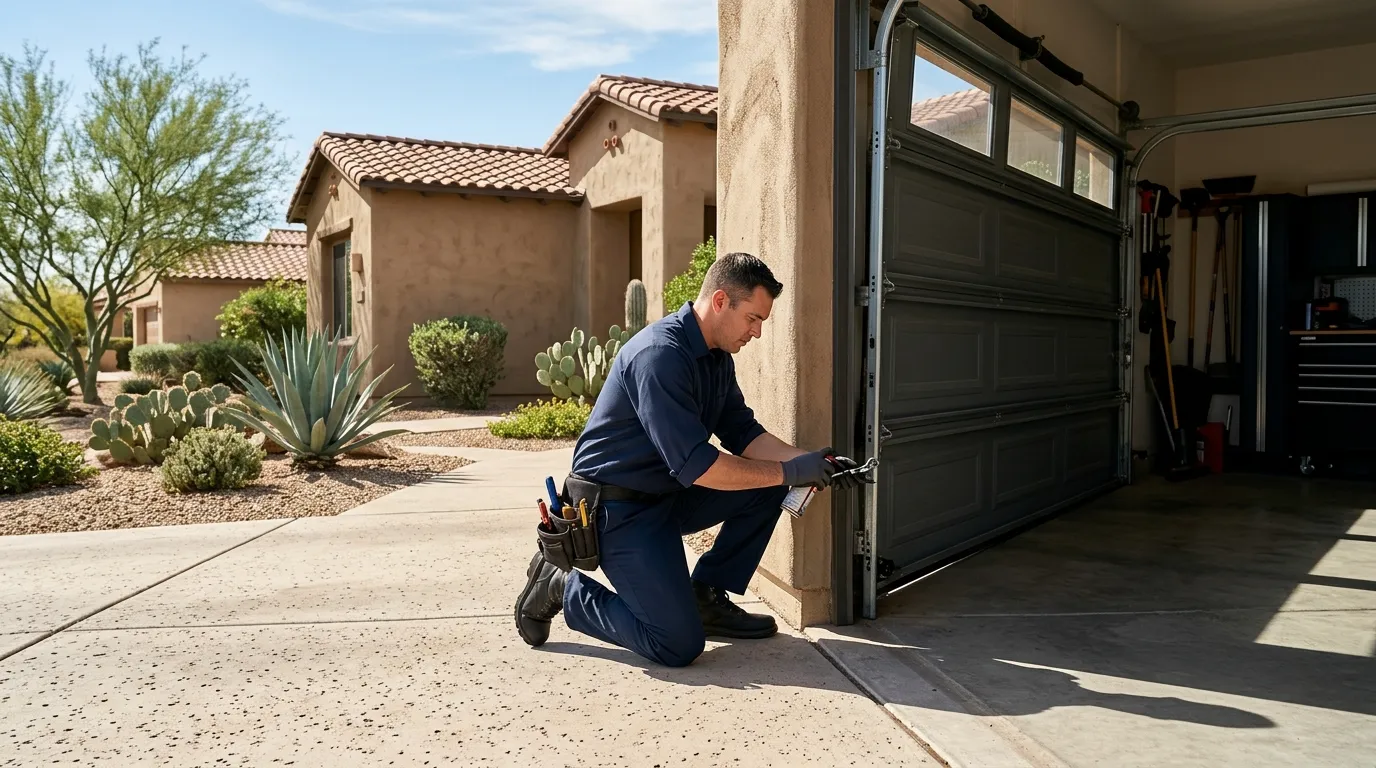
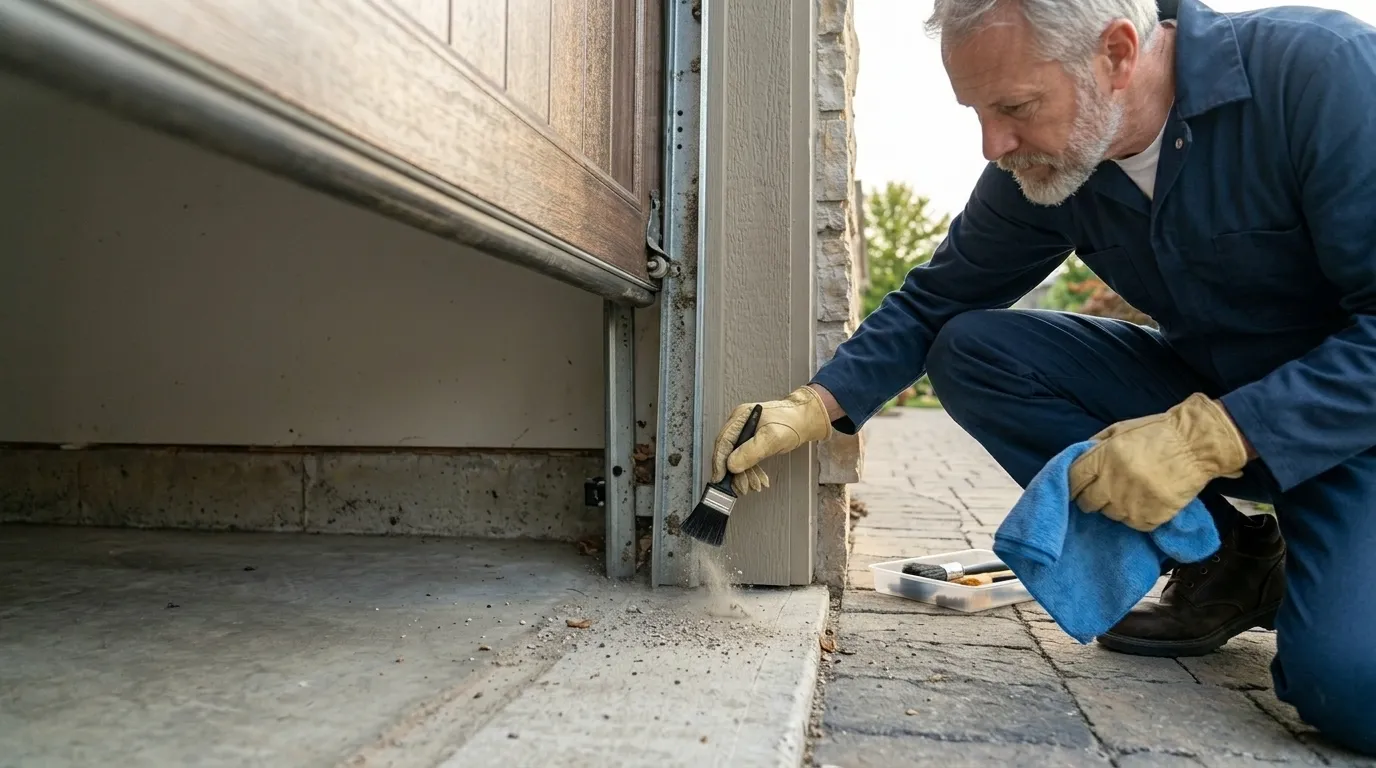
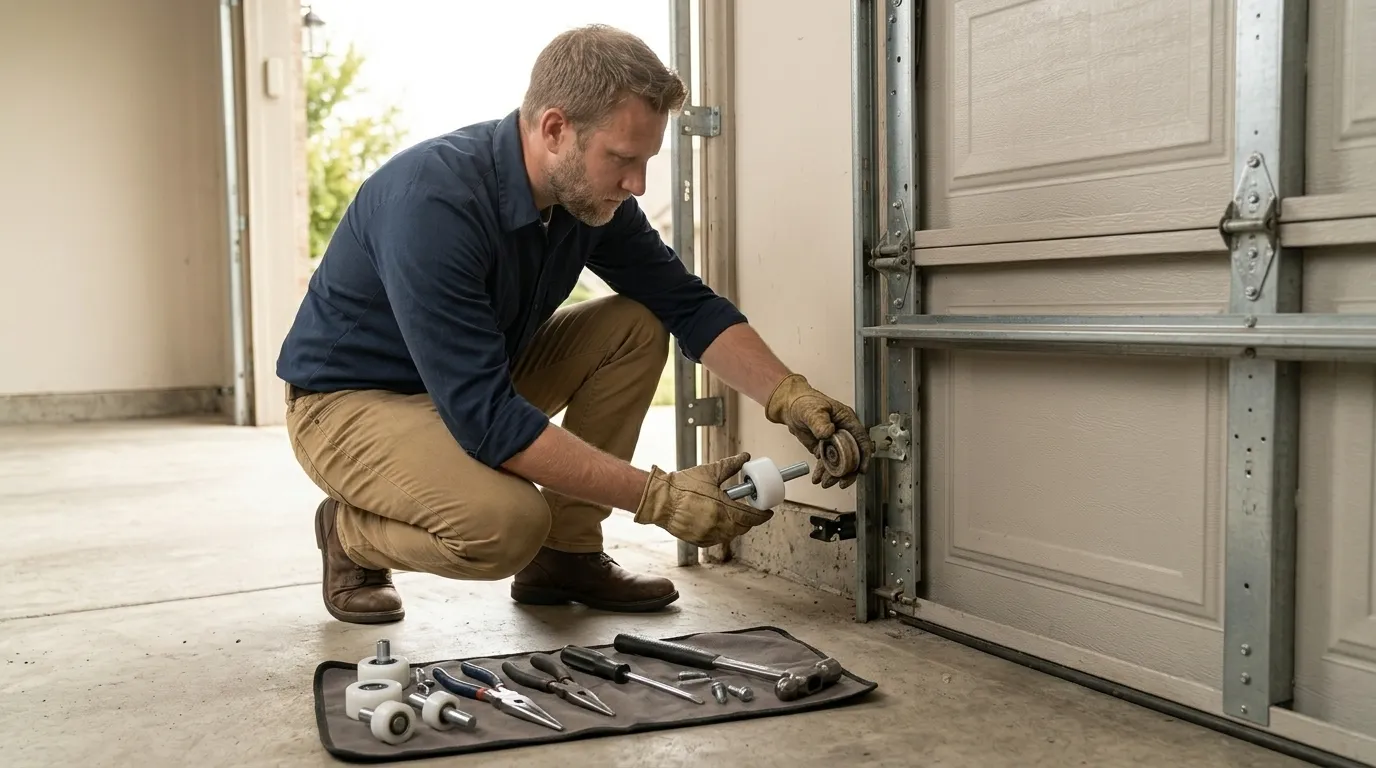
Maintenance on a door this age starts with pulling the rollers and checking for pitting or flat spots, since 1970s-era steel rollers wear unevenly compared to the nylon ones common today. We check spring tension by hand rather than assuming factory spec, because a 50-year-old torsion spring has usually been adjusted or replaced at least once already, sometimes with the wrong wire gauge for the door's actual weight. Track alignment gets checked at both jambs, not just eyeballed, since original brackets on houses this old have often shifted slightly over the decades. Lubrication uses a lithium-based grease on the hardware, not household oil, which gums up in cold weather and does more harm than good. One honest limit here: if the spring or opener is original to a 1971 install, parts matching that exact hardware often aren't made anymore, and the honest fix is a compatible replacement part, not a factory match. We'll say so on the spot rather than hunt for a part that doesn't exist.
How it works
From “it’s stuck” to “it’s fixed”
01
Tell us what’s wrong
Describe the symptom - won’t open, loud bang, opener runs but the door won’t move.
02
On-site diagnosis
A technician tests the door under power and by hand and finds what actually failed.
03
Clear, up-front plan
You get the fix that’s needed and what drives the cost - before any work starts.
04
Repaired & tested
The repair is done, the door is set true and tested, and the work area left clean.
Serving Chaska, MN - tell us what your door’s doing and we’ll take it from there.
How often should a Mound homeowner get maintenance done?
With Mound's older housing stock - median build year 1971 - we generally recommend a check once a year, ideally before the first hard freeze. Original hardware from that era wears faster under cold stress than newer galvanized track and sealed bearings, so catching slack or pitting before winter matters more here than it would on a newer door.
Does the distance from Chaska affect scheduling?
It can. Mound is about eight miles out, so calls there tend to get grouped with other stops on that side of the lake rather than fit in as a same-hour add-on. We'll give you a window when you book rather than an exact time, and we travel out for the maintenance visit itself, not just repairs.
Is it worth maintaining a door this old instead of replacing it?
Often yes. A tune-up on original 1970s hardware is far cheaper than a full replacement, and a lot of these doors have solid bones once the track, rollers, and spring tension are brought back in line. If we find the springs are wound wrong for the door's weight or the track is bent beyond adjustment, we'll say so and let you decide from there.
Ready to get your garage door sorted?
Tell us what it’s doing and where you are in Chaska - we’ll take it from there.