
What the Fix Involves
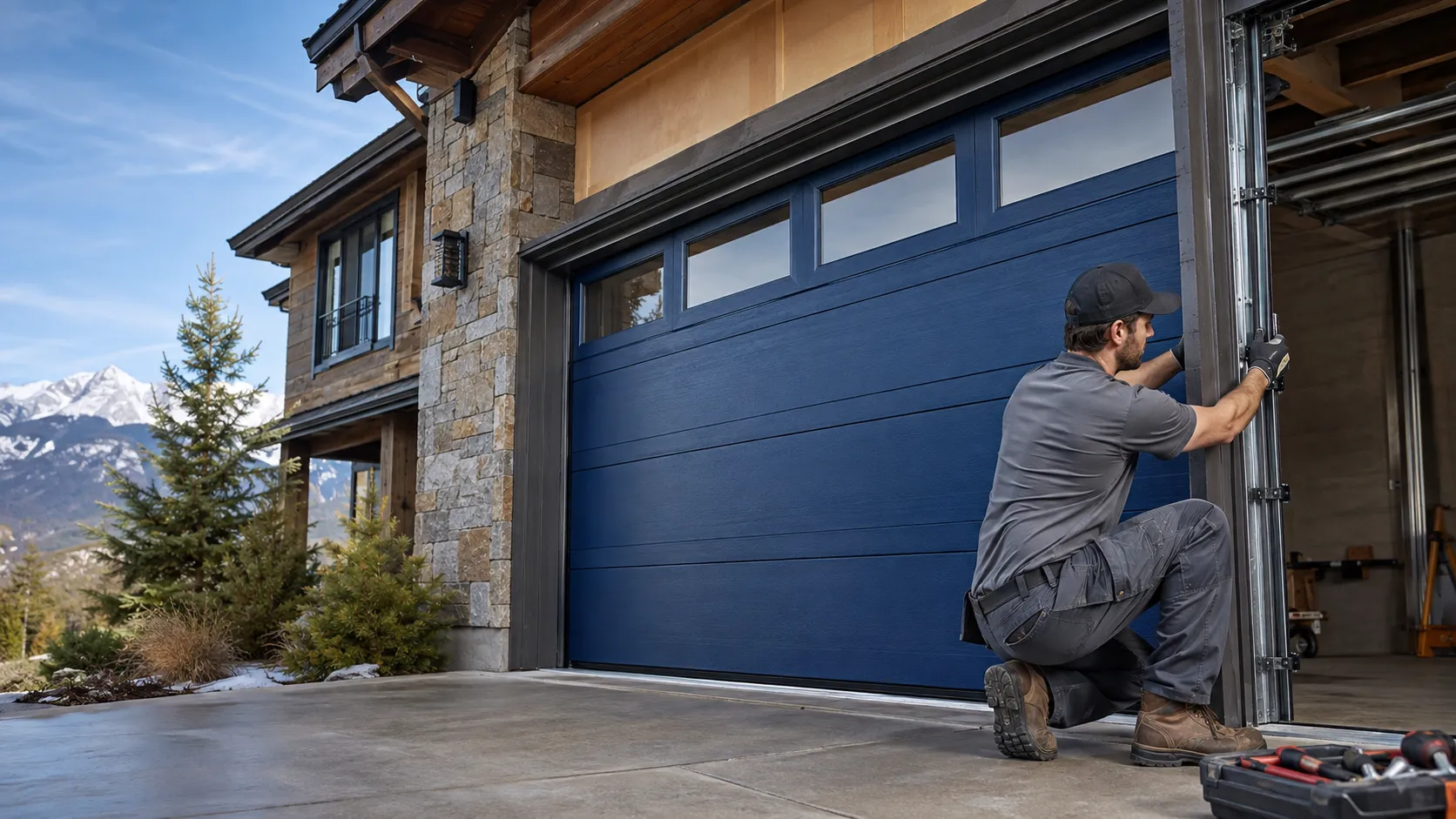
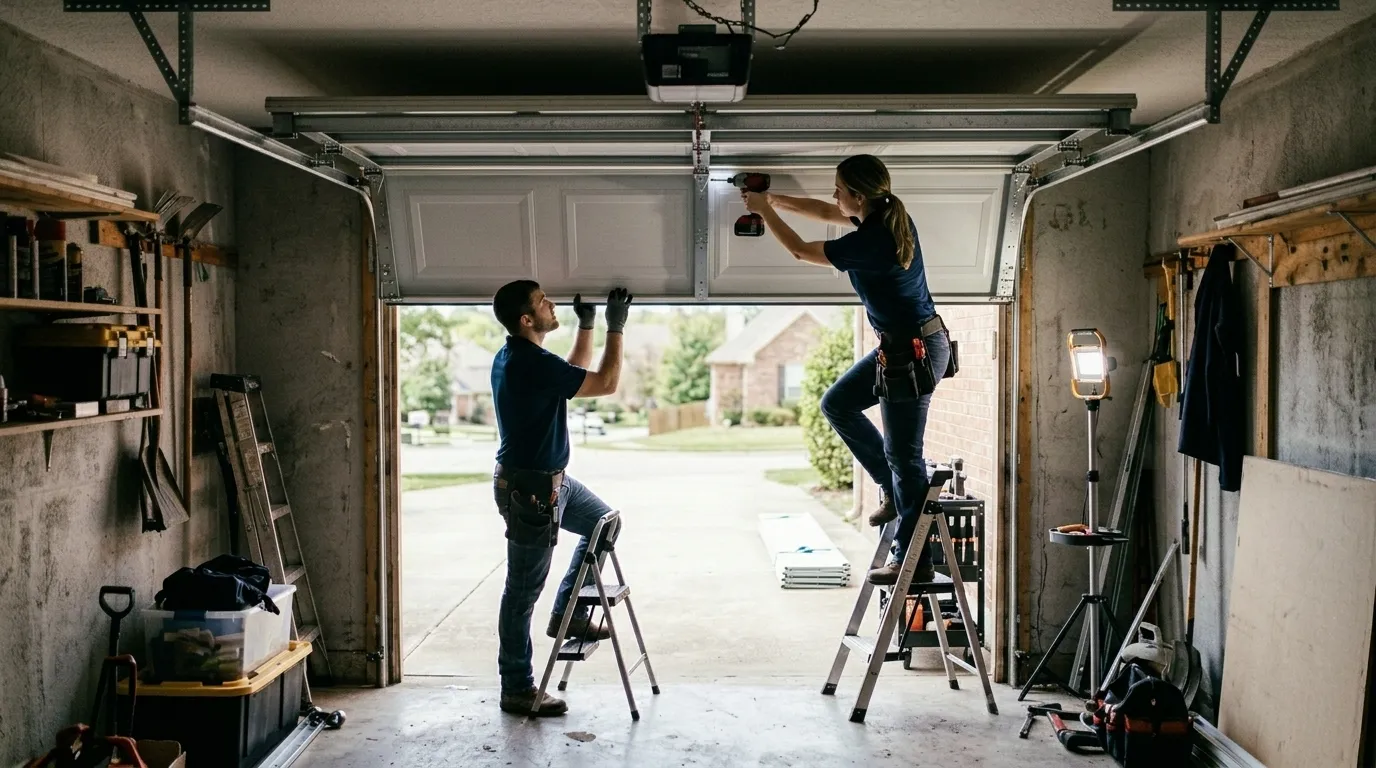
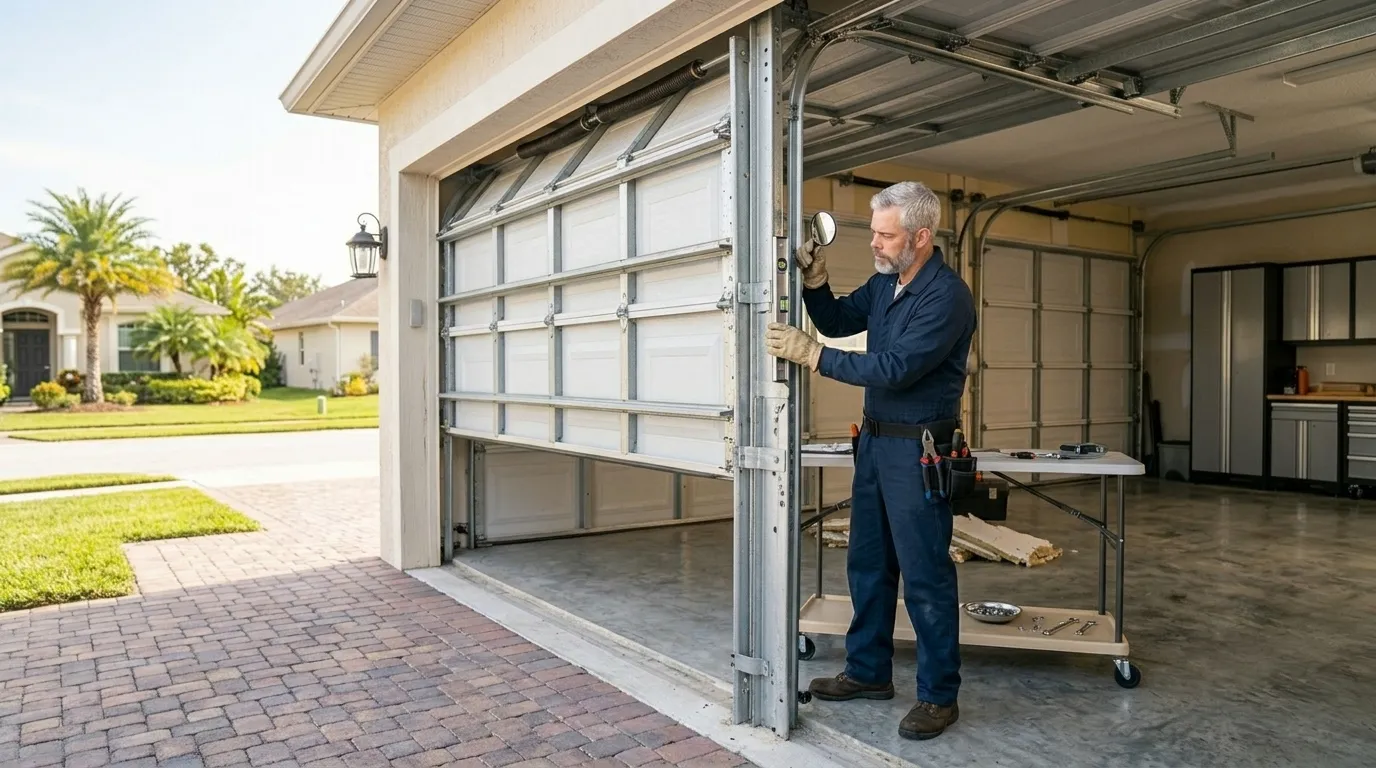
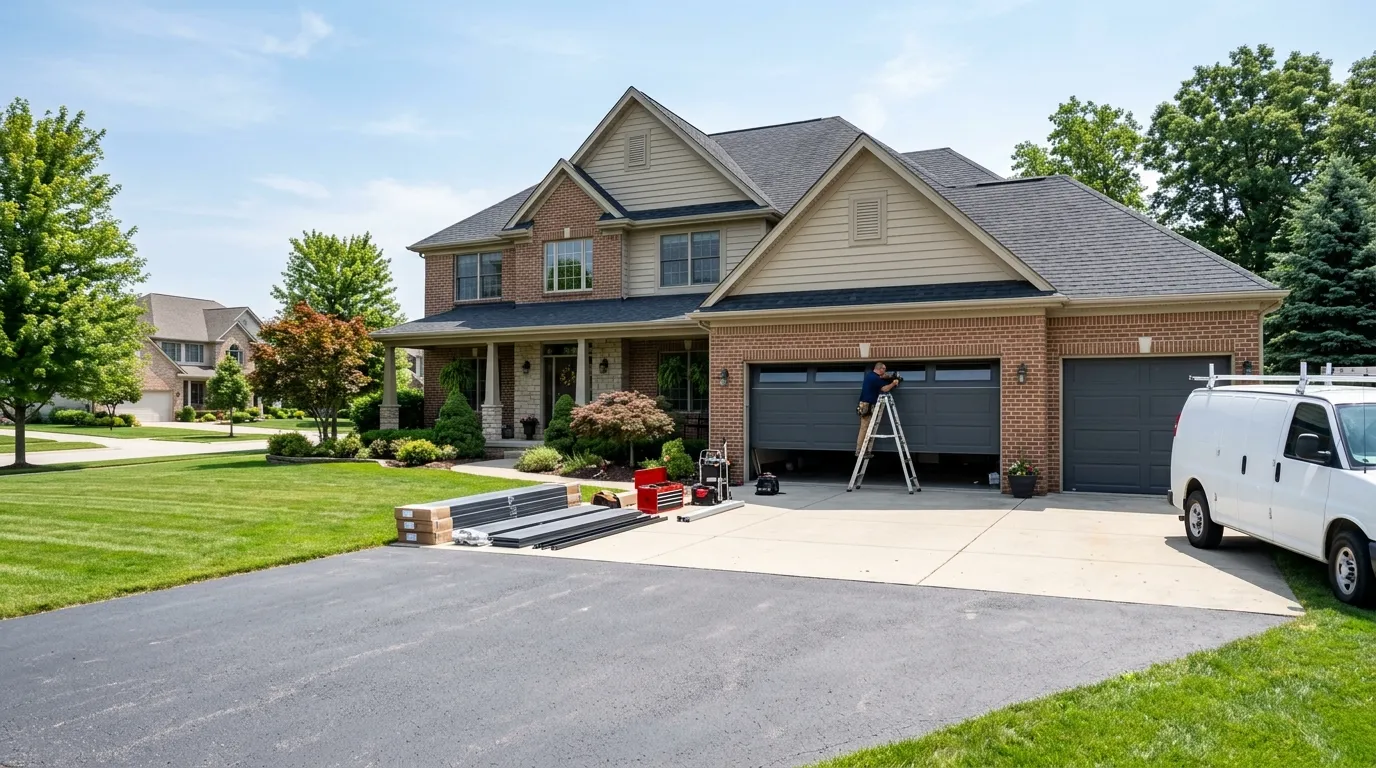
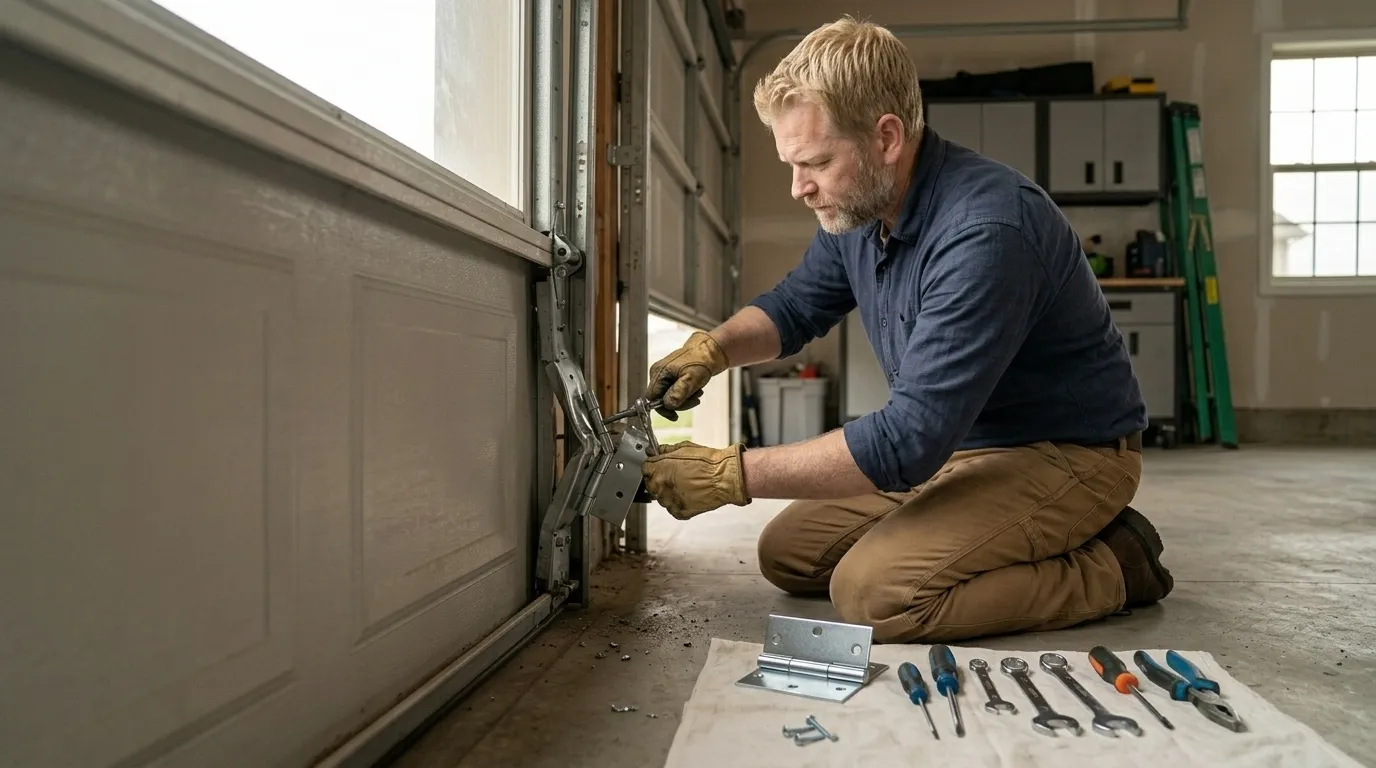
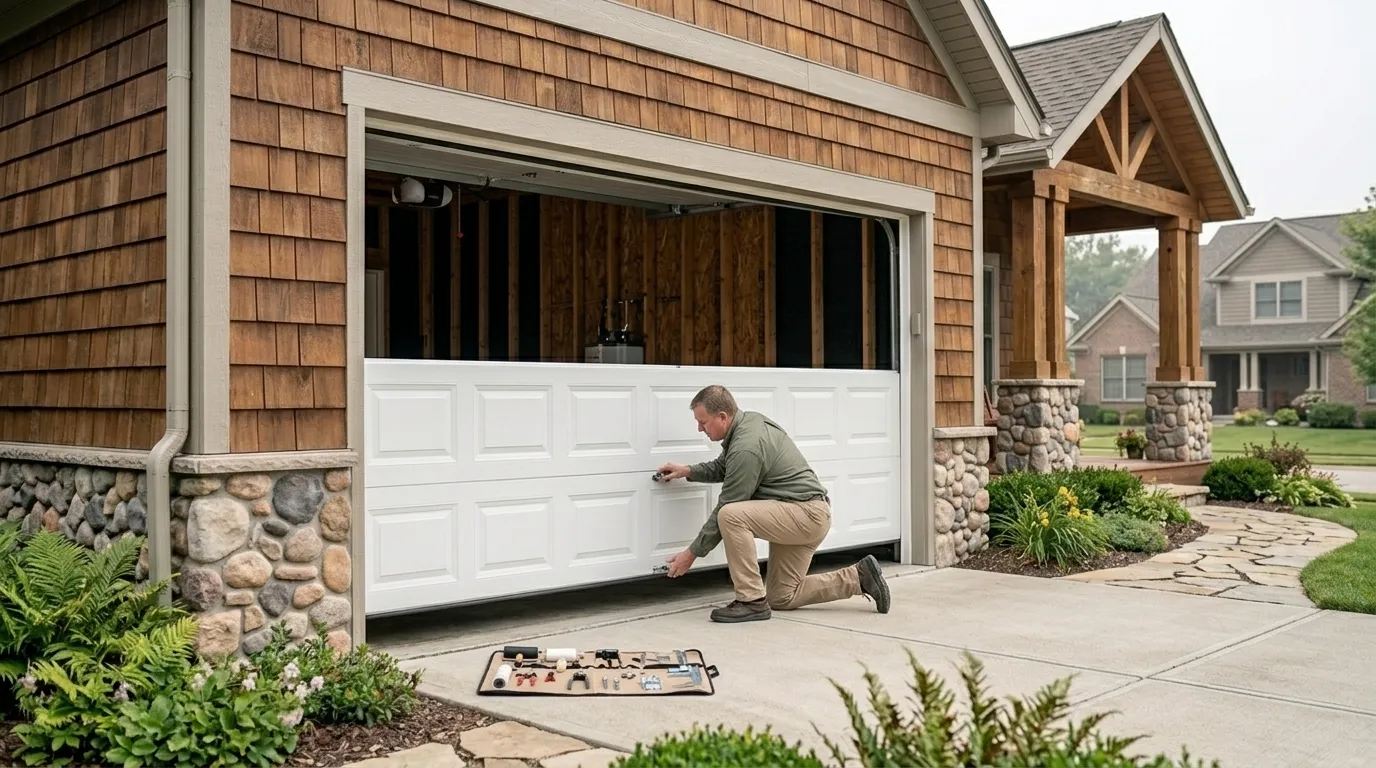
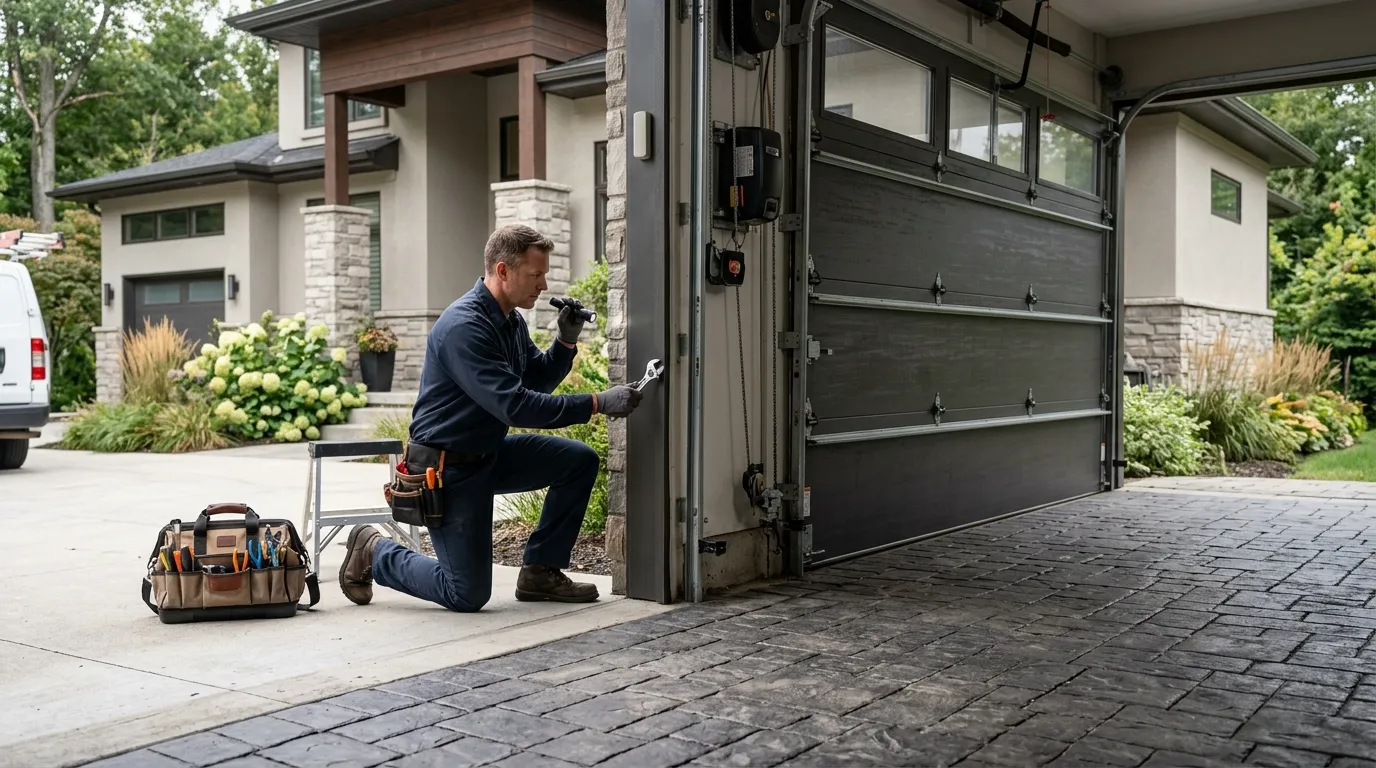
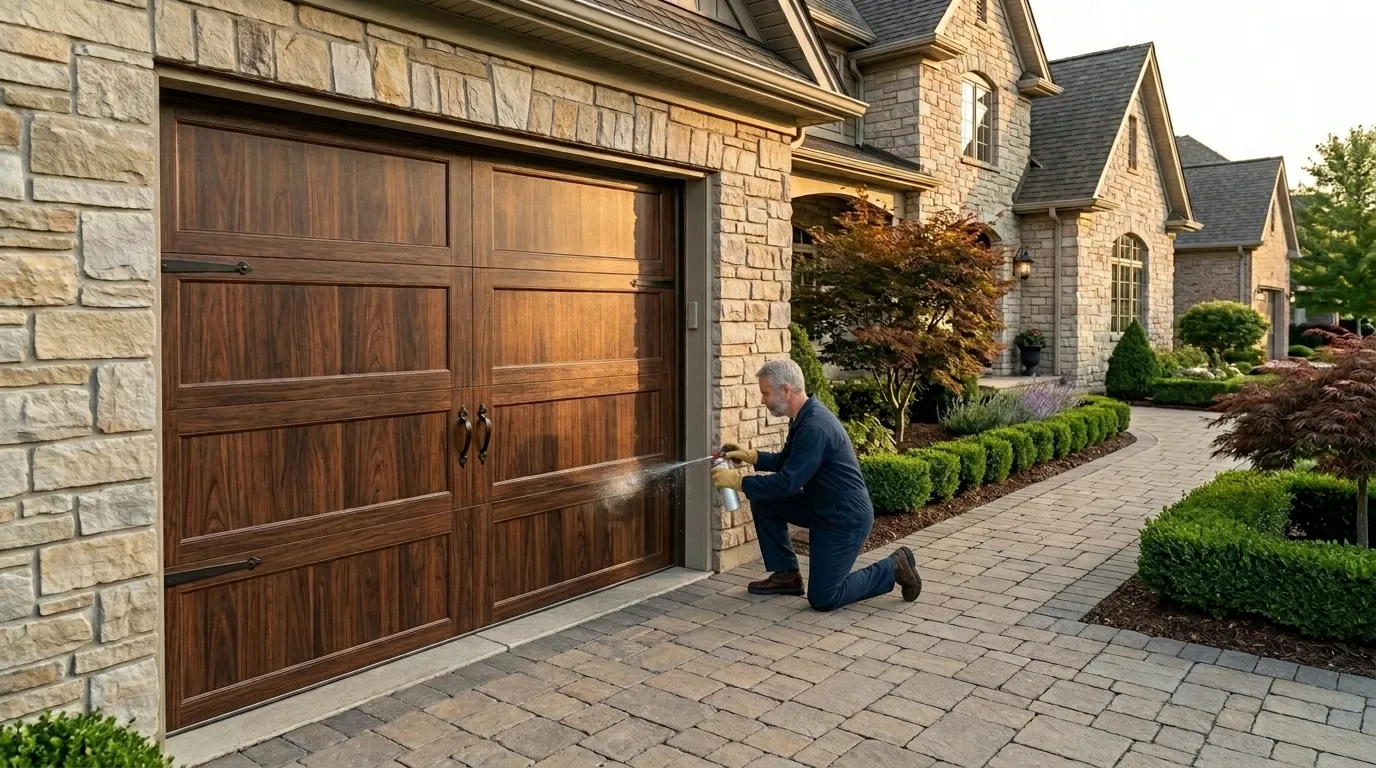
On a house built in the 2000s, the door is almost always a steel sectional panel on a torsion spring mounted above the opening, paired with a chain or belt-drive opener that has a working photo-eye safety sensor. Maintenance on that setup means checking spring tension (it drifts over time even without a failure), lubricating the rollers and hinges, tightening loose lag bolts on the track brackets, and testing the auto-reverse and photo-eye alignment. Because the climate here runs cold and severe through the winter, we pay close attention to weatherstripping at the bottom seal and the way lubricant behaves once temperatures drop - the wrong grease thickens and stops doing its job right when you need the door to move smoothly. None of this is exotic work. It's routine, and it's the kind of routine that keeps a newer door acting like a newer door for another decade instead of starting to bind, sag, or slam once the springs lose their set.
How It Shows Up
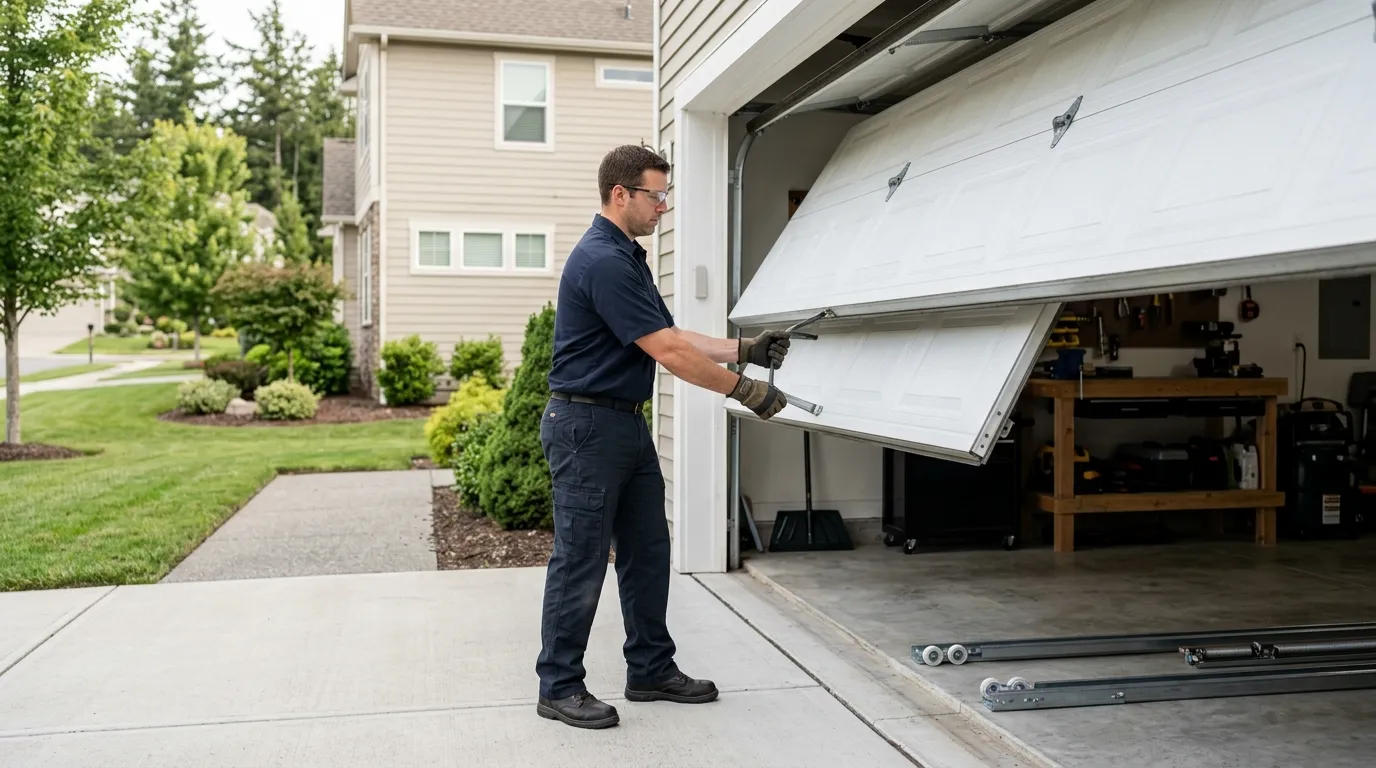
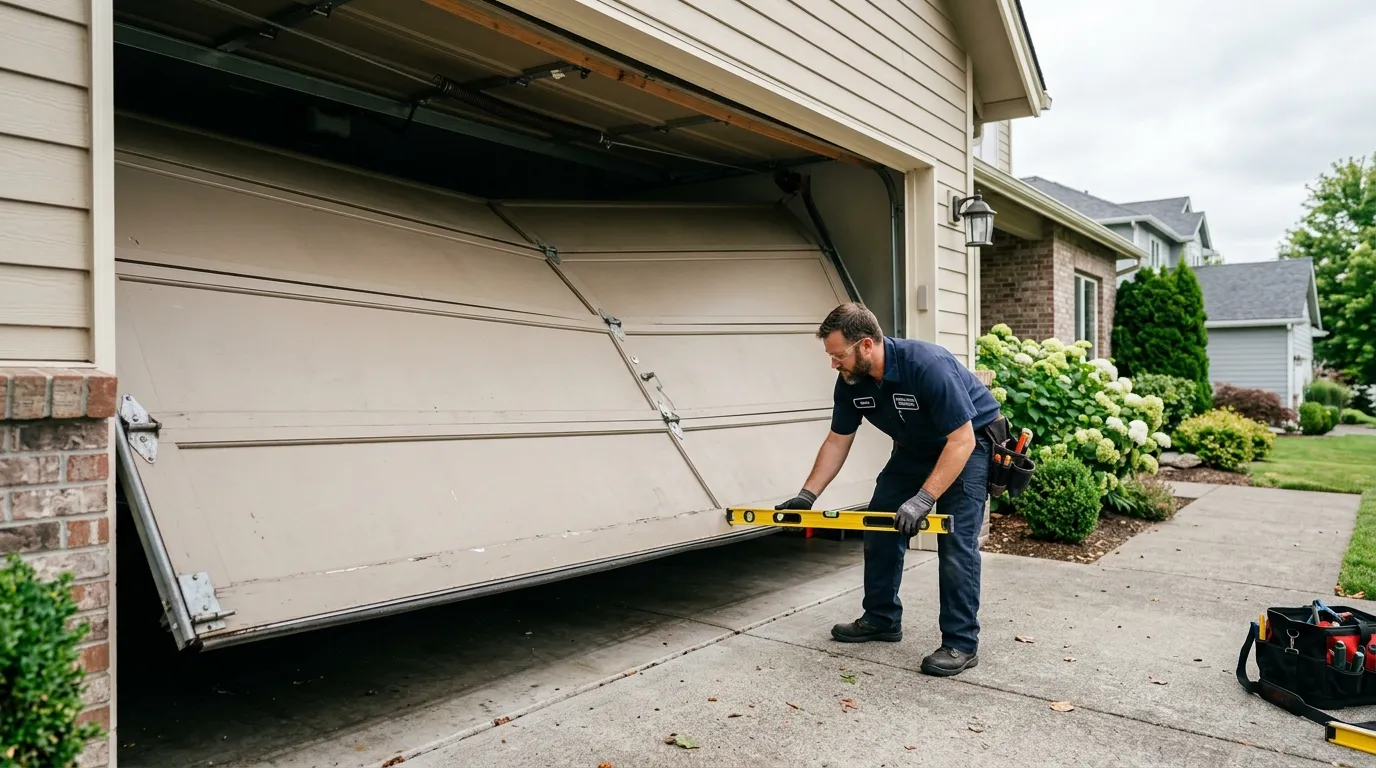
On newer construction like most of what's in Victoria, the first sign of neglected maintenance usually isn't a dead spring. It's noise - a grinding roller, a squeal at the top of the track, or a door that jerks instead of gliding on the way up. Cold weather makes it worse: metal contracts, old lubricant stiffens, and a door that ran quiet in August starts complaining in January. We also see photo-eye sensors knocked out of alignment, often from a bike or a garbage can bumping the bracket, which throws off the auto-reverse safety function without anyone noticing until the door refuses to close. Because the housing stock here is younger, we're rarely dealing with structural sag in the door panel itself - that's more common on the older builds elsewhere in the service area. Here it's almost always the moving parts: springs losing tension, rollers wearing, or an opener sensor drifting out of true.
What Is on the Truck
We carry the parts that match what's actually out there in a town like Victoria - torsion springs sized for standard steel sectional doors, rollers, cables, photo-eye sensors, and the lubricant that holds up in a cold-severe climate rather than gumming up at low temperatures. What we don't stock is obsolete hardware for discontinued door lines; on a house this age that's rarely an issue, since most of Victoria's stock is recent enough that parts are still made. We travel to Victoria from Chaska, about 4 miles away, so we're not working out of a local branch here - the same crew and the same stocked parts just come from down the road.