The Seasonal Bit
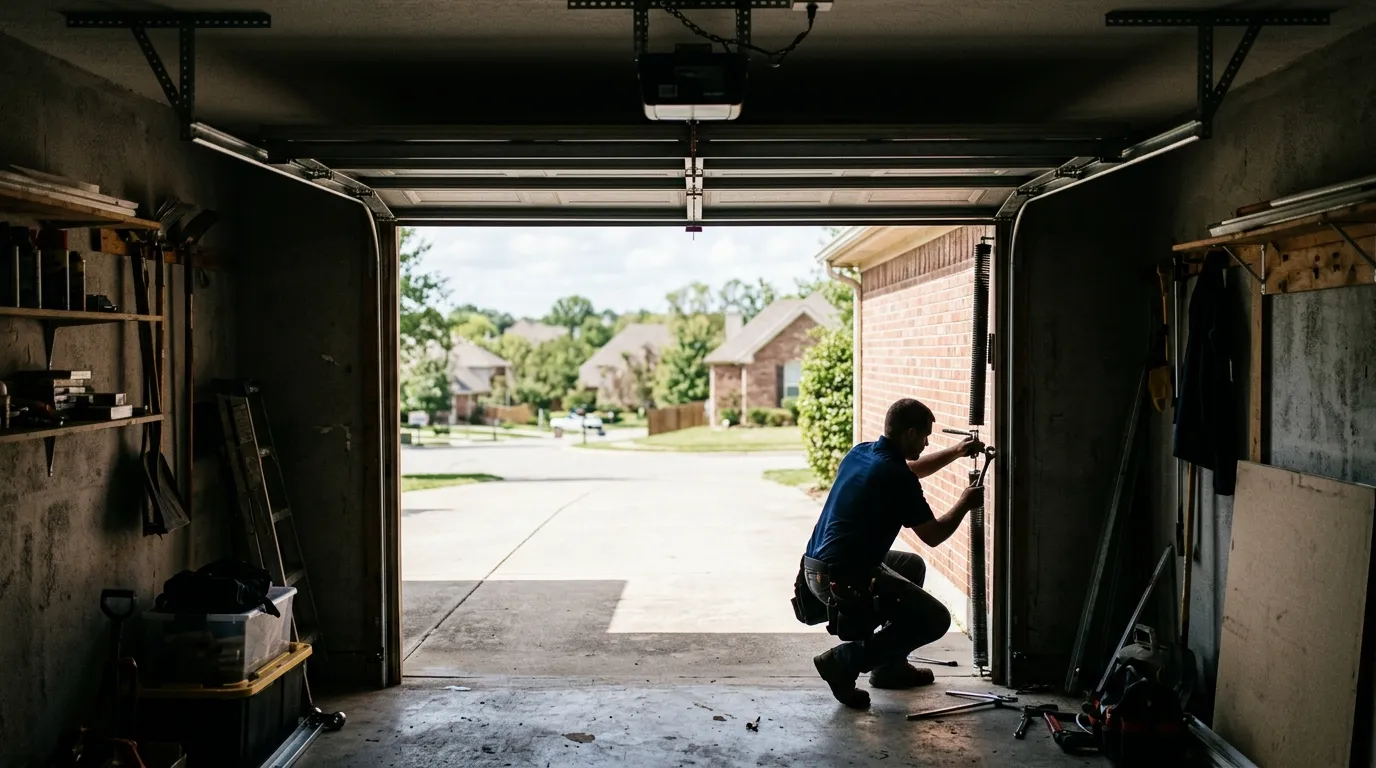
Most of the housing around Chaska went up between 1954 and 2006, with the bulk of it dating to the 1980s and 90s. That range matters because it spans several generations of garage door opener and spring technology, and the noise a door makes often tells you which generation you're dealing with. Doors from the earlier end of that window, if original, tend to run on extension springs mounted along the horizontal track - these make a distinct rattling slap on the way up as the spring stretches against its safety cable. Doors from the 80s and 90s wave are more likely on torsion springs, which give a duller, more contained thump rather than a rattle. Chain-drive openers from that era develop a metallic slap at the motor end as the chain stretches with age; belt-drive replacements, more common in newer installs, wear quieter but develop a squeal when the belt starts to glaze. If your house falls into that 1980s-90s band and you're hearing a rhythmic slap timed to the door's travel, it's worth checking which drive and spring type you actually have before assuming the worst. A lot of these systems are original or close to it, and age alone changes what a normal sound is.
What Is Going On
Break the sounds down by what's actually moving. A sharp bang, once, usually at the top or bottom of travel, points to a spring - either a torsion spring letting go or an extension spring snapping at the end mount, and either one needs the door taken out of service until it's looked at. A steady grinding hum as the door moves is almost always rollers, either dry or worn enough that the wheel isn't turning smoothly in the track anymore. A rhythmic clicking that speeds up with the door is often a bent track section catching a roller on every pass. A high squeal concentrated near the header is usually the opener's drive belt or chain, not the door itself. And a loud pop followed by the door refusing to open all the way is frequently a cable that's jumped its drum - don't force the opener again once that happens, since running the motor against a jammed door strains the gear set. Given the age spread across this area, a lot of these are original hardware reaching the point where wear sounds have replaced break-in sounds. That's not a judgment on the door. It's just where a 20-to-40-year-old system tends to land.