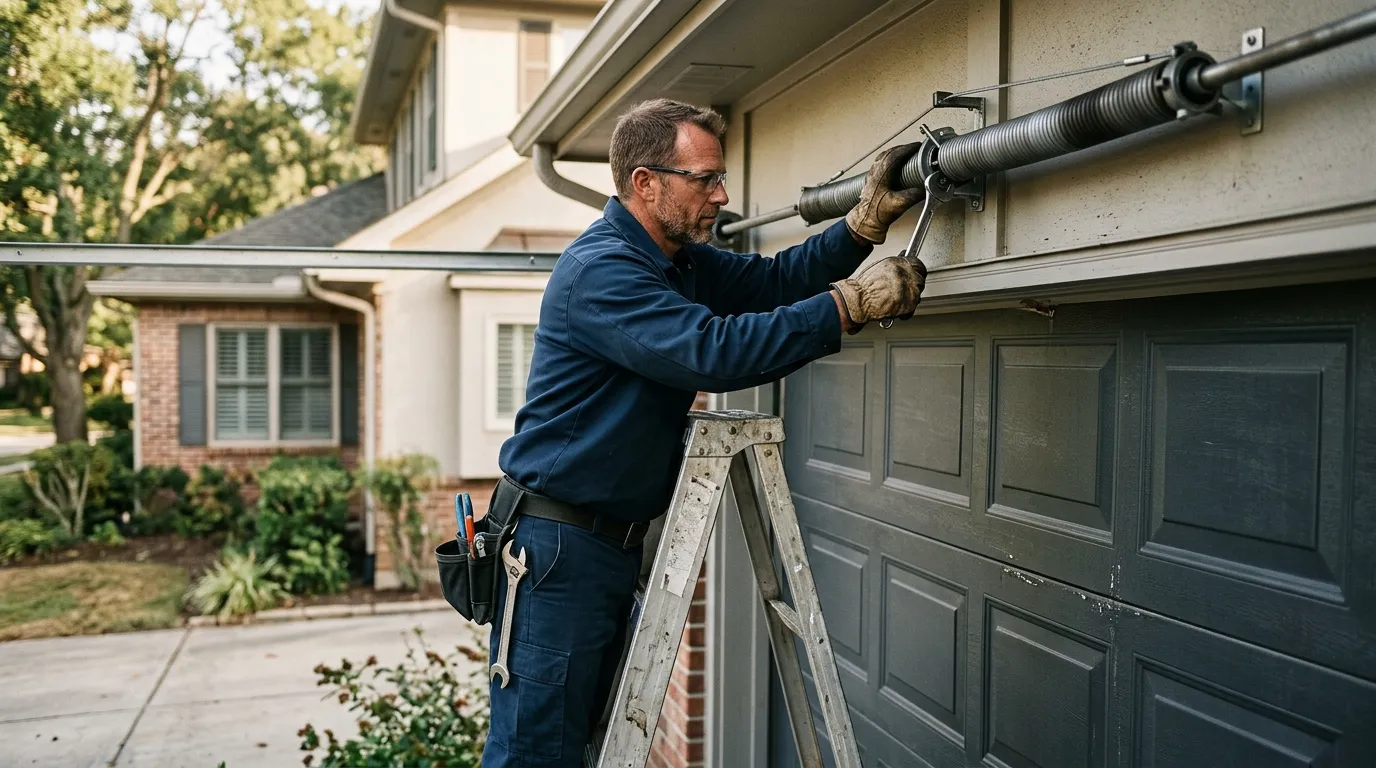
Garage Door Repair for Chaska's 1980s-Era Housing Stock
Chaska homes from the 1954-2006 building boom lean on hardware that wasn't built for Minnesota cold snaps. We fix the springs, cables, and openers that fail because of it.
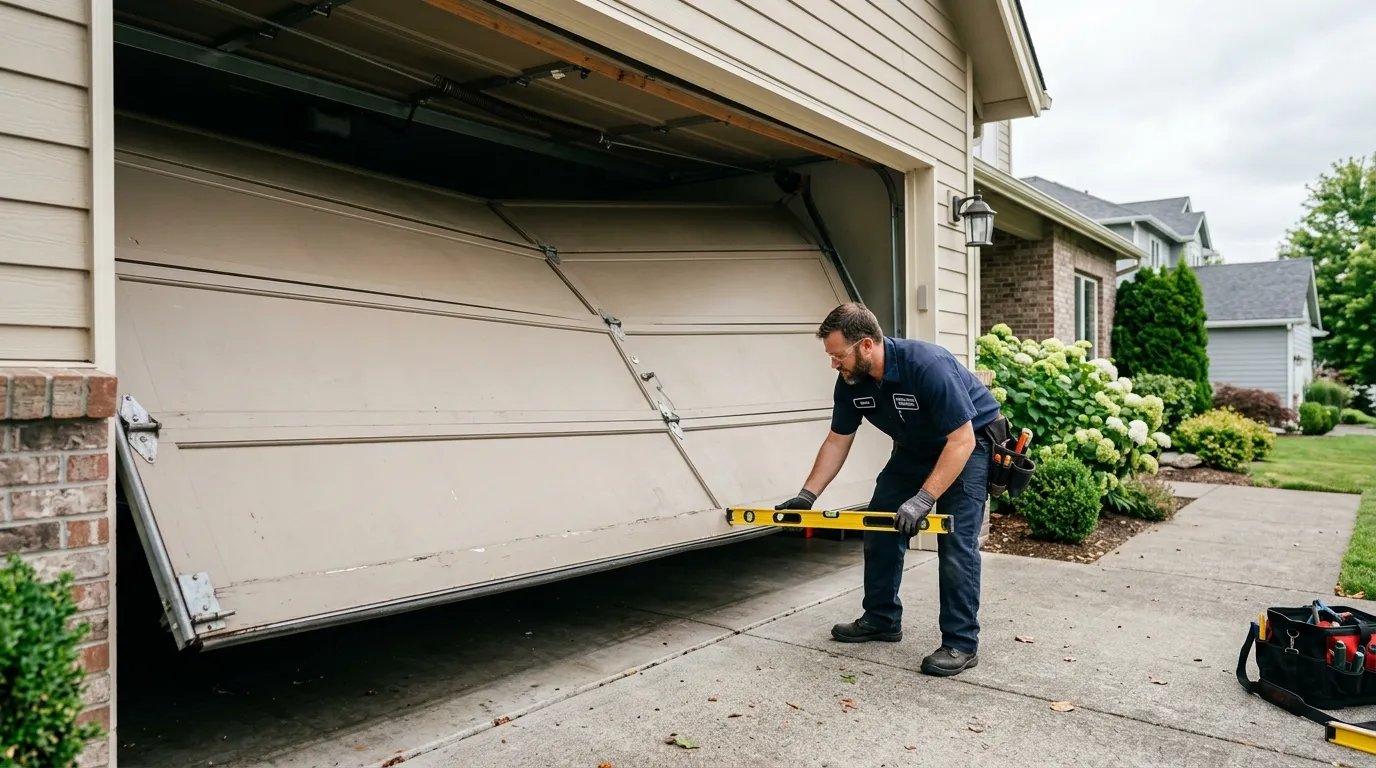
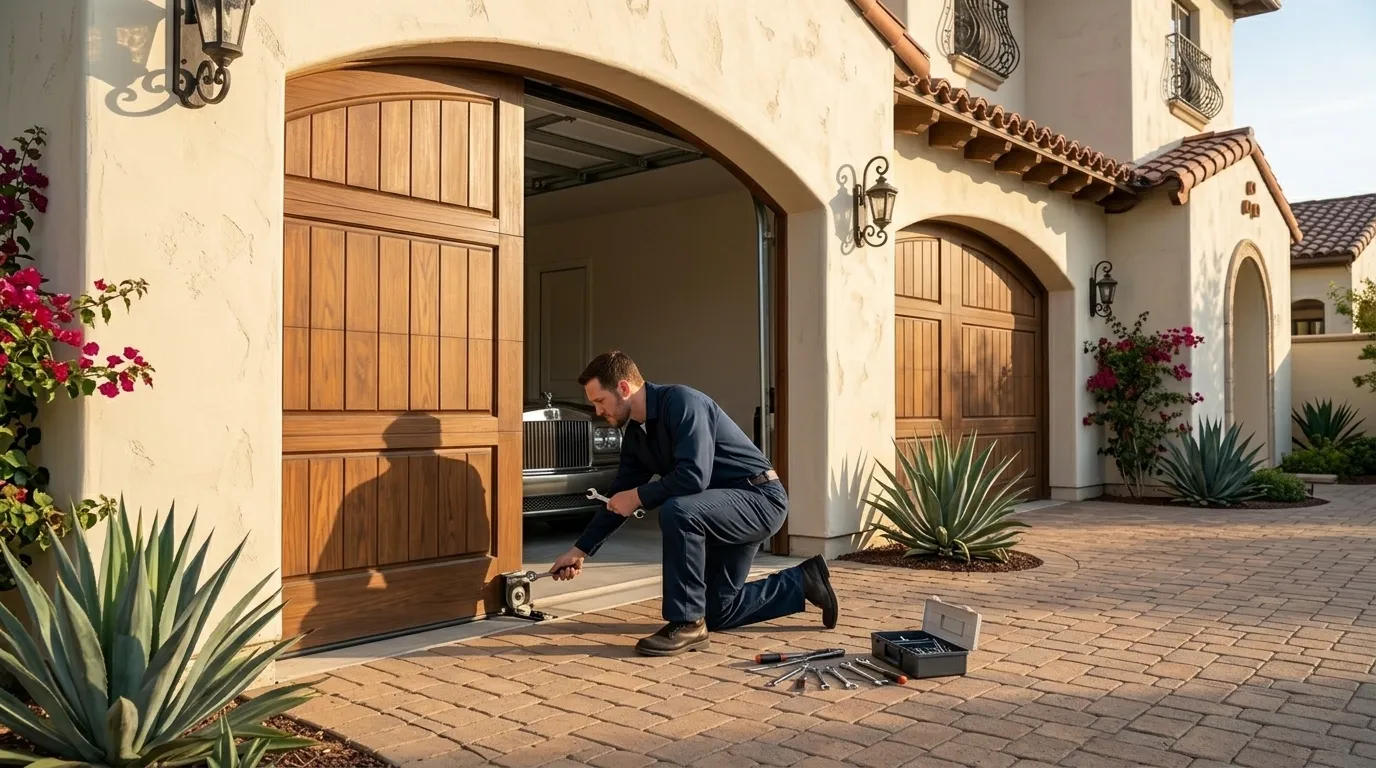
Most calls start the same way: the door won't budge, or it goes up a foot and stops. Sometimes it's a loud bang from the garage overnight, followed by a door that won't move at all in the morning - that's a torsion spring letting go. Other times it's slower, a door that sags on one side, or an opener that runs but the door doesn't follow because a cable jumped the drum.
Given the median build year in this area sits around 1986, a lot of the doors we're called out for are original hardware or a first replacement from the 90s, now well past the spring's rated cycle count. Extension springs on older builds and torsion springs on the 90s-era doors both show the same pattern: they hold fine for years, then quit within a season of each other, because they went in around the same time and see the same temperature swings.
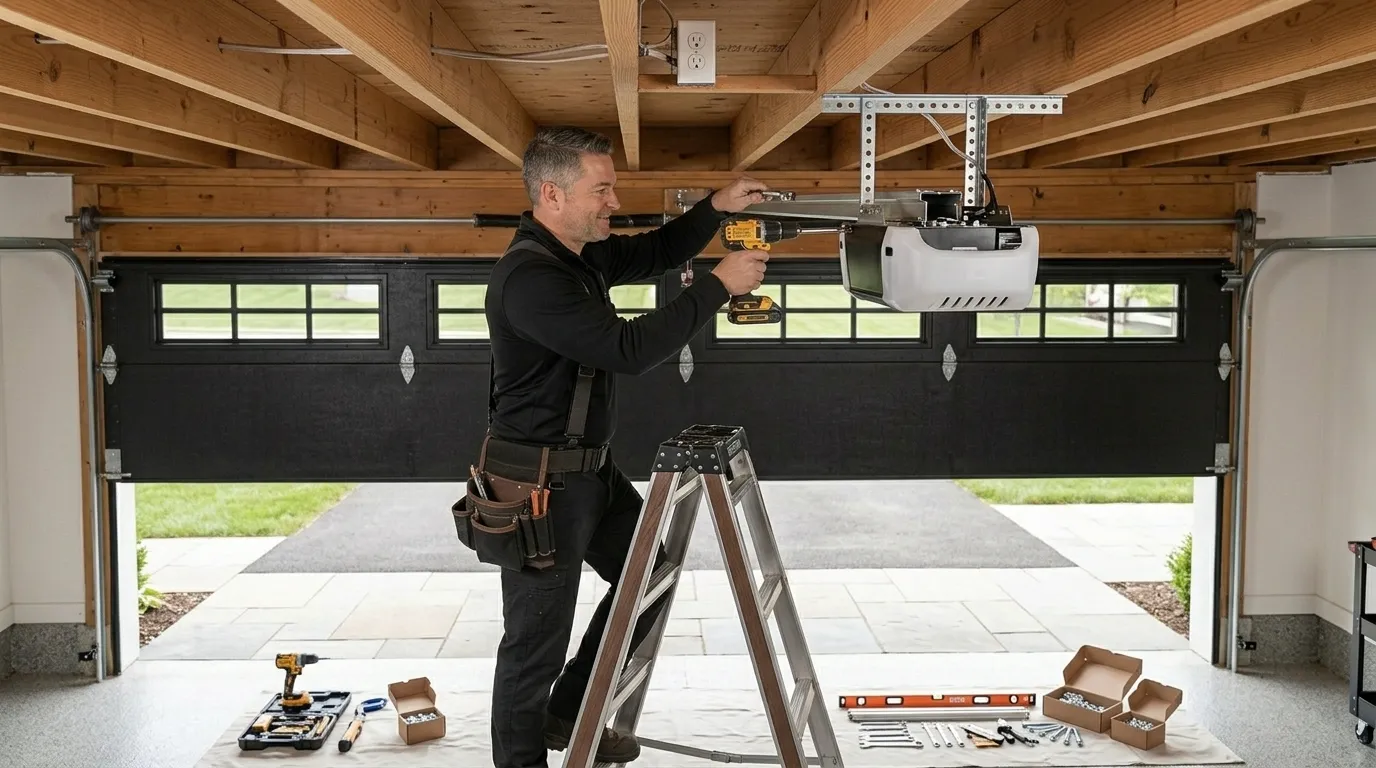
Opener trouble shows up differently - grinding, a motor that hums but doesn't lift, remotes that stop working. That's usually the gear inside the unit, not the door itself, and it's a separate repair from spring work even though the symptom (door won't open) looks identical from the driveway.
What Causes It Around Here
Chaska sits in a cold-severe climate band, and that matters more for garage doors than people expect. Steel springs and cables contract in the cold, which raises the tension a spring is working against right when it's already fatigued. A spring that would have lasted another six months in a mild climate can snap on a January morning here instead.
Housing built between 1954 and 2006 covers a wide range of hardware generations, but the bulk of it - the 1980s and 90s stock that makes up most of the area - used torsion spring setups that were standard for the era and are now 25 to 40 years old. That's old for a spring under repeated cold-to-warm cycling, whether or not the door gets used every day.
Cold also affects the opener side: nylon gears get brittle, lubricant thickens, and openers that labor to lift a door already stiff with cold-hardened springs burn out faster. We see this pairing often enough that when a customer calls about a slow or noisy opener in winter, we ask about the springs before we ask about the motor. One doesn't usually go bad without stressing the other.
What It Costs
We don't have a flat number to quote here, and we wouldn't trust one if we saw it on someone else's site - a torsion spring swap on a standard door and a cable-and-drum repair on a double door are not the same job, and the door's age and hardware type change the parts list. What we can tell you: replacement parts for doors built in the 80s and 90s are usually still available, since that hardware was standard, not custom. Doors from the earlier end of the 1954-2006 range sometimes need a part that's harder to source, which can add a step to the job.
Given the median household income in this area runs well above the state figure, we also get asked more often whether it's worth repairing an older door outright versus patching one more spring. That's a fair question and it depends on the door's condition beyond the spring, which is something we look at on site rather than guess at over the phone.
How Long You Are Without the Door
A broken spring or a jumped cable on its own is usually a same-visit fix once we're at the house - the door goes back to working the same day. What stretches things out is a part that has to be ordered, which happens more with older doors from the earlier end of the 1954-2006 range than with the 1980s and 90s stock that makes up most of this area.
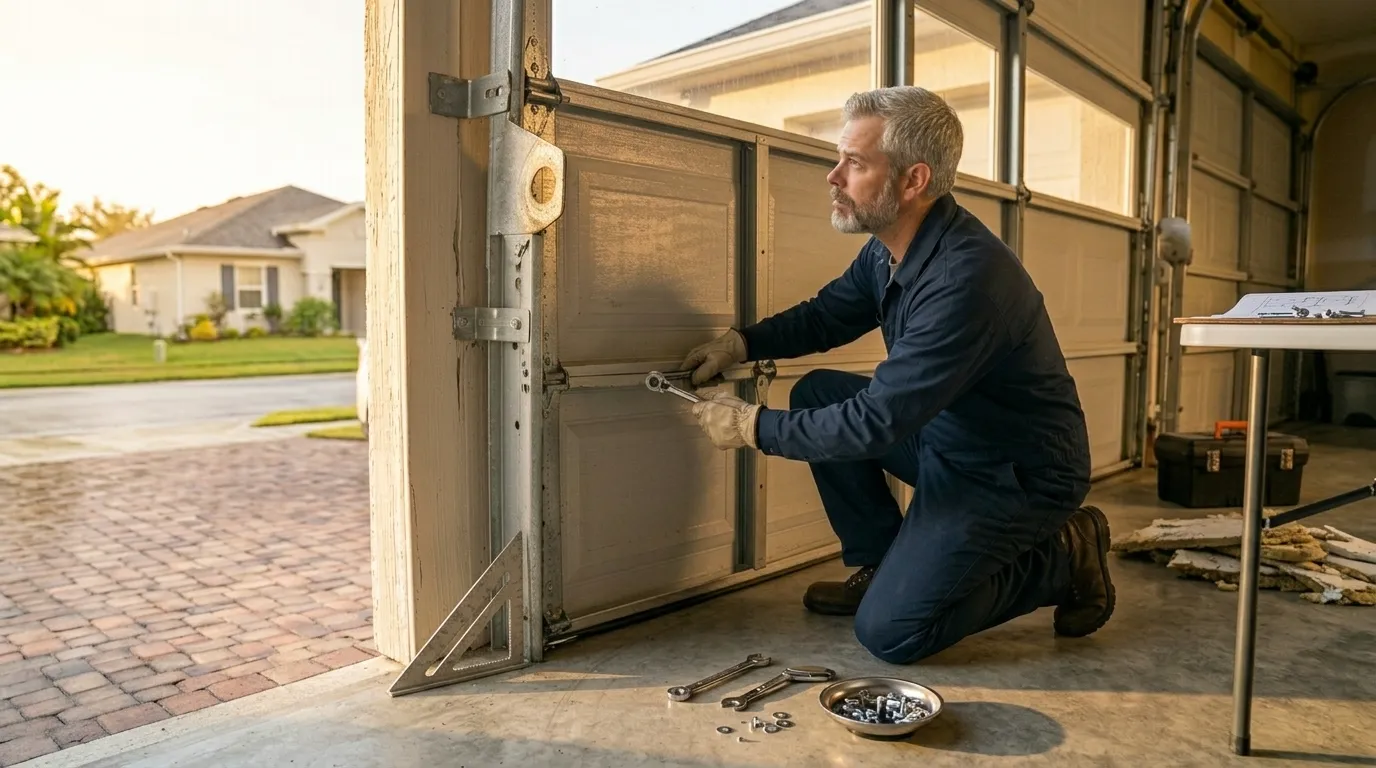
Cold weather adds its own delay, honestly. Working on a torsion spring in a garage that's near outdoor temperature takes longer and more care than the same job in July, because the steel behaves differently and rushing it is how someone gets hurt. We won't compress that step to save time on site.
If you're within a few miles of Chaska - Chanhassen, Carver, or Victoria area, for instance - travel time isn't usually the bottleneck. It's parts availability and whether the job is a spring swap alone or a spring-plus-opener repair, since finding the second problem partway through the first one adds time to the visit.
How it works
From “it’s stuck” to “it’s fixed”
01
Tell us what’s wrong
Describe the symptom - won’t open, loud bang, opener runs but the door won’t move.
02
On-site diagnosis
A technician tests the door under power and by hand and finds what actually failed.
03
Clear, up-front plan
You get the fix that’s needed and what drives the cost - before any work starts.
04
Repaired & tested
The repair is done, the door is set true and tested, and the work area left clean.
Serving Chaska, MN - tell us what your door’s doing and we’ll take it from there.
Why did my garage door spring break in the middle of winter?
Cold makes steel contract, which increases the tension a spring is already holding. A torsion spring that's been cycling for 25-plus years - common on 1980s and 90s Chaska houses - is already near the end of its life, and a cold snap is often what pushes it over the edge.
Is it worth repairing an old door instead of replacing it?
Depends on what's wrong beyond the spring. If the track, rollers, and panels are sound and it's just the spring or cable, repair usually makes sense. If the door is from the older end of the 1954-2006 build range and several parts are failing at once, replacement can be the better call - we'll tell you which situation you're in on site.
Can you get parts for an older garage door?
For the 1980s and 90s stock that makes up most of this area's houses, yes - that hardware was standard and parts are generally available. Doors from the earlier end of the range sometimes need a less common part, which can add time to the job.
Do you work on the door in winter or wait for warmer weather?
We work on it in winter - that's when most spring failures happen here. It does take more care, since cold steel behaves differently under tension, but there's no reason to leave a broken door shut through a Minnesota winter.
Ready to get your garage door sorted?
Tell us what it’s doing and where you are in Chaska - we’ll take it from there.