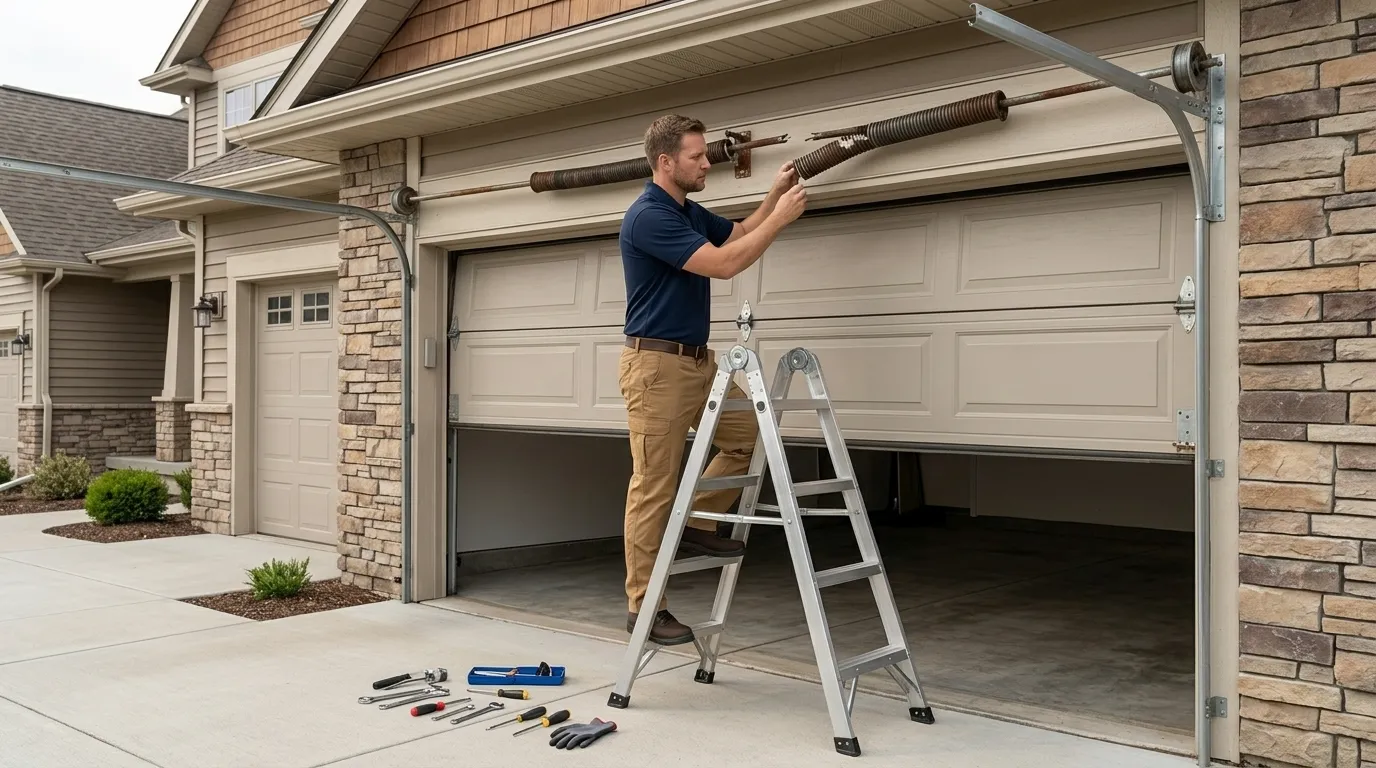
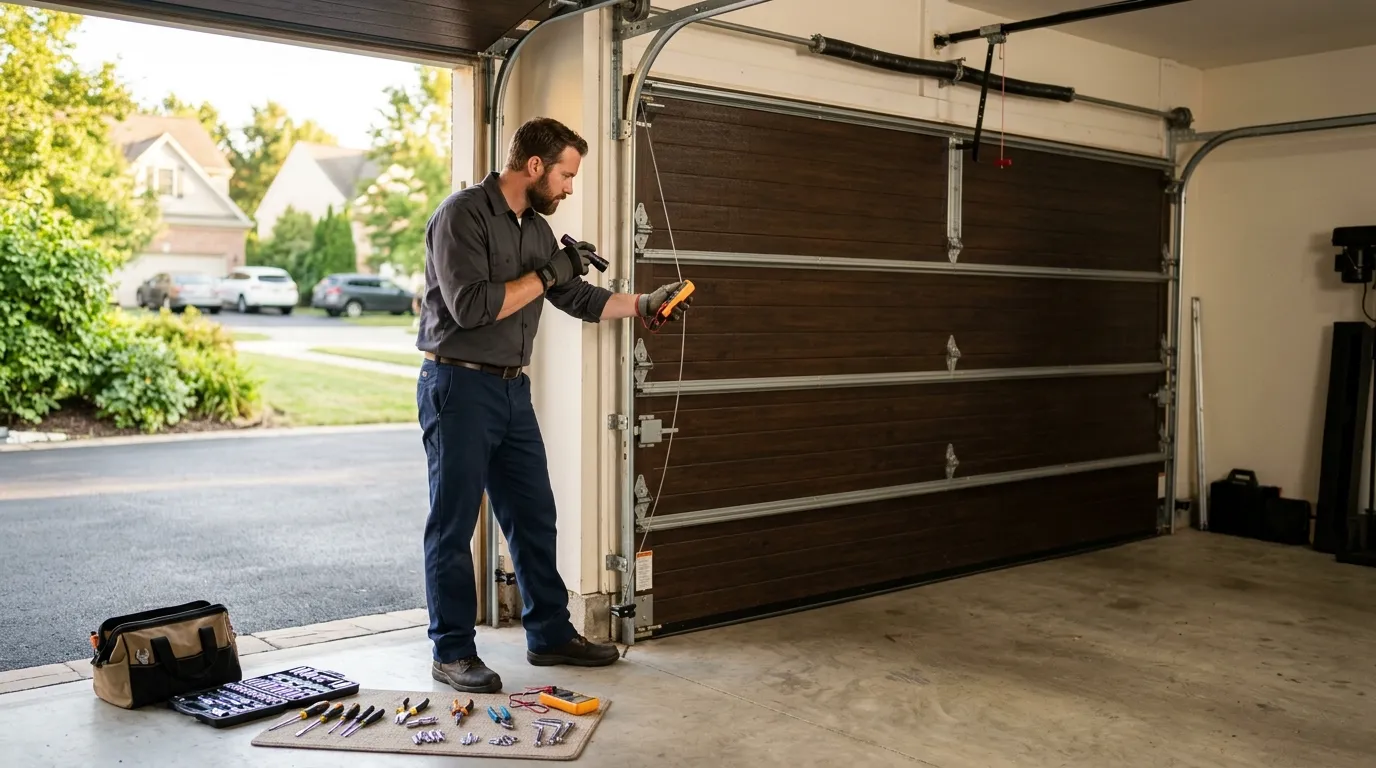
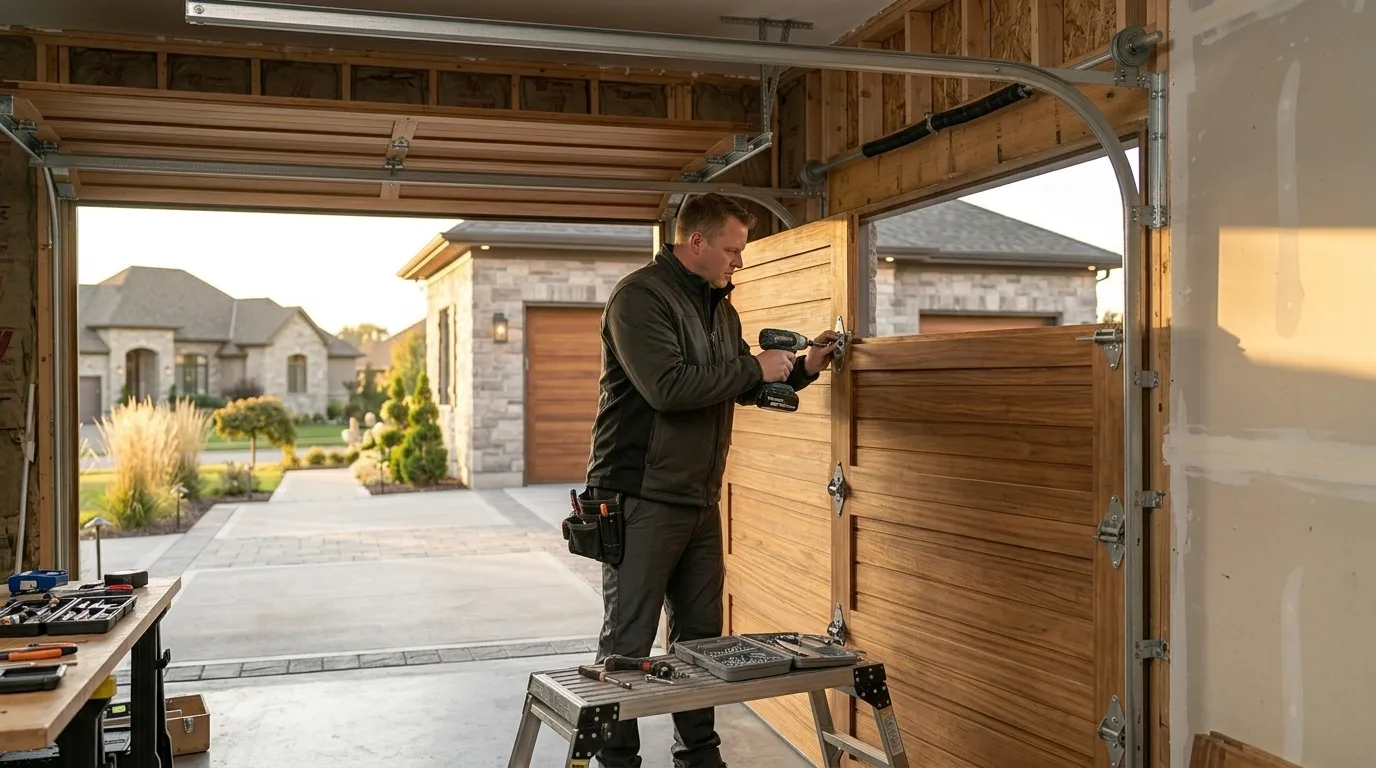
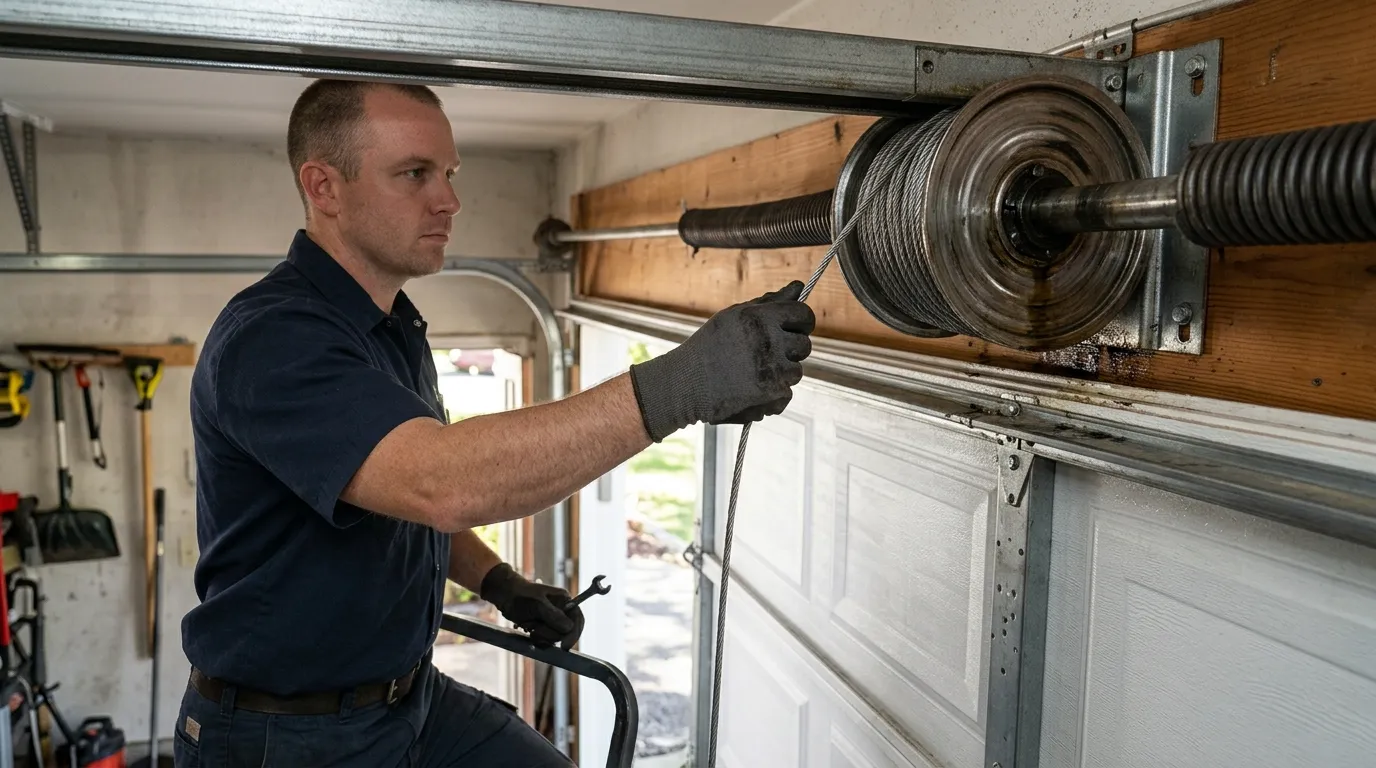
Chaska sits in a cold-severe climate band, and that matters more to a garage door than most homeowners realize. It's not the cold itself that walks a track out of alignment - it's the ground moving underneath the slab as it freezes and thaws through a Minnesota winter. The concrete apron in front of your door and the slab it's anchored to don't move as one piece. Freeze heave lifts one edge a little more than the other, and over a few winters that tiny difference in level shows up as a track that's no longer plumb against the jamb.
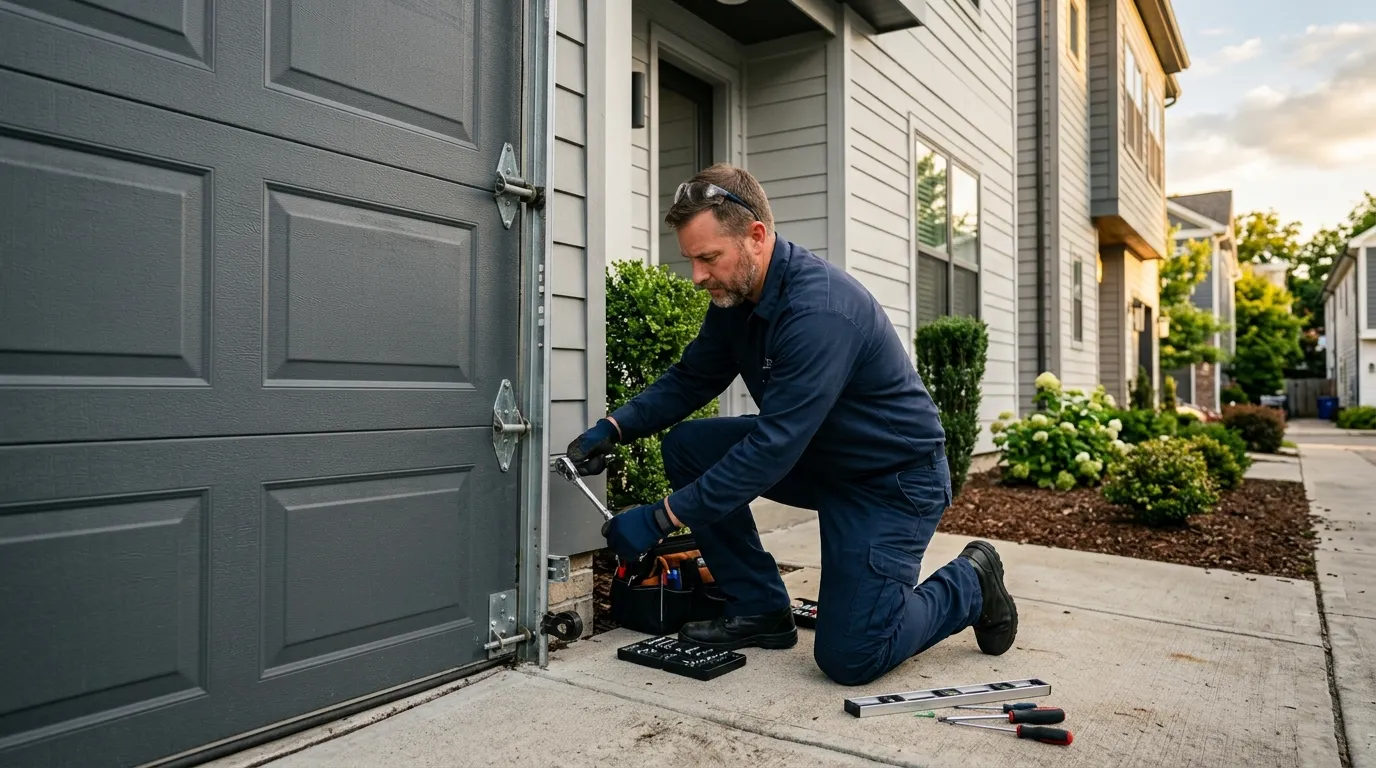
You'll usually notice it as a roller binding at the same spot every time the door cycles, or a bottom panel that sits crooked when the door's down. Some of it is cosmetic. Some of it is a rail bracket working loose from bolts that were never meant to fight frost movement year after year. In a cold-severe band like this one, that's not a defect in the door - it's what the ground does, and the hardware either keeps up with it or it doesn't.
The Seasonal Bit
The failures cluster. A track that's been drifting slowly all summer tends to announce itself in the first hard cold snap, when steel contracts and whatever slack was hiding in a loose bracket turns into a binding roller or a cable that jumps its drum. That's the seasonal pattern in a cold-severe climate: slow drift, sudden symptom.
We also see it go the other way - a door that ran fine all winter starts binding once things thaw and the slab settles back down unevenly. Either direction, the mechanism is the same frost cycle acting on the same aging hardware. If your door has started making a new noise or hesitating at one spot in its travel, that's usually the track telling you it's lost its line before it fully leaves it.
What Is Going On
Most houses in Chaska went up between 1954 and 2006, with the bulk of the stock - across the wider service area's 41 named neighborhoods - dating to the 1980s and 90s. That matters for track failure specifically: hardware installed during that building boom is now thirty to forty years old, on galvanized track that was standard for its era but was never engineered for the freeze-thaw cycling a cold-severe climate delivers decade after decade.
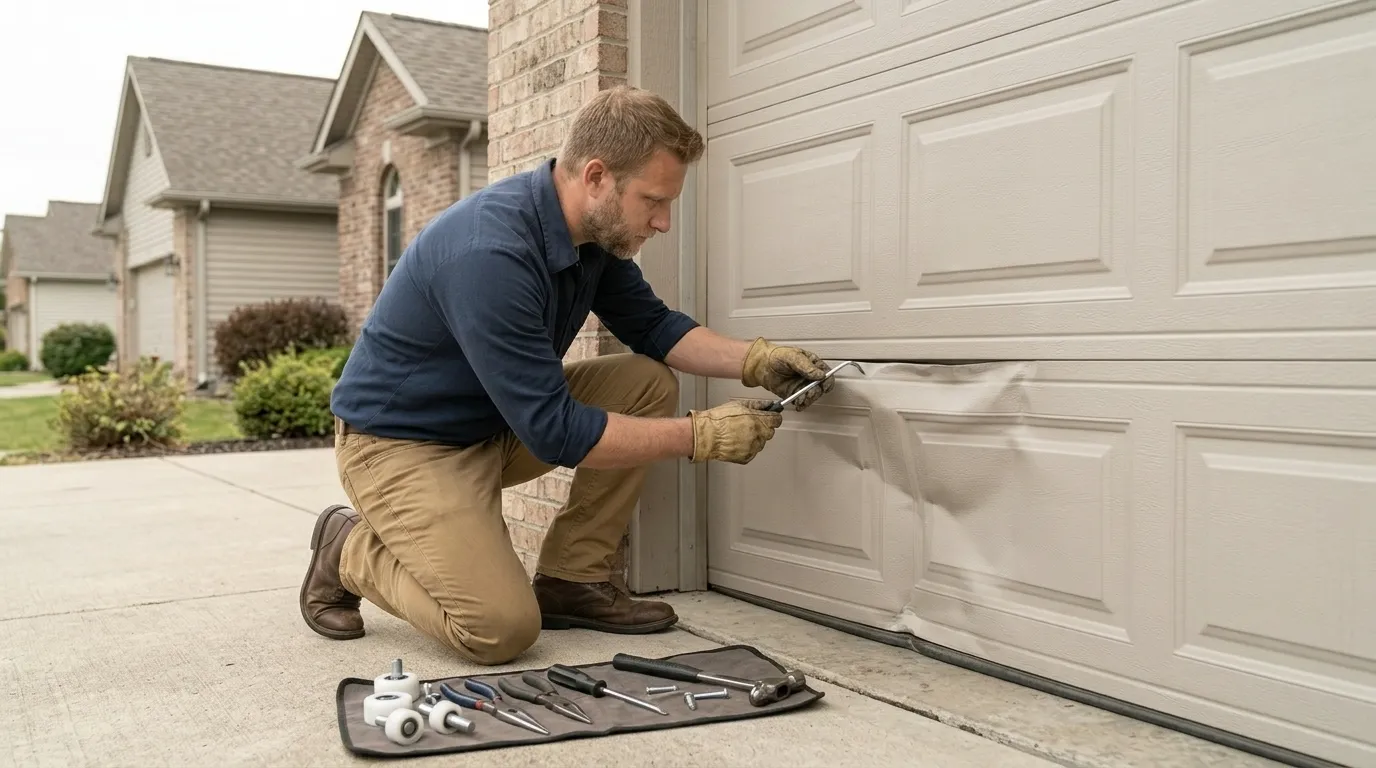
What we actually find on the truck, more often than not, is a bent track section from years of a slightly-off roller grinding one spot, or a bracket lag bolted into a jamb that's shifted with the frost until the fasteners no longer sit square. Sometimes it's simpler: a roller has worn down enough that it no longer fills the channel, so the door has slop side to side that eventually turns into it jumping the track entirely. None of that is a mystery once you know the age and the climate the door has been living in.
What It Costs
We don't quote a number without looking at the track, and we're not going to pretend otherwise here - a bent section near the bottom rollers is a different job than a bracket that's pulled loose from a jamb, and a door that's actually left the track and dropped a panel is a different job again. What we can tell you is what drives the cost: how much of the track needs replacing versus realigning, whether the rollers are shot, and whether the opener's travel limits need resetting once the door tracks straight again.
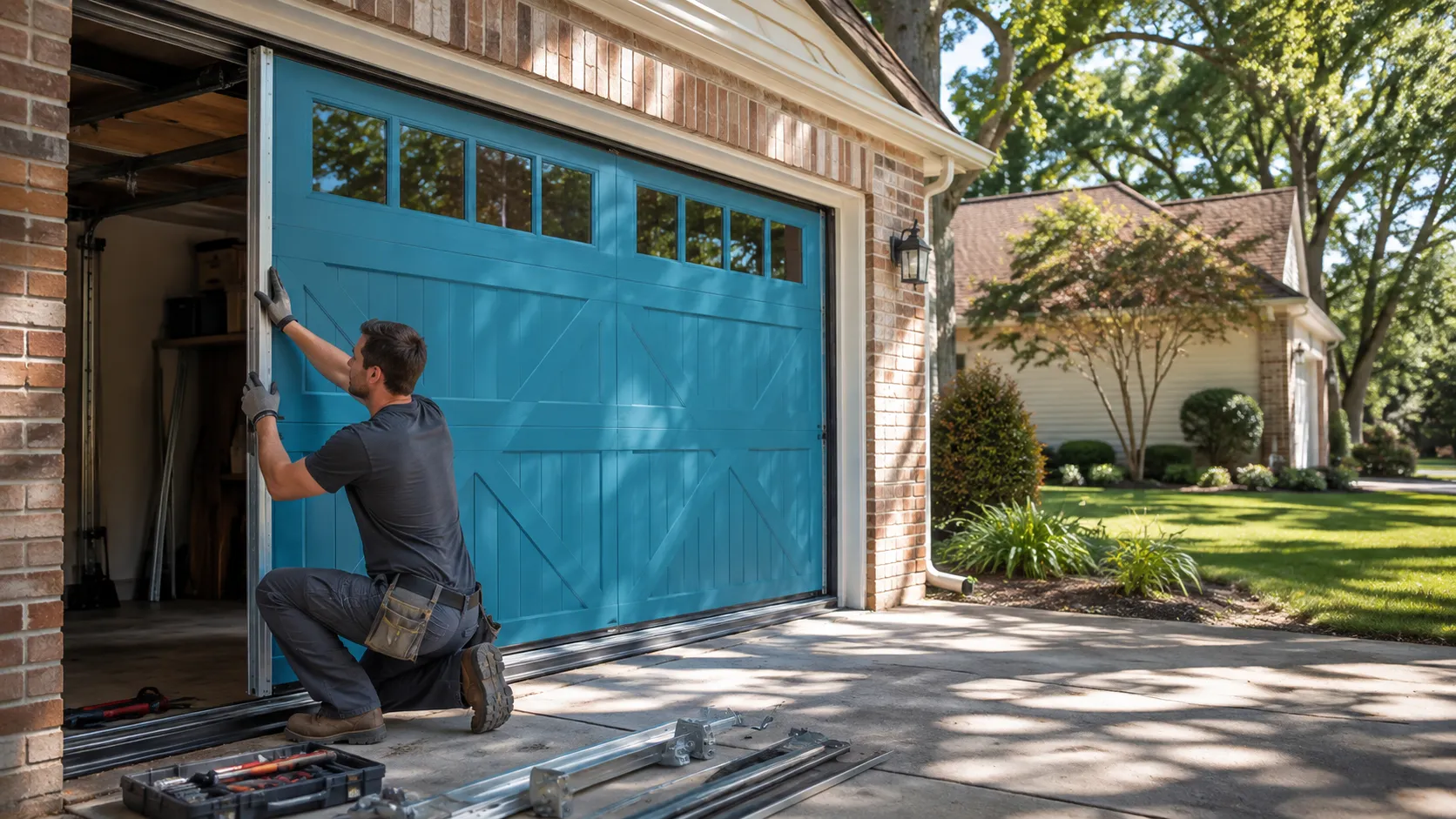
Households in this area, with a median income around $116,500, more often choose to repair a doors' track and hardware rather than replace the whole unit, and for a lot of the 1980s-90s builds around Chaska that's the right call - the door itself is usually fine, it's the track and the fasteners fighting frost movement that gave out. That said, if a track has been bent and rebent enough times, or the section is warped past where a straightening job holds, replacing that run of track outright is often less work than fighting it a second time.
How it works
From “it’s stuck” to “it’s fixed”
01
Tell us what’s wrong
Describe the symptom - won’t open, loud bang, opener runs but the door won’t move.
02
On-site diagnosis
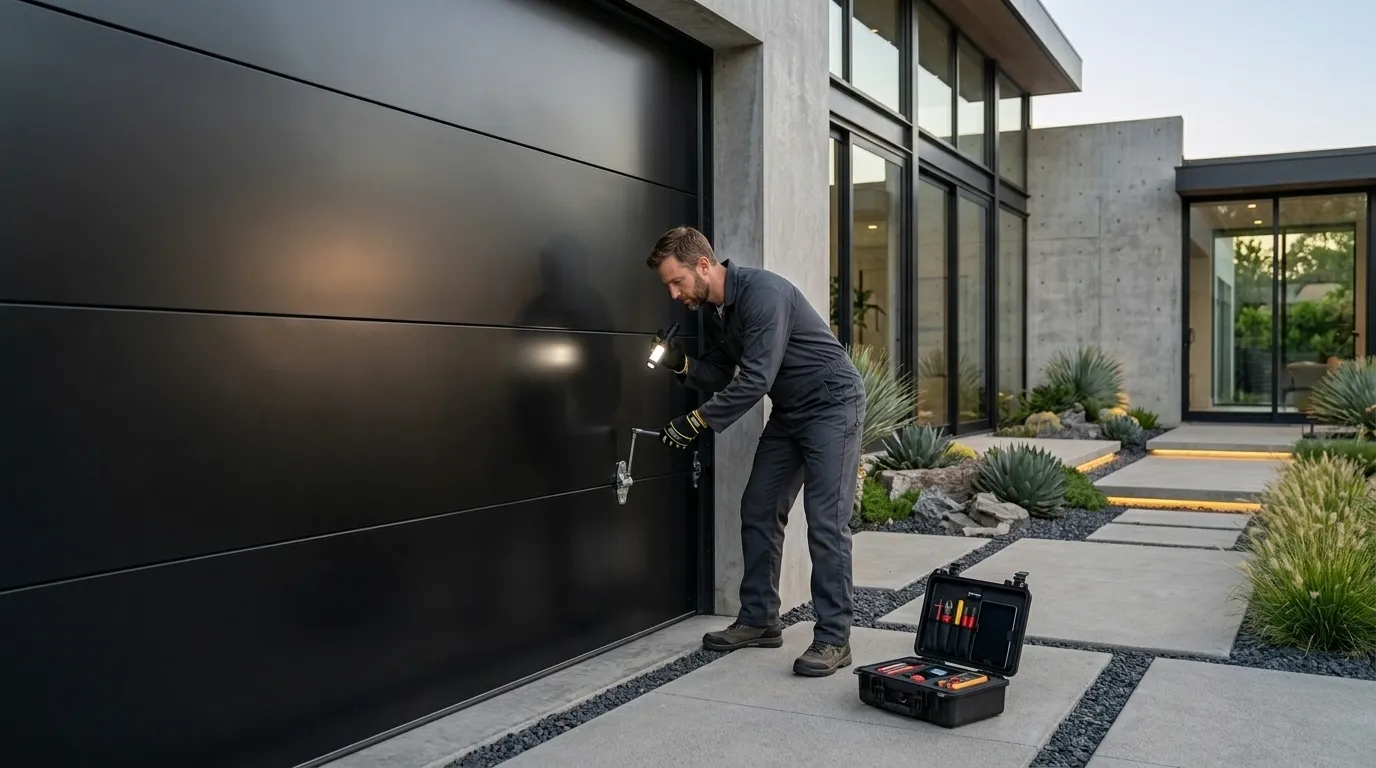
A technician tests the door under power and by hand and finds what actually failed.
03
Clear, up-front plan
You get the fix that’s needed and what drives the cost - before any work starts.
04
Repaired & tested
The repair is done, the door is set true and tested, and the work area left clean.
Serving Chaska, MN - tell us what your door’s doing and we’ll take it from there.
That's almost always a track that's gone slightly out of plumb rather than a problem with the door panel itself. In Chaska's cold-severe climate, frost heave under the slab lifts one side of the track's anchor points more than the other, so the roller catches at the same point in its travel every time. It's a bracket and alignment fix, not usually a door replacement.
Is a bent track always a full replacement?
No. A track section that's bent from a roller grinding one spot for years can often be straightened or that one section swapped out, with the rest of the run left alone. Full replacement makes more sense when multiple sections are warped or the fasteners have chewed through the jamb they're anchored to.
My house was built in the 1980s - is the original track still up there?
Given how much of the housing around Chaska dates to that era, it's common. Galvanized track from that period wasn't built to handle forty winters of freeze-thaw cycling, so if nobody's touched it, it's worth having someone check the brackets and level before it fails on its own schedule.
Does cold weather actually cause this, or is it just old age?
Both, working together. Age gives you worn rollers and loosened fasteners; the cold-severe freeze-thaw cycle gives that wear somewhere to go. A track on a newer build in a mild climate can loosen slowly for decades and never show it. Here, the frost movement speeds that timeline up.
Ready to get your garage door sorted?
Tell us what it’s doing and where you are in Chaska - we’ll take it from there.