The Seasonal Bit
Spring breaks cluster around the first real cold snap, not the deepest cold of the year. The steel is fine until the temperature drops fast enough that it can't relax between cycles - that first plunge into the teens or single digits after a mild stretch is when the phone starts ringing. It tapers off once everyone's spring has already found its breaking point for the season.
Morning use makes it worse. A door that's sat cold all night takes its first full-weight lift of the day right when the steel is stiffest, which is exactly the moment a fatigued spring is most likely to let go. If you're going to test a door after a cold night, do it slow and watch how it moves rather than hitting the opener button and walking away.
The honest limitation here: we can't tell you exactly which week your spring will go. Spring life is measured in cycles, not months, and a spring nearing the end of its rated cycle count in a house built in the 1980s or 90s doesn't send a warning first. It just goes.
What Is Going On
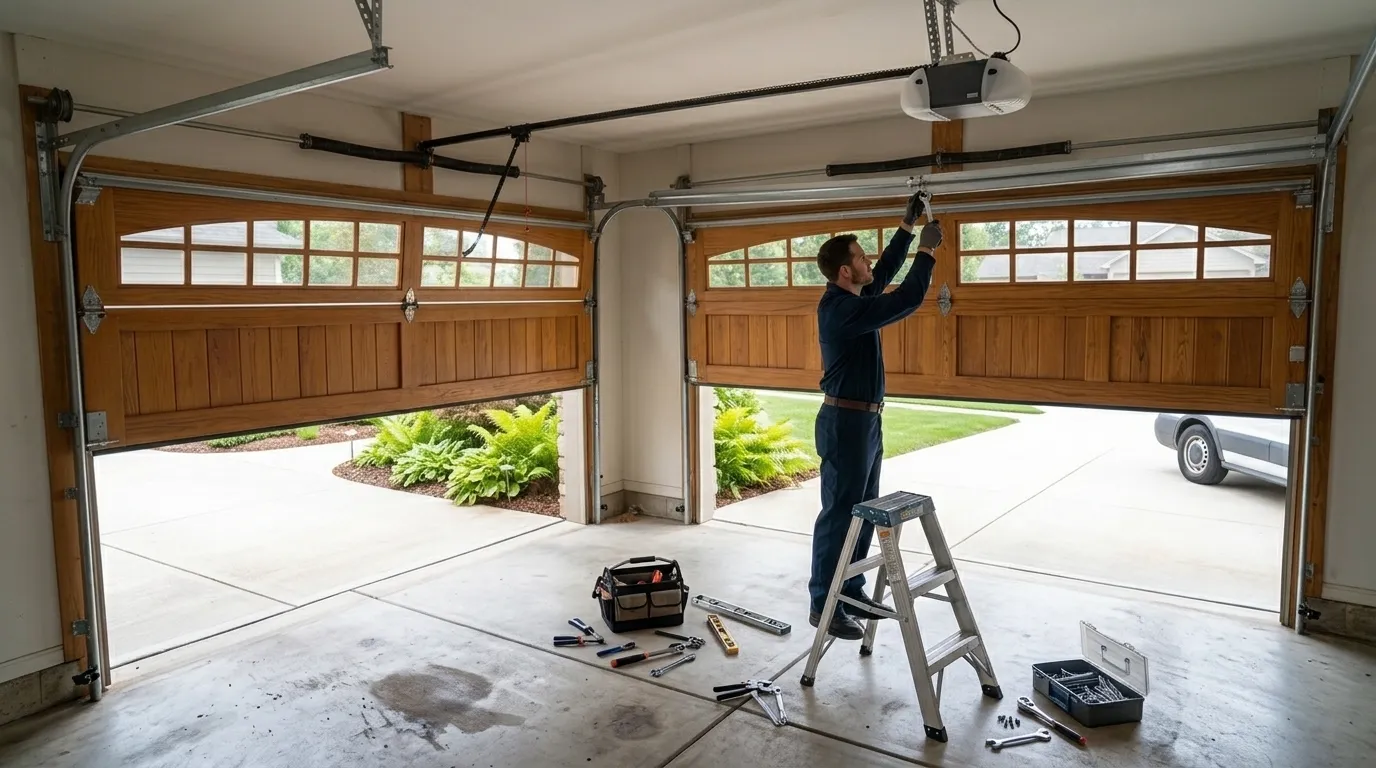
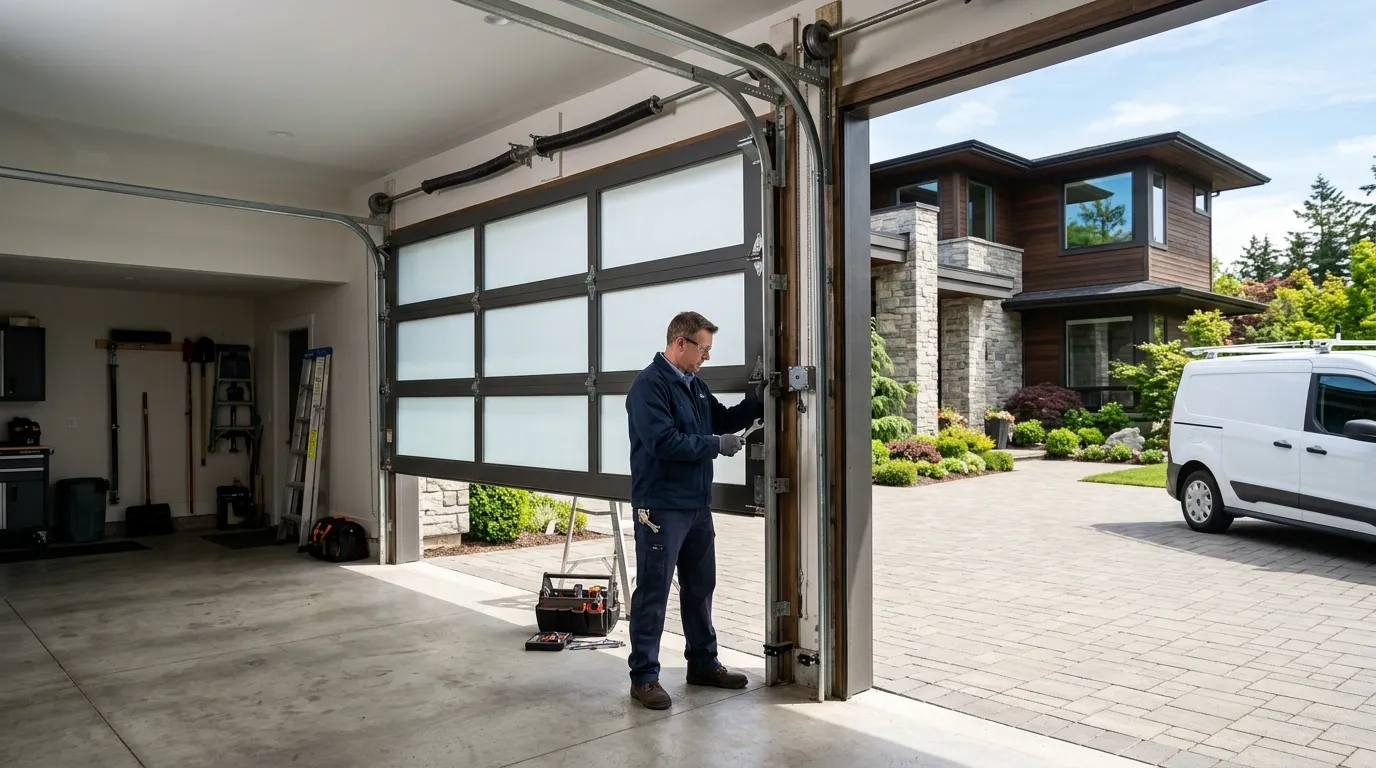
A torsion spring stores the energy that lifts the door, wound tight above the opening on a steel shaft. Every open-and-close cycle stresses that coil a little more, and cold steel is more brittle steel - a spring rated for a certain number of cycles will hit its limit sooner in a severe-cold climate than in a mild one, simply because the stress each cycle puts on it is higher.
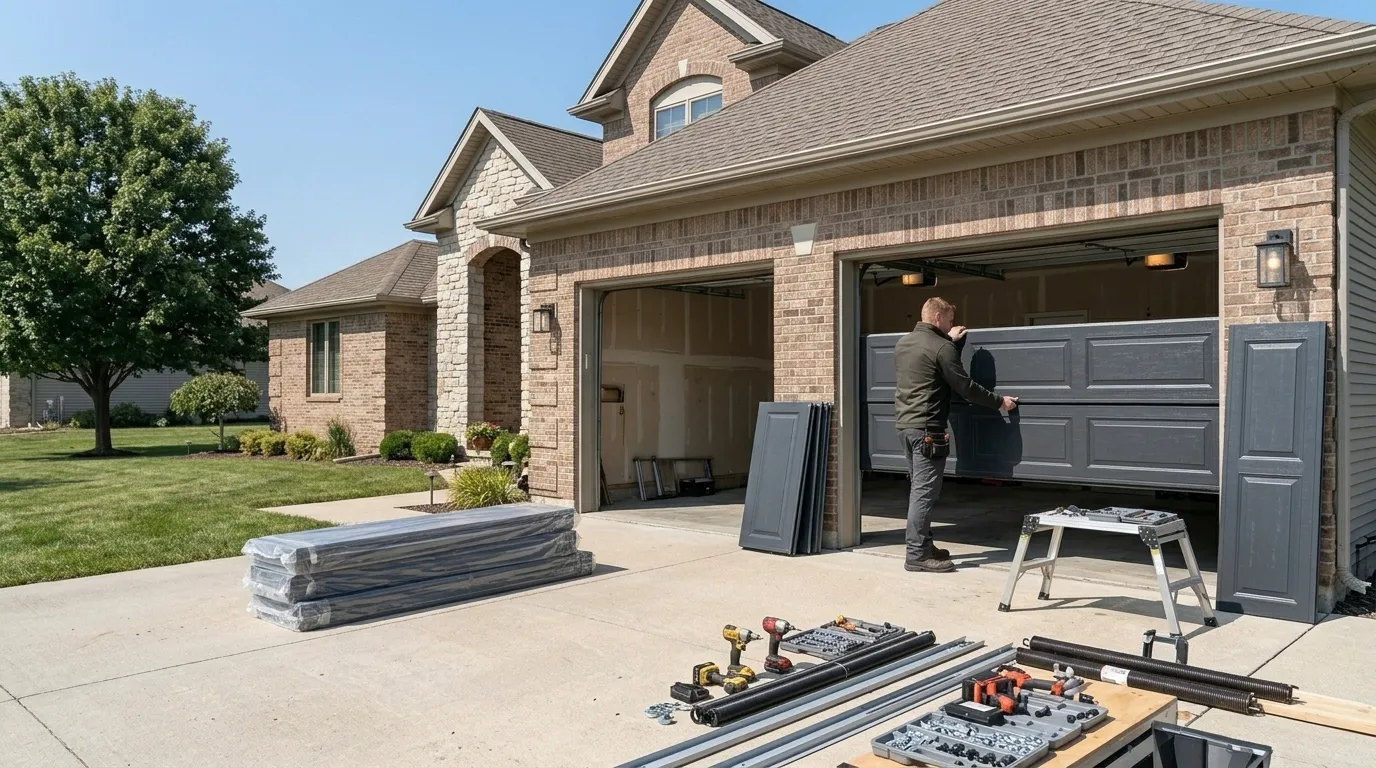
Across this service area there are 61,559 owner-occupied houses, and a large share of them are sitting on the original hardware from that 1980s-90s construction wave. Original torsion springs from that era were sized for the doors and openers of the time, which weren't always as heavy as what's on the market now if a door's been replaced since. That mismatch shortens spring life further.
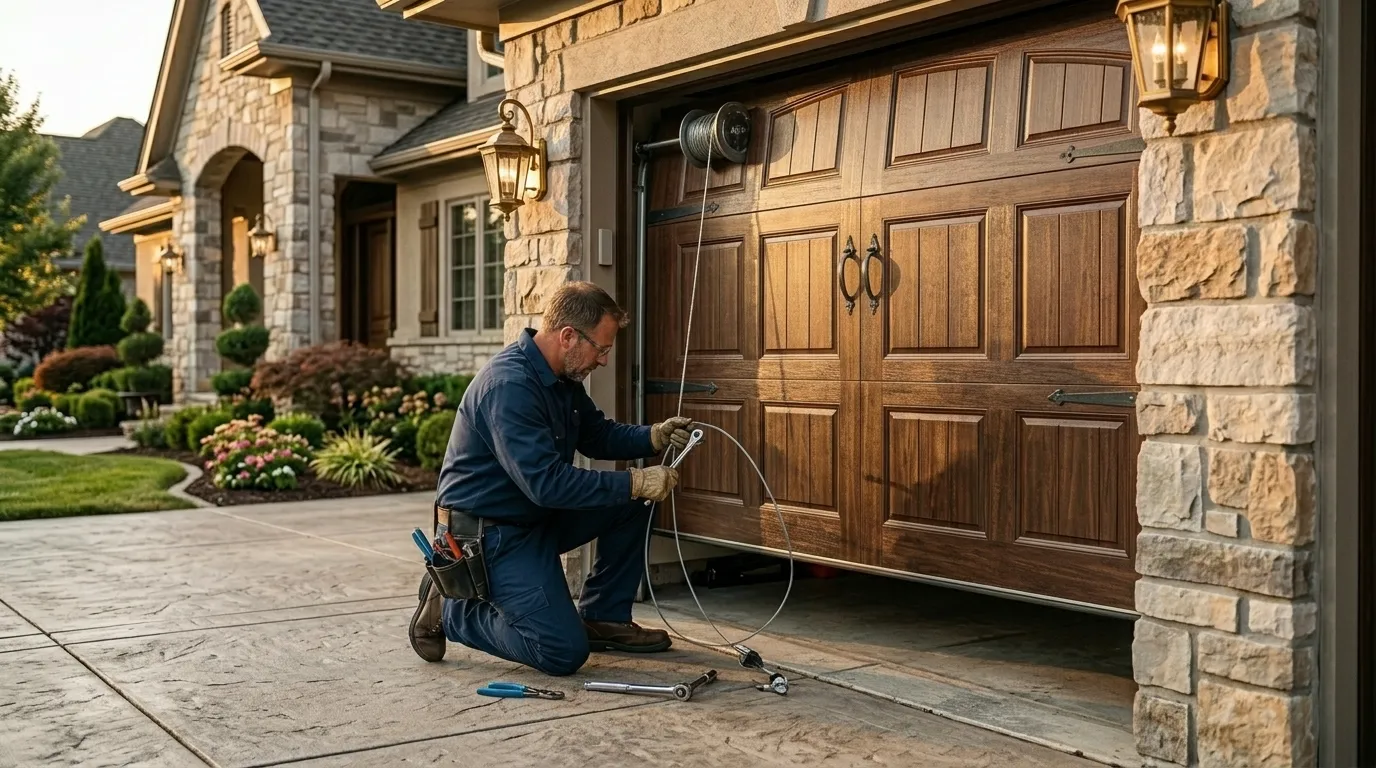
What actually breaks is usually one of two things: the spring itself snaps clean through, or one of the cable drums it's connected to cracks under the sudden load. Either way, the door won't lift safely and shouldn't be forced - a broken spring under tension is dangerous to work around without the right bars and clamps.