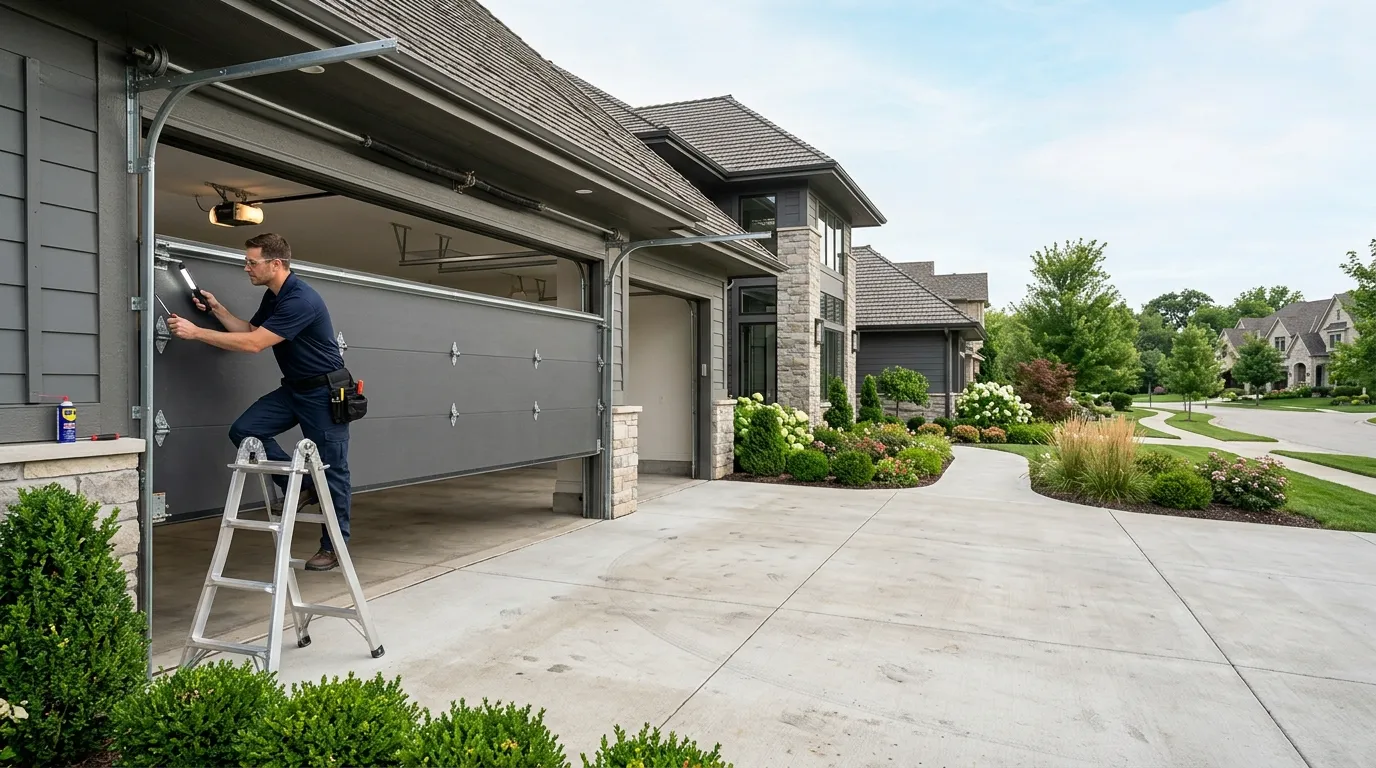
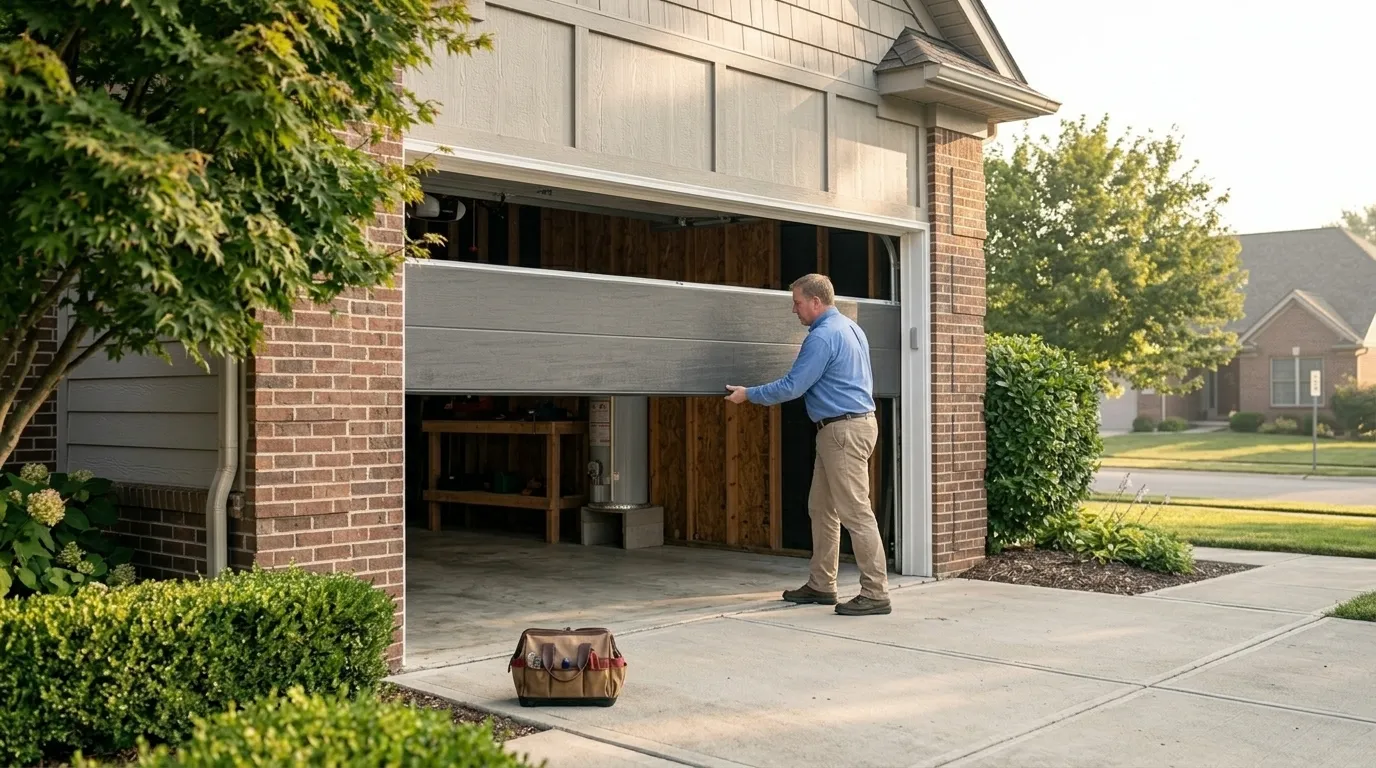
A look at what a Chaska garage door service call covers, tied to this area's severe cold swings and its mostly 1954-2006 housing stock, not a generic maintenance list.
Chaska falls in a cold climate band rated severe, and that's not just a weather label, it's what happens to a garage door twice a year. The swing from a January cold snap into a July heat spell puts real load on steel panels, on the galvanized torsion spring wound to a set tension, and on nylon rollers that get brittle in the cold and soft in the heat. A spring calibrated for 70 degrees doesn't hold the same lift force at 10 below, and that's why a door that opened fine in October starts groaning or hanging crooked by February.
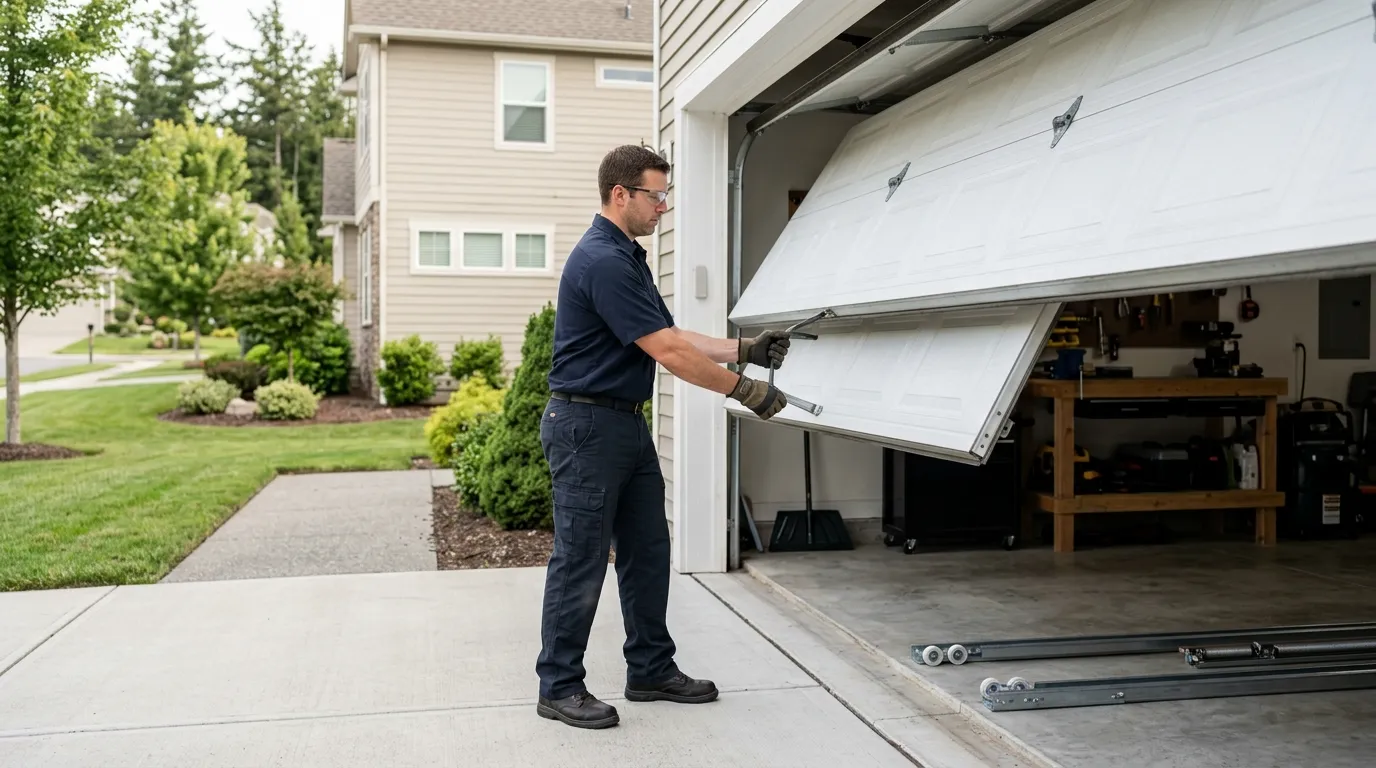
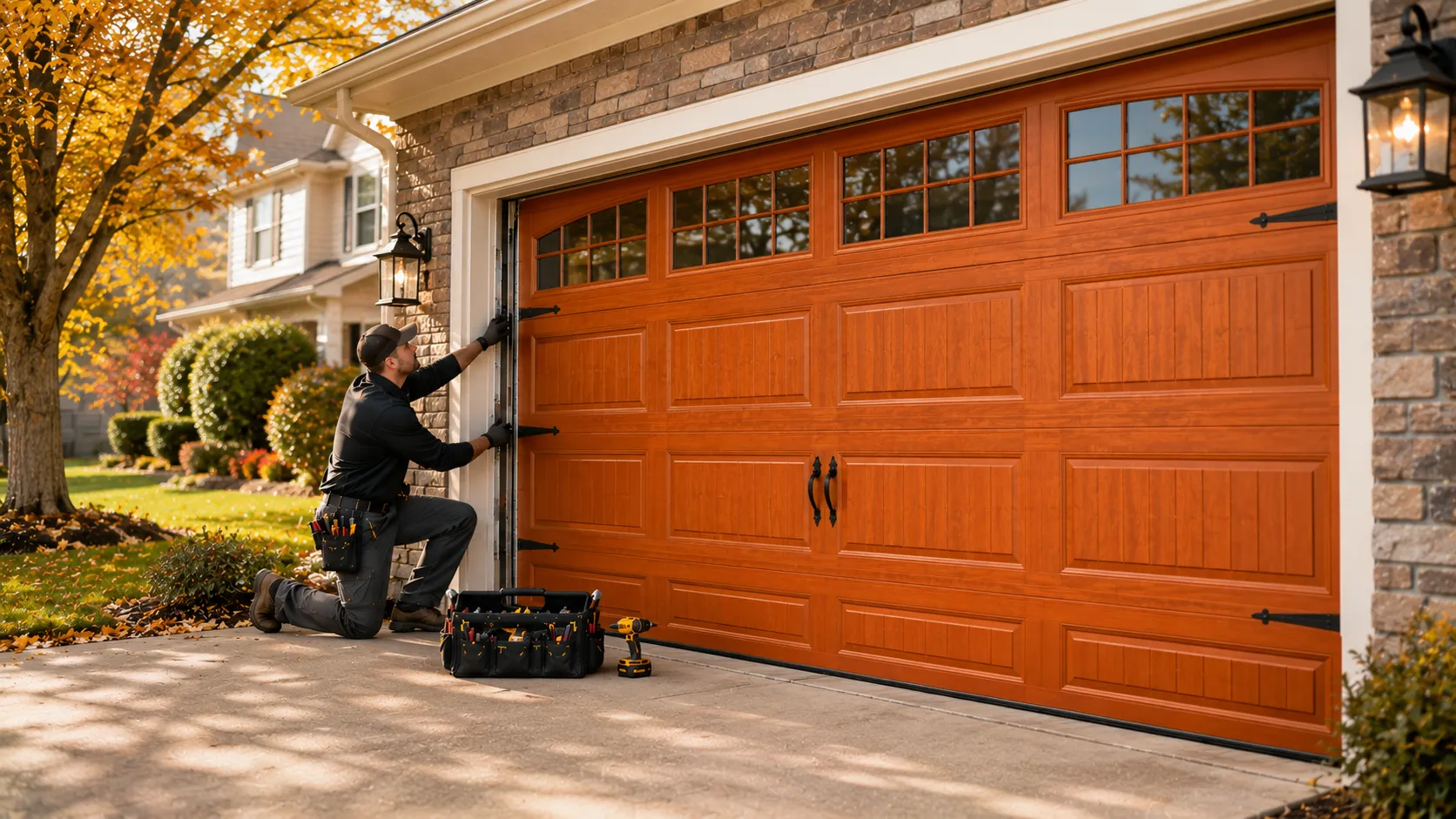
Steel contracts in the cold, which tightens tolerances in the track and can turn a slightly bent section from a non-issue into a door that binds every time it drops below freezing. On a service call we're checking track plumb, spring tension, and hinge wear with that swing in mind, not treating the door like it lives somewhere mild. One honest limitation: we can't fully diagnose an intermittent cold-weather bind over the phone. It usually takes seeing the door move through a full cycle in the actual temperature it's failing in.
The Seasonal Bit
The freeze-thaw cycle here does more damage to garage doors than any single storm. Water gets into the bottom seal, freezes overnight, and the door either won't seat or tears the seal pulling free the next morning. Lift cables that were fine in September start showing frayed strands by March because condensation cycling on and off the drum corrodes them from the inside out.
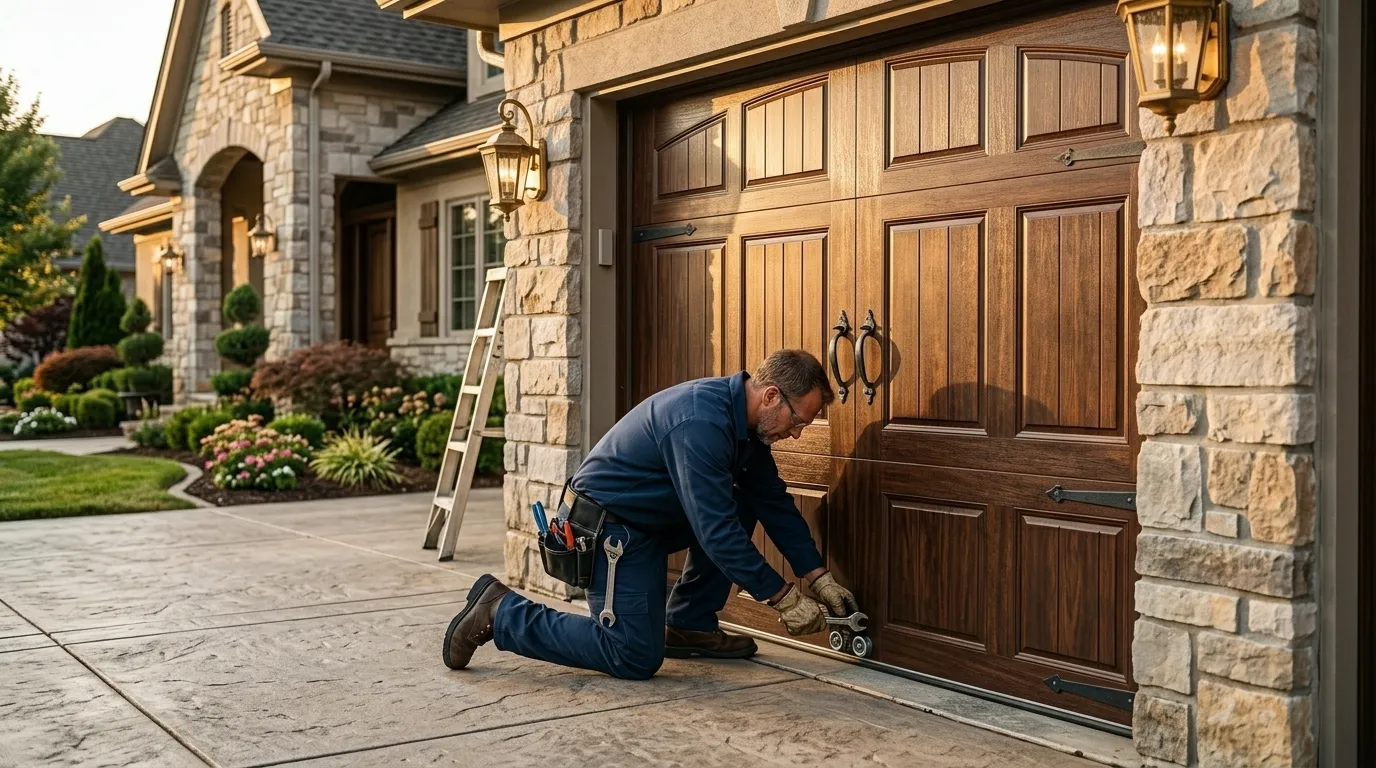
Spring tension is the other seasonal casualty. Cold steel is less elastic, so a torsion spring already near the end of its cycle count is far more likely to snap on a sub-zero morning than in July. That's why late fall is the point where a marginal spring should get replaced rather than run through another winter - not because of a calendar date, but because the failure mode lines up with the cold. We check cable condition, seal fit, and spring wind on every call between roughly October and April with that pattern specifically in mind.
What Is Going On
Housing in this area went up mostly between 1954 and 2006, with the median build year around 1986, and the bulk of the stock across the 41 named neighborhoods and townships nearby dates to the 1980s and 90s. That matters because it tells us what's actually on the wall before we get there. A door from that window is usually on a torsion spring system, often the original steel section door, sometimes still running the chain-drive opener that came with the house.
Across the service area, 61,559 of the roughly 102,146 households own their home, which means most of our calls are homeowners dealing with hardware they've never had to think about until it fails. A door built to an 80s-era spec wasn't engineered for today's insulation standards or opener safety reversal requirements, so a repair sometimes surfaces a code mismatch we have to flag rather than just patch. We'll tell you when that's the case instead of quietly working around it.
What It Costs
We're not going to quote a number here that doesn't hold up once we're standing in front of your actual door. Cost on a service call depends on what's actually failing - a broken torsion spring on a door built in the 80s is a different job than an opener replacement on a newer install, and parts availability for an original door from that era can run longer than for a current model, which affects timeline more than price.
Given the median household income in this area sits well above $100,000, we see more owners choosing full opener or spring-and-cable replacement over a patch job that buys another cold season - but that's a call you make, not one we make for you. What we can tell you up front: we diagnose on site, we tell you what's actually broken before touching anything, and if a repair isn't worth it against a full replacement given the door's age, we'll say so plainly.
How it works
From “it’s stuck” to “it’s fixed”
01
Tell us what’s wrong
Describe the symptom - won’t open, loud bang, opener runs but the door won’t move.
02
On-site diagnosis
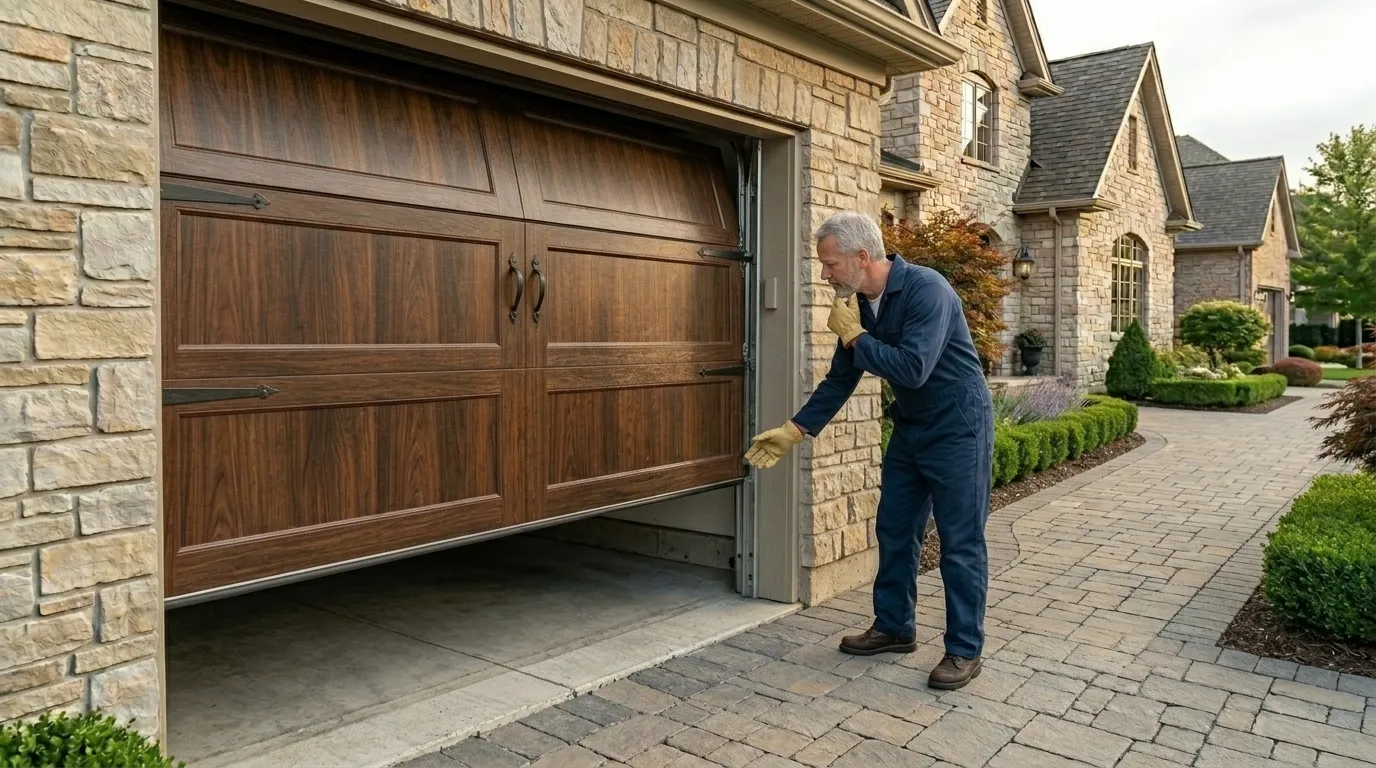
A technician tests the door under power and by hand and finds what actually failed.
03
Clear, up-front plan
You get the fix that’s needed and what drives the cost - before any work starts.
04
Repaired & tested
The repair is done, the door is set true and tested, and the work area left clean.
Serving Chaska, MN - tell us what your door’s doing and we’ll take it from there.
Steel contracts in cold temperatures, which tightens the track tolerances, and torsion springs lose some of their lift force as the metal cools. Chaska's climate band is rated severe, so that swing is bigger here than in a milder area, and a door that's marginal in fall often becomes a real problem once temperatures drop consistently below freezing.
Is my door old enough that parts are hard to find?
Homes in this area were mostly built between 1954 and 2006, with the heaviest concentration in the 1980s and 90s. If your door dates to that window, some original hardware, especially spring size and track brackets, may not match what's stocked new, which can add time to sourcing the right part.
Should I replace my spring before winter or wait until it breaks?
A spring already showing wear is far more likely to snap in cold weather because cold steel is less elastic and takes more strain per cycle. If a spring is near the end of its life going into fall, replacing it before the first hard freeze usually avoids a broken spring on the coldest morning of the year.
Can you give me a price over the phone?
Not honestly, no. Cost depends on what's actually failing and on the door's age and hardware, which we can't confirm without seeing it. We diagnose on site and tell you the cause before we quote anything.
Ready to get your garage door sorted?
Tell us what it’s doing and where you are in Chaska - we’ll take it from there.