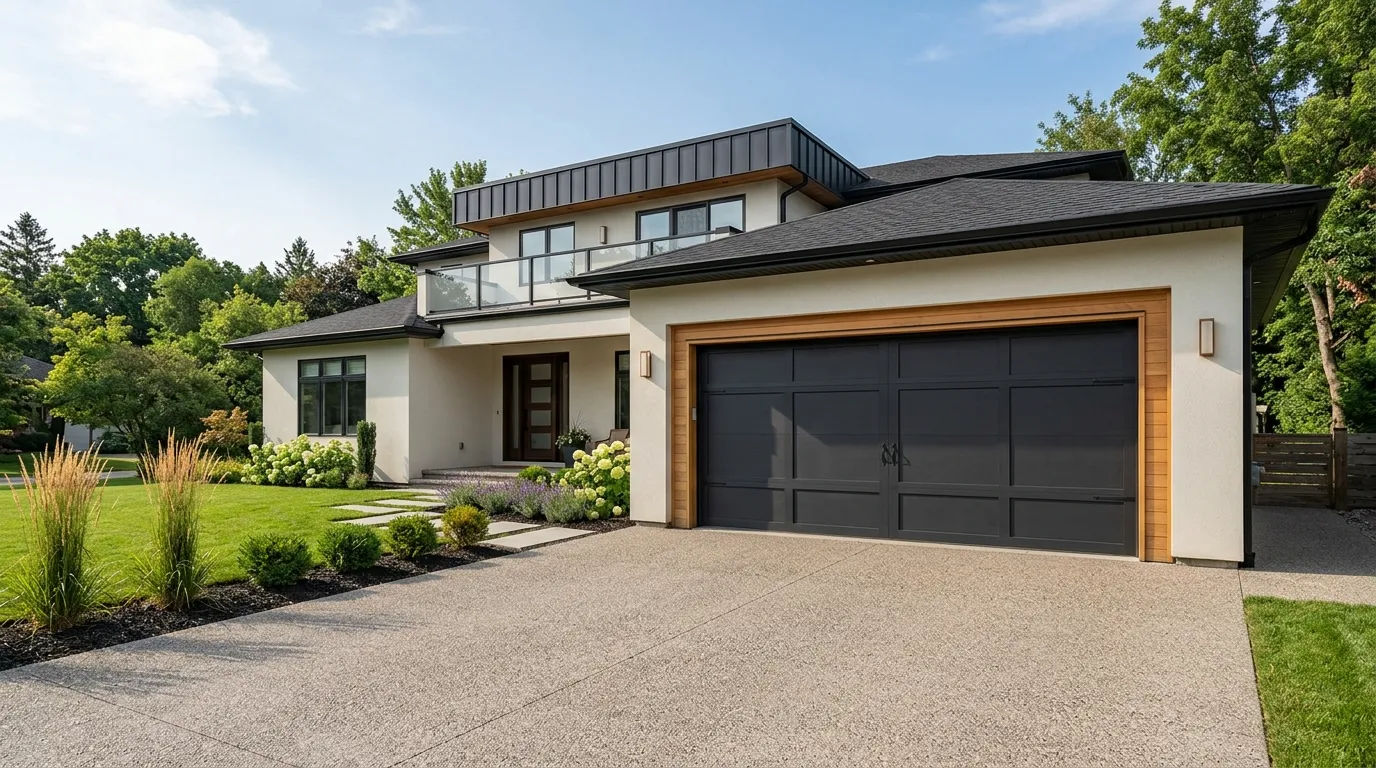
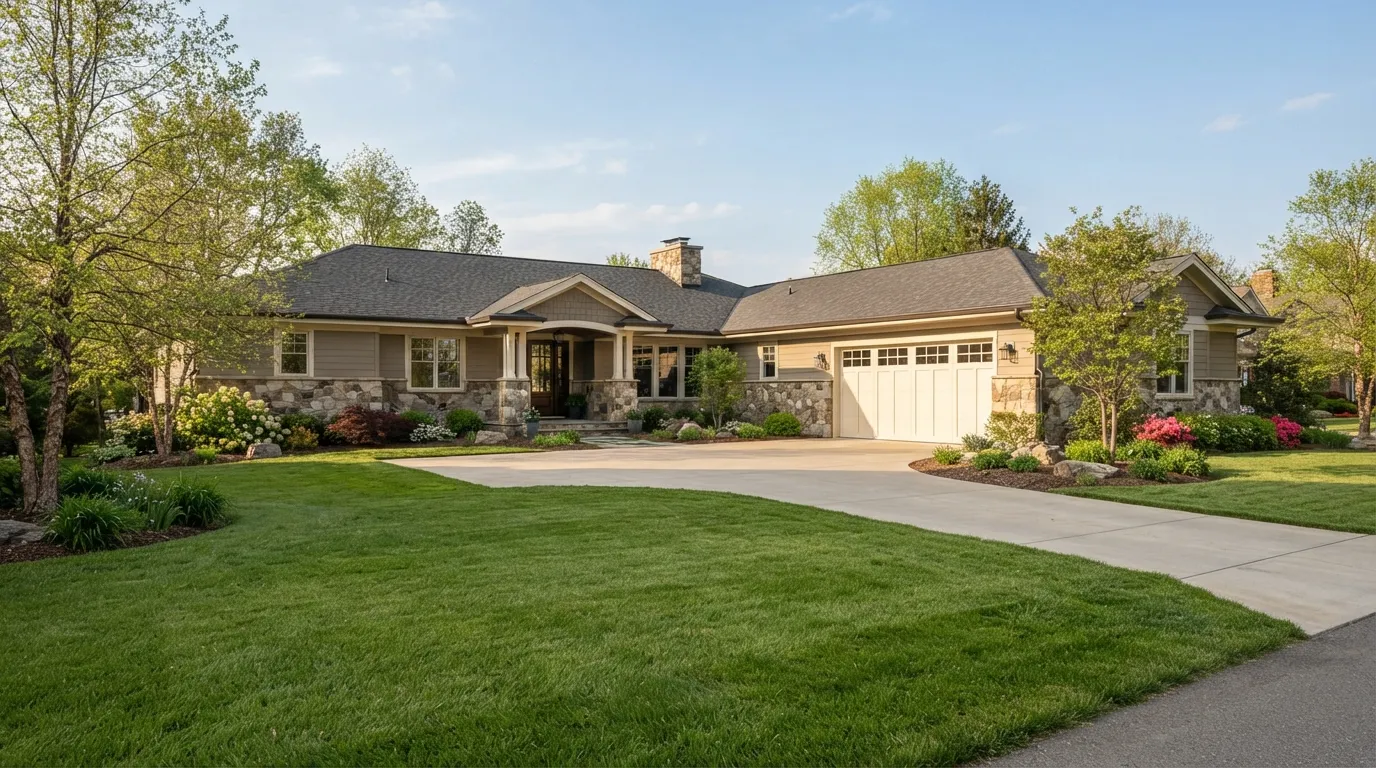
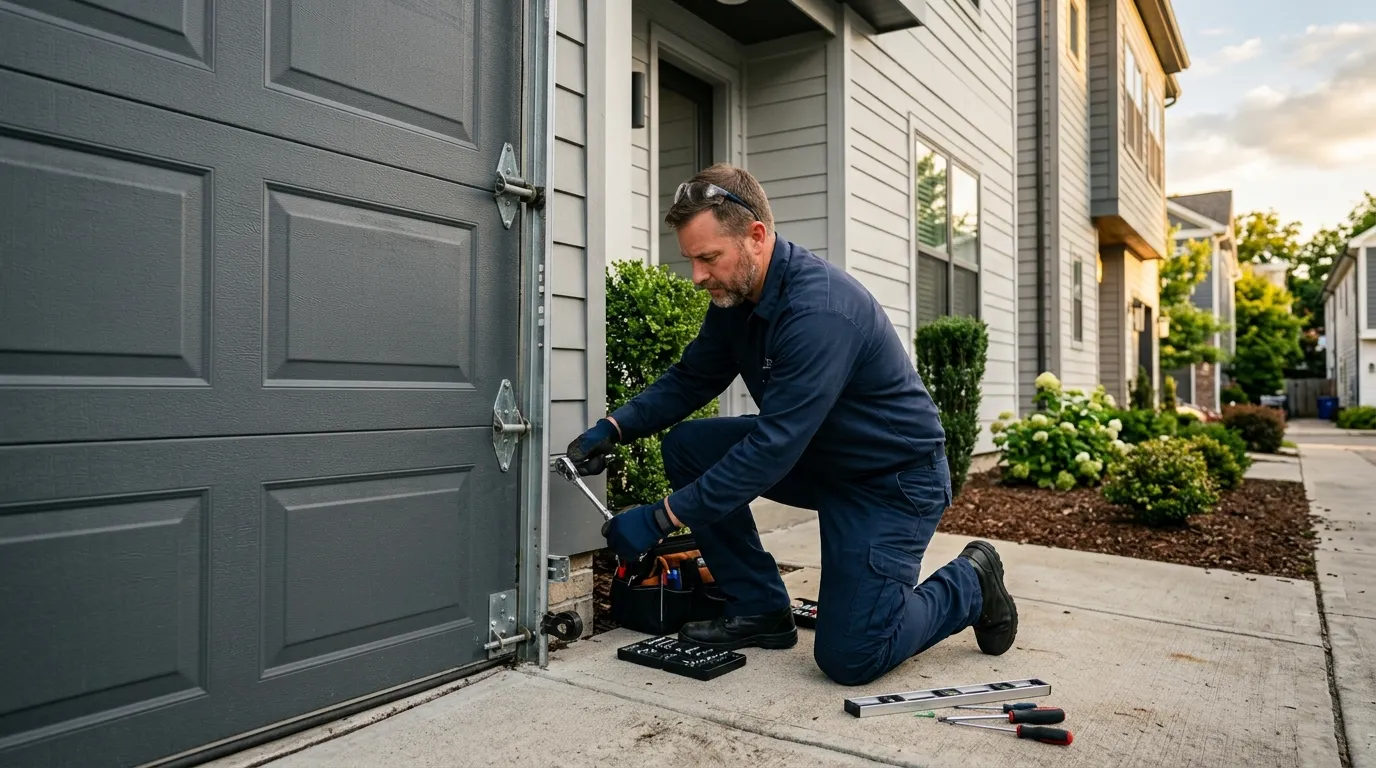
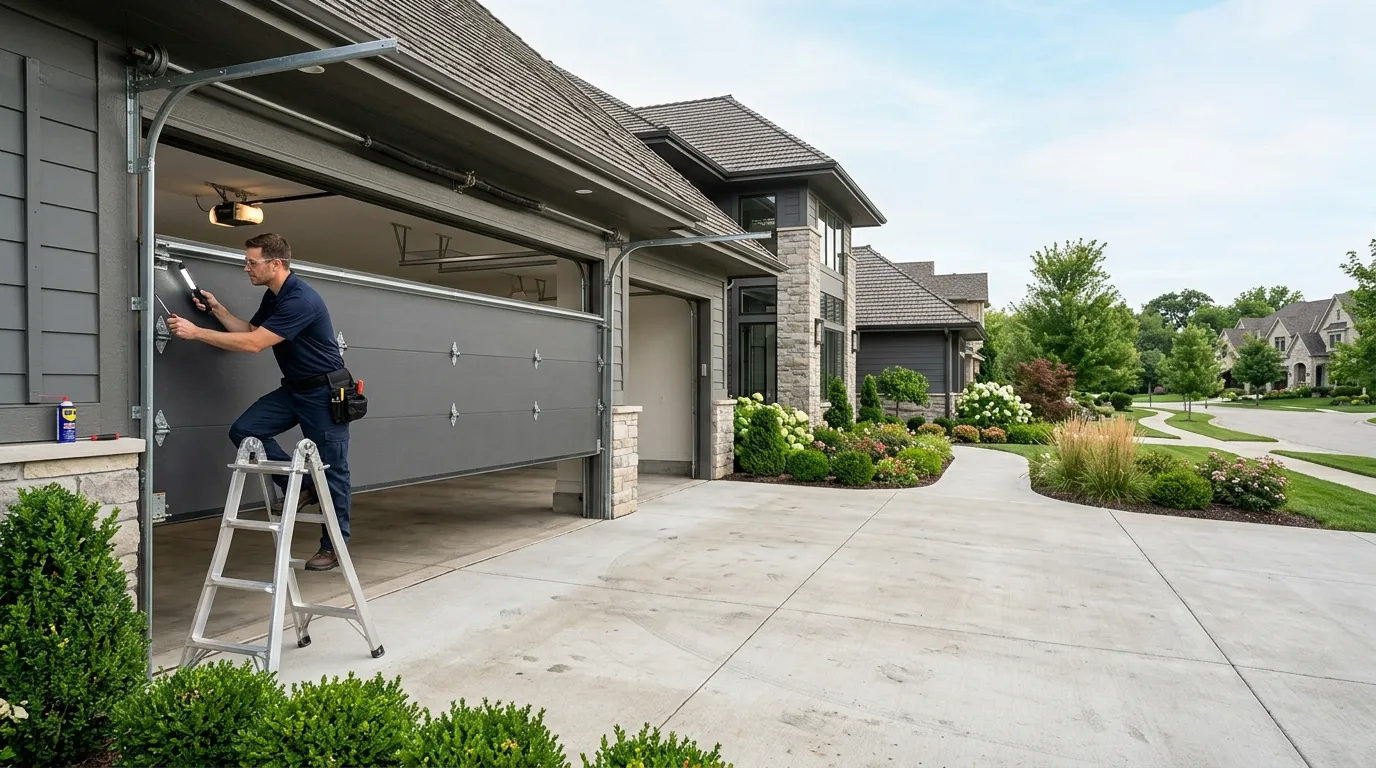
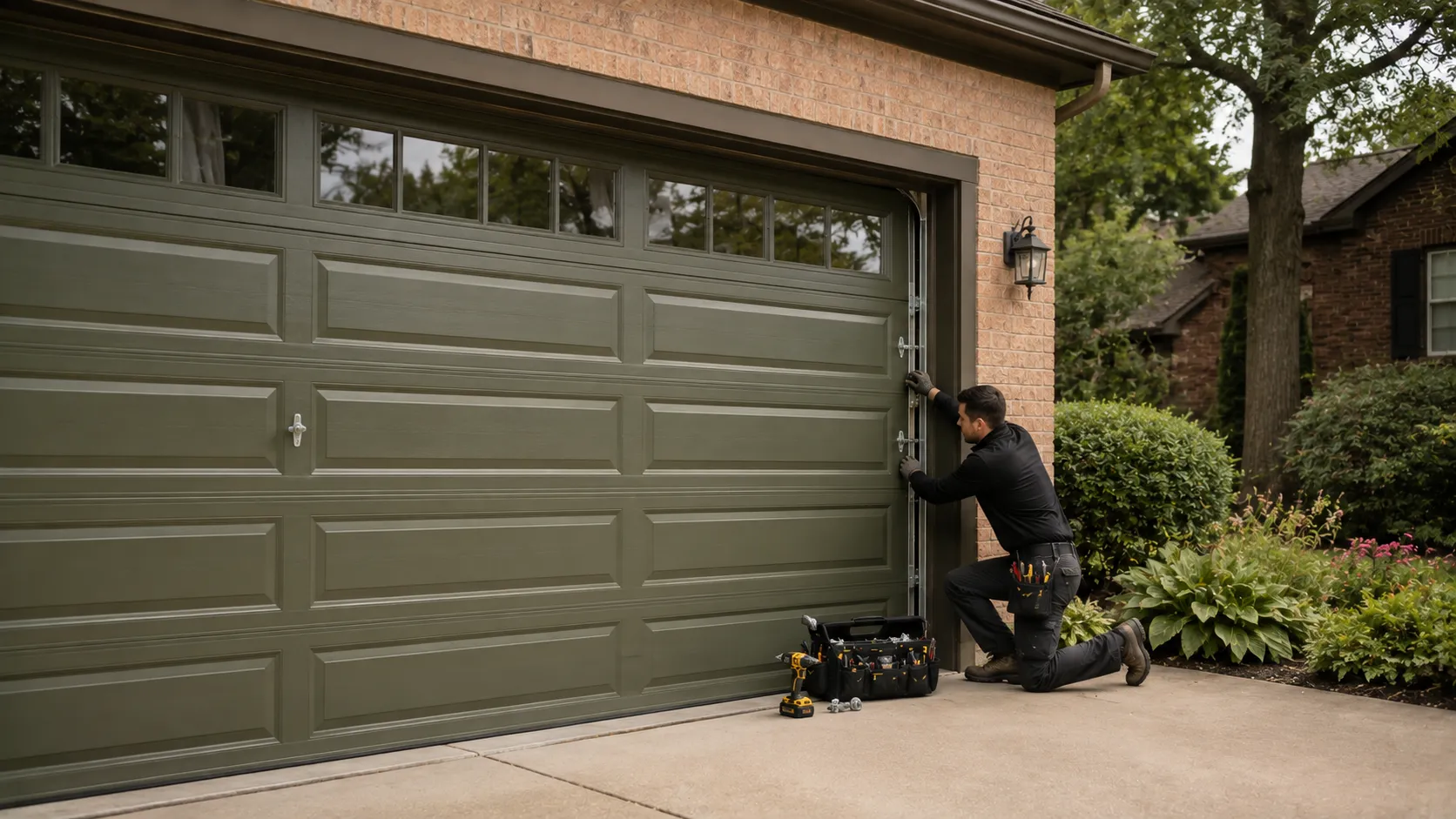
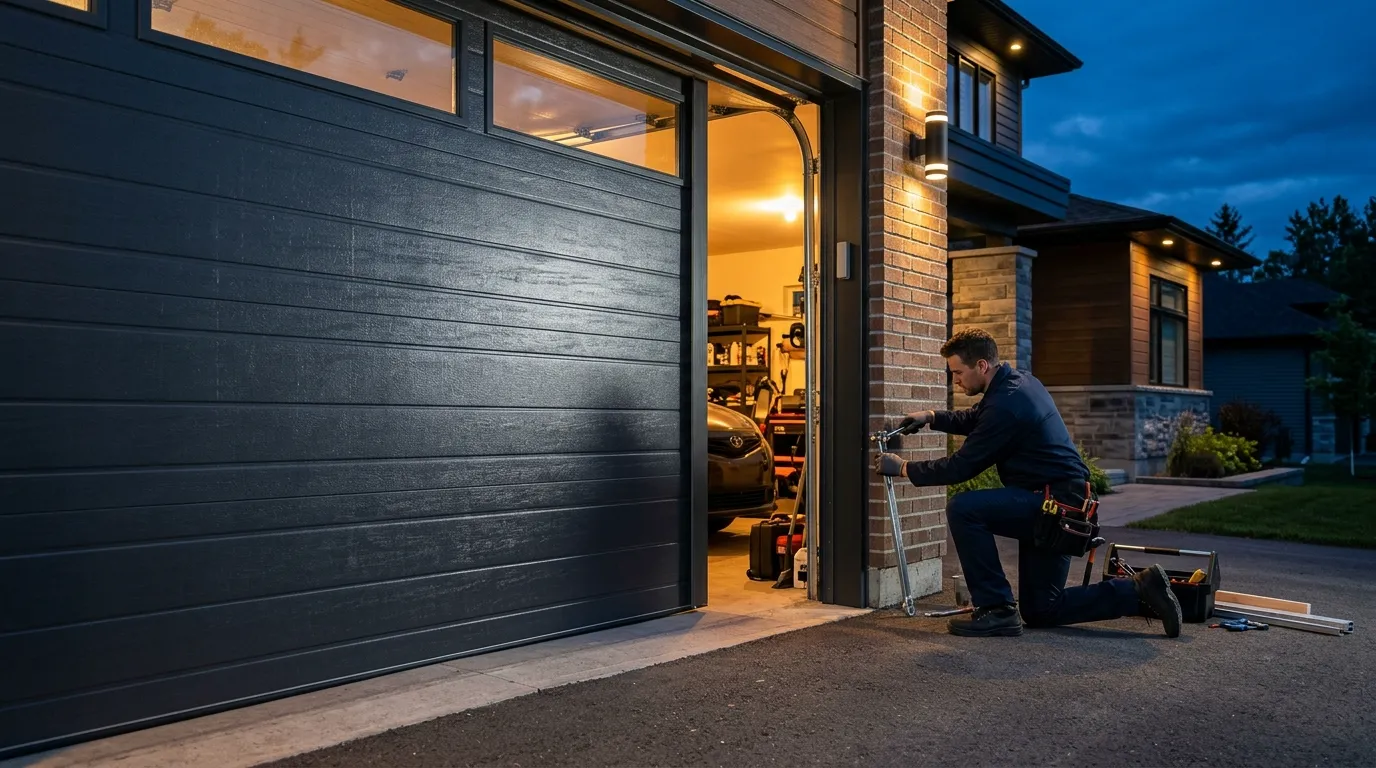
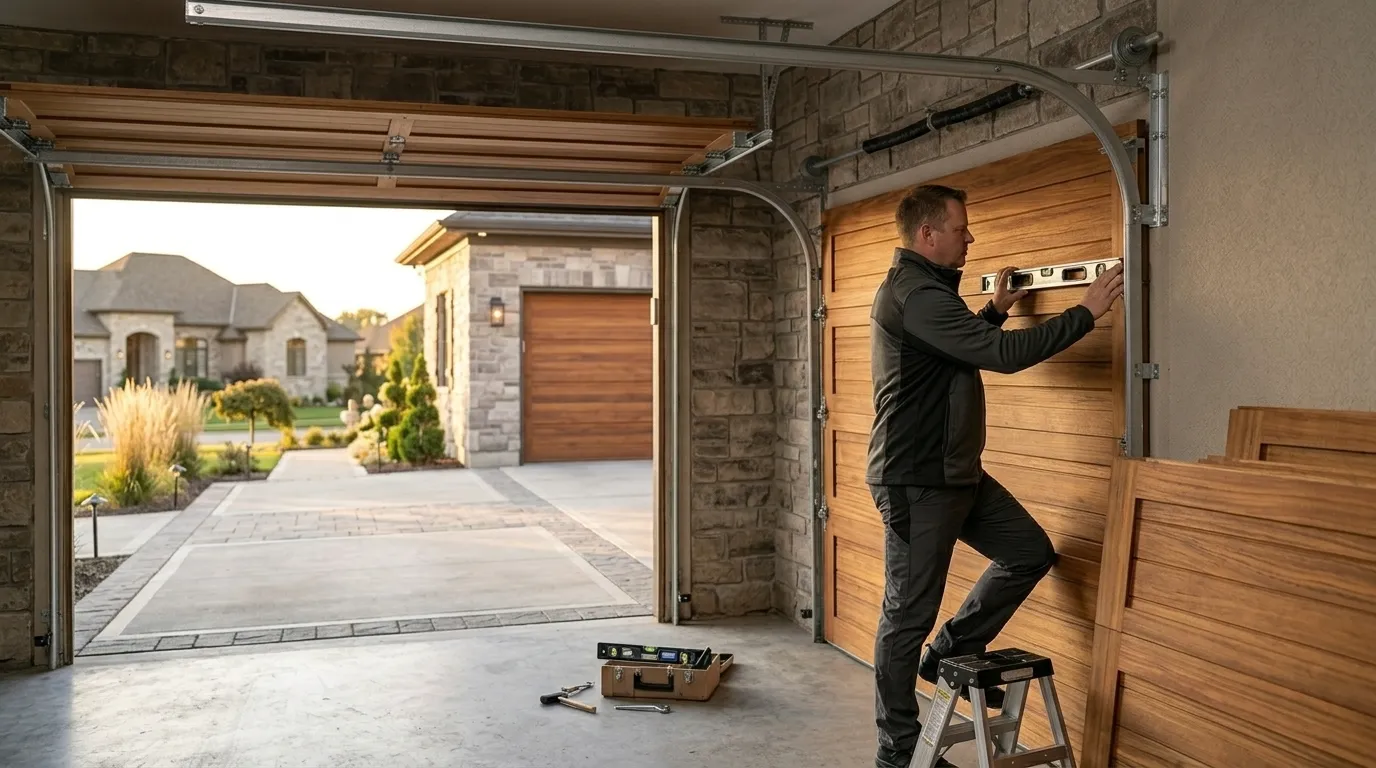
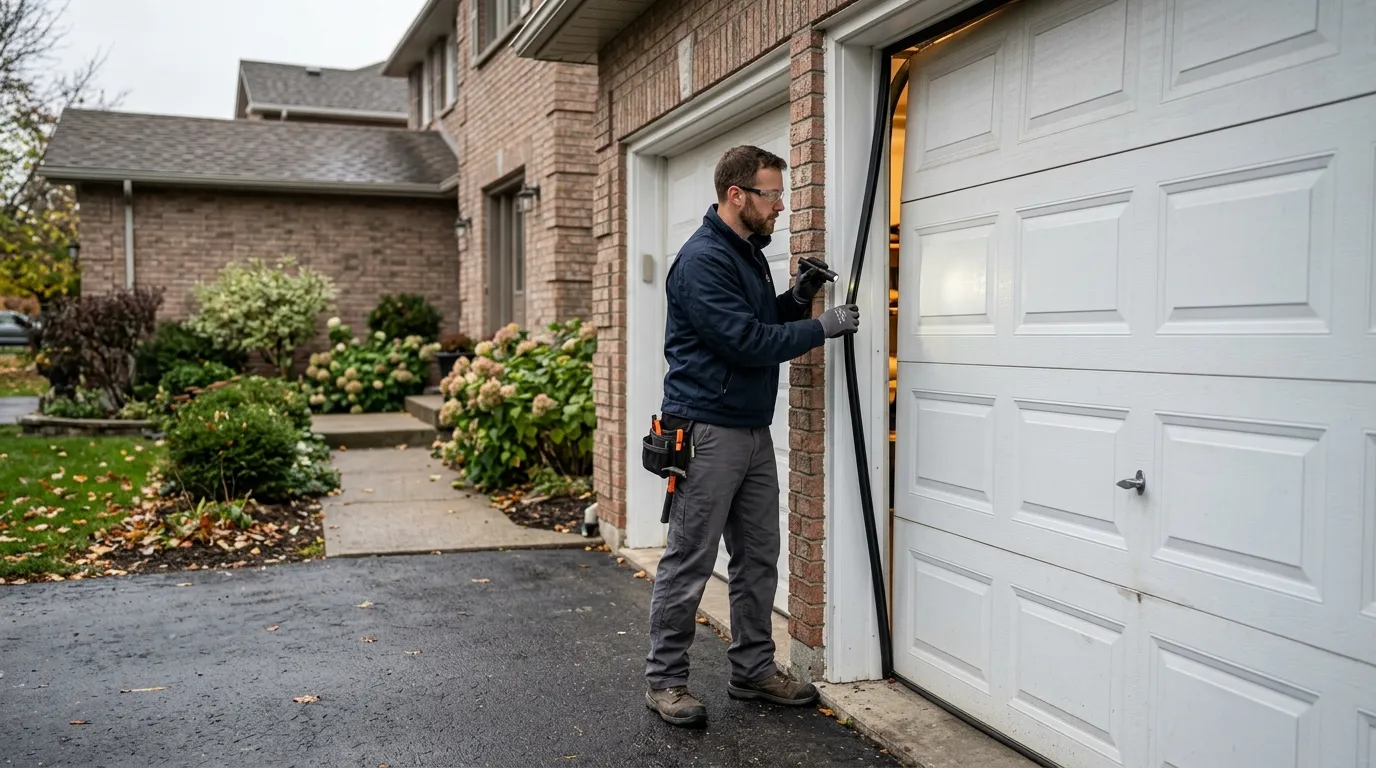
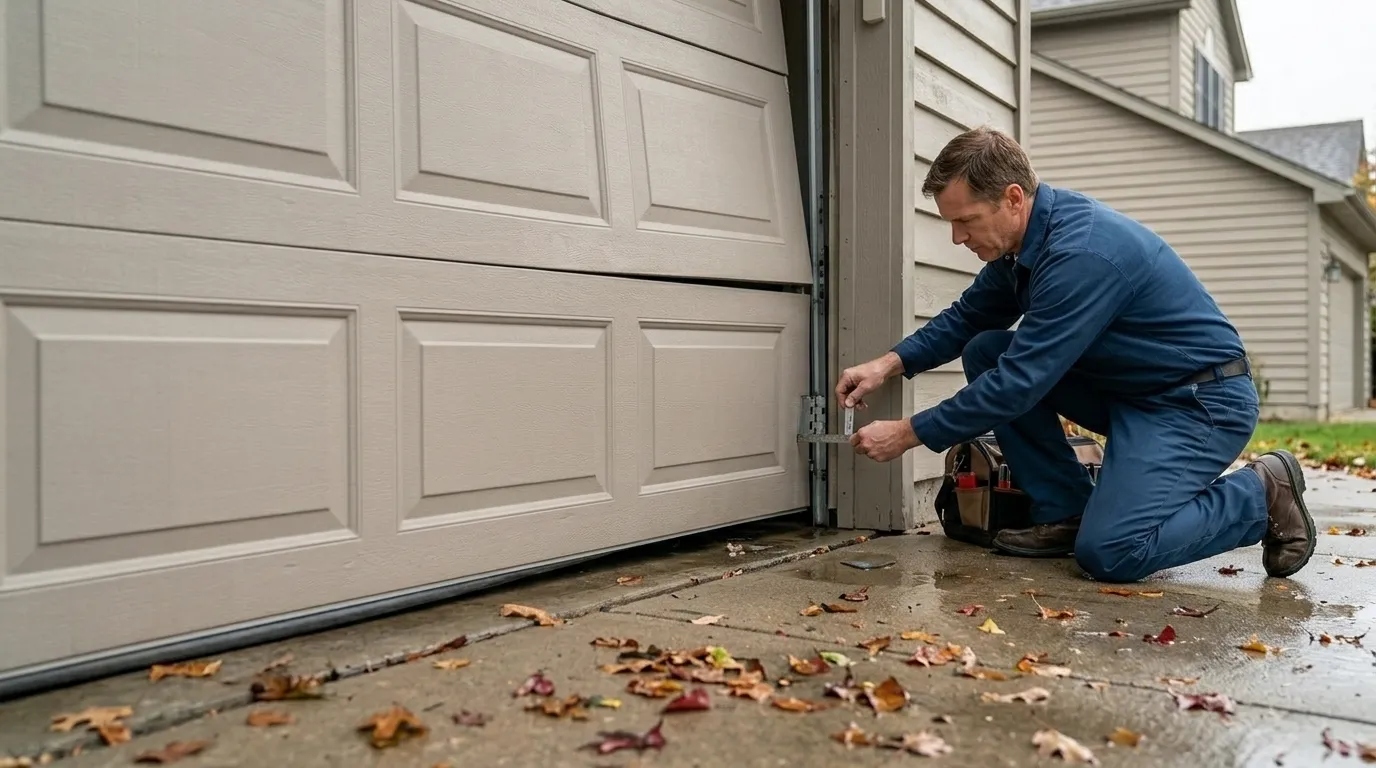
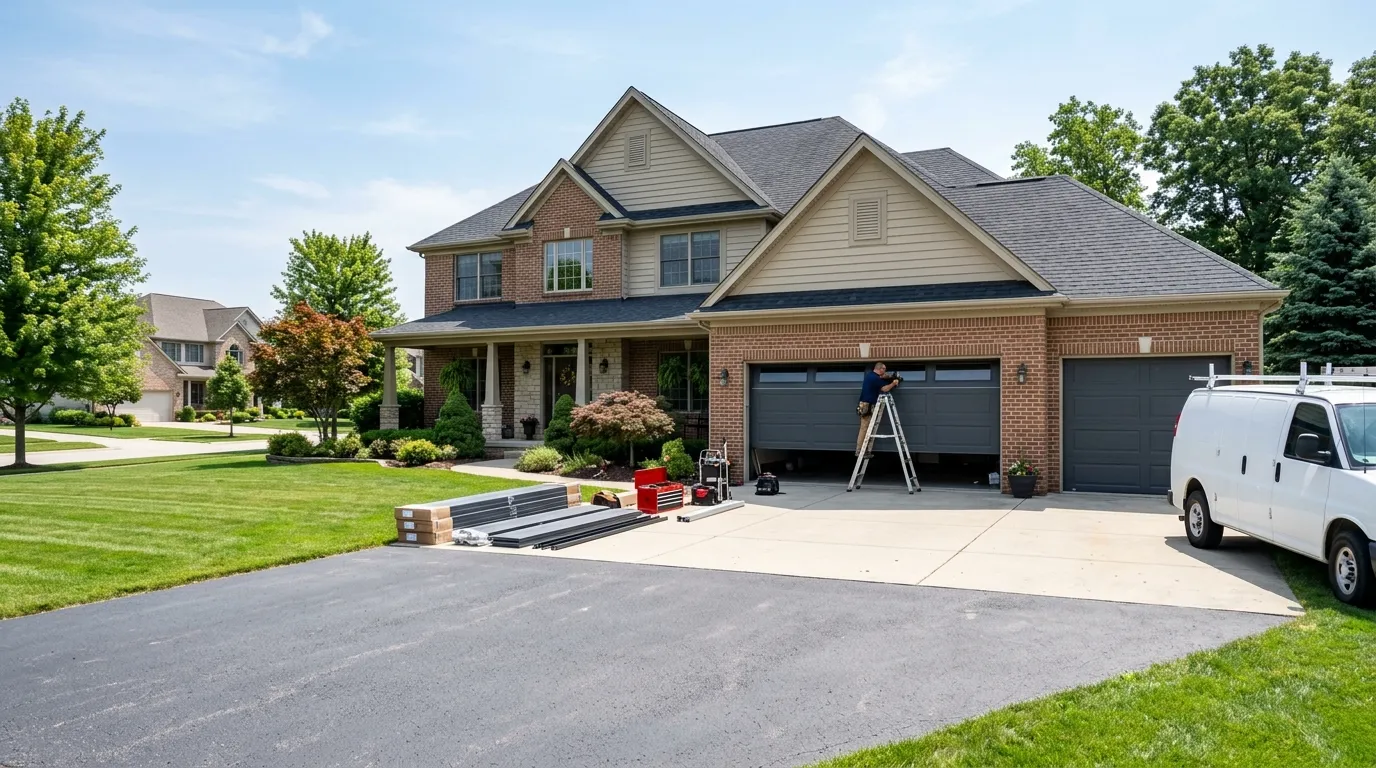
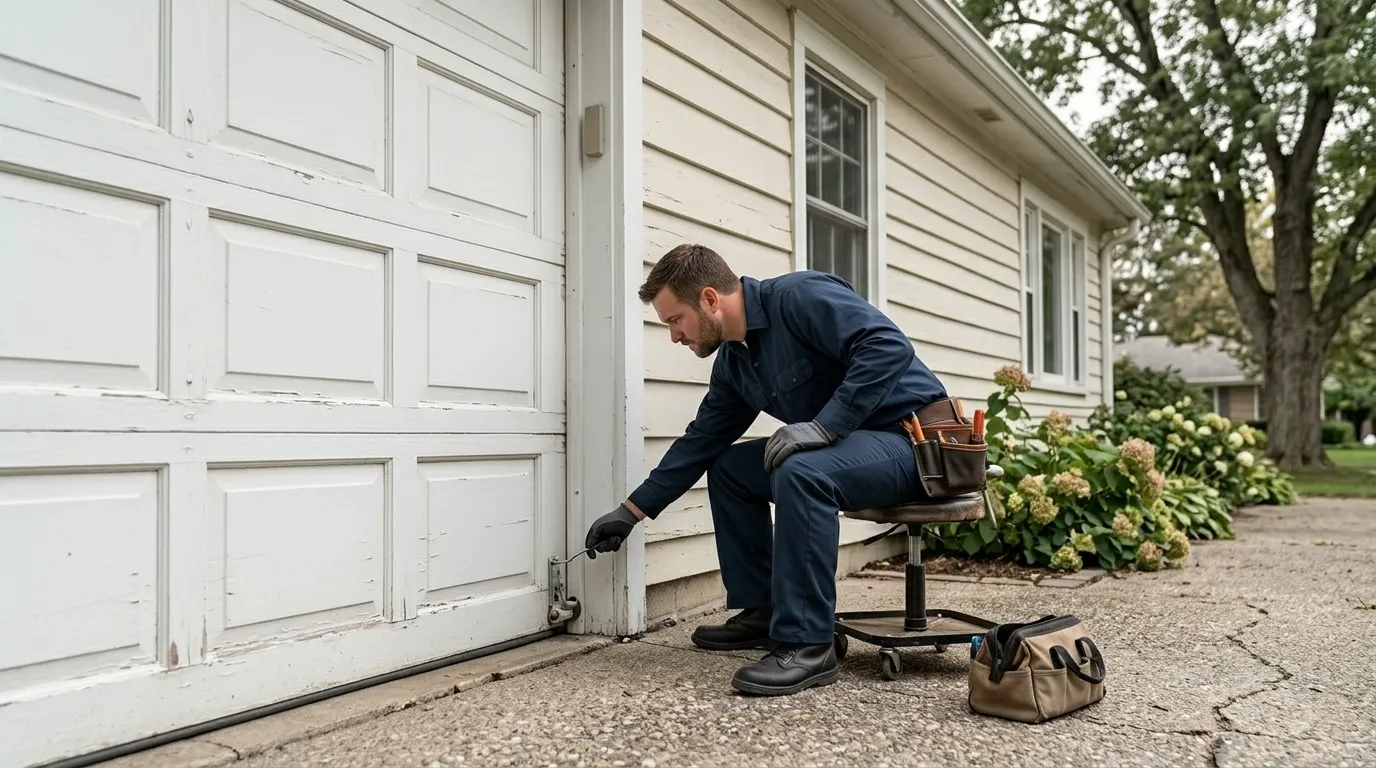
Woodland, MN homes date mostly to 1964, older torsion hardware than later stock. Chaska Garage Door Pros travels 10 miles to fix or replace doors here.
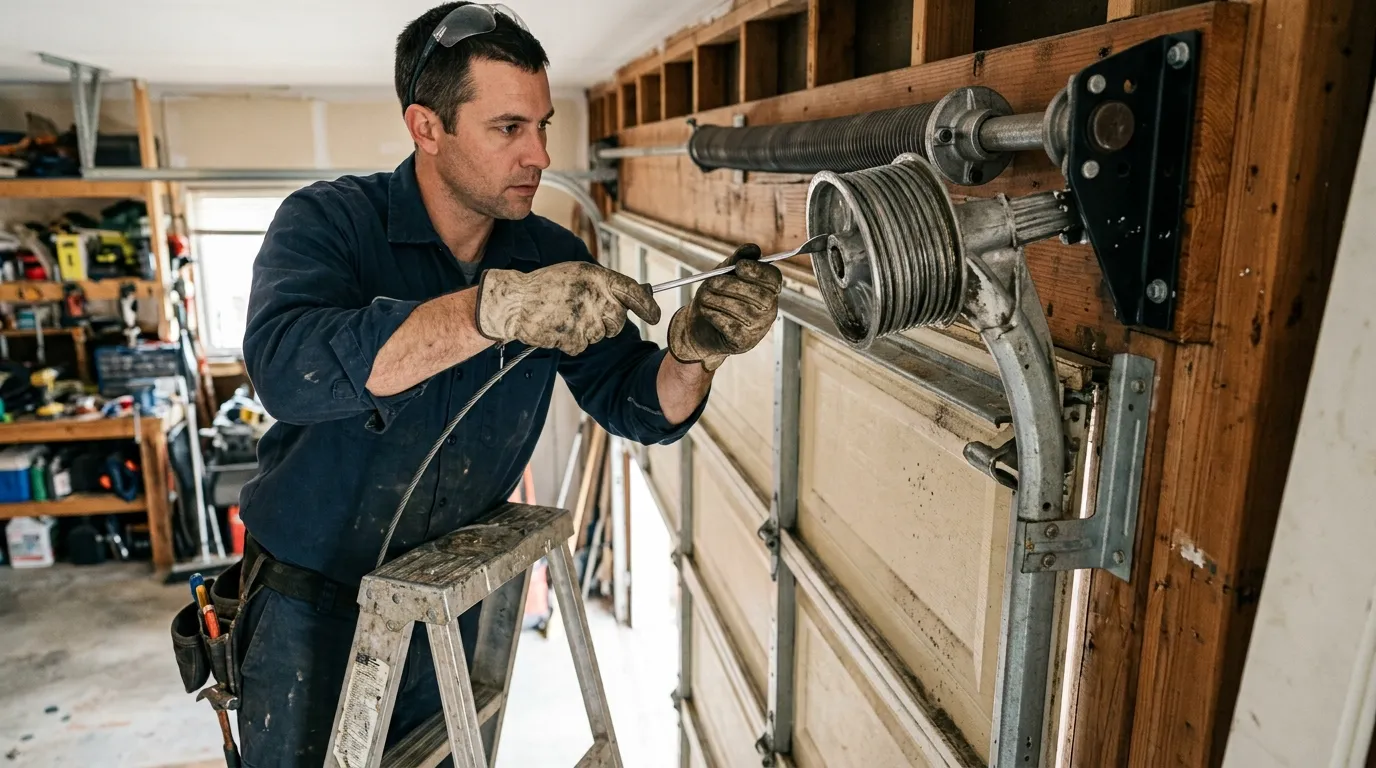
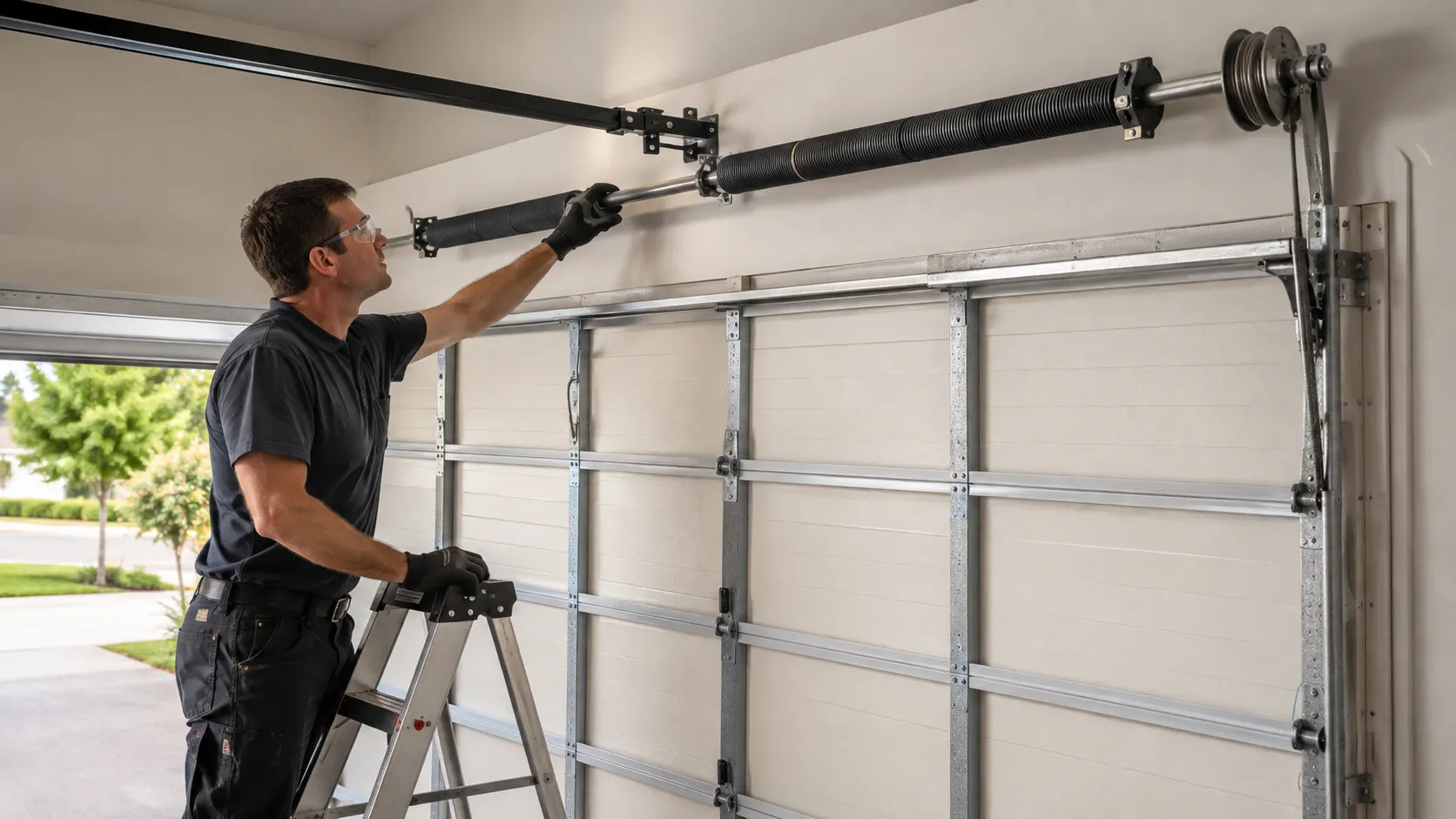
Woodland's houses mostly went up around 1964. That puts this pocket a good two decades ahead of the median build year across the rest of the service area, which lands closer to 1986. The gap matters at the garage door. A door installed on a house from the mid-1960s is more likely to have been swapped out once or twice already, but the track hardware, the header framing, and sometimes the opener mount underneath it often date back further than the door itself. We see extension spring setups on these older openings more than the torsion systems that came standard on newer builds elsewhere in the area. Extension springs sit differently, wear differently, and fail differently - usually with a sharper bang than a slow torsion give.
Cold-climate stress (this whole area sits in a severe cold band) works harder on older hardware. Steel that's flexed through fifty-plus winters develops fatigue in ways that newer coil doesn't show yet. If your door is original to a 1964-era build and you haven't had the springs or cables looked at, that's the first thing worth checking before a panel or opener gets blamed for what's really a spring problem.
Old Streets and New Ones
The wider service area spans homes built anywhere from 1954 to 2006, spread across 41 named areas, so no two neighborhoods here have quite the same door problems. Woodland sits on the older end of that range. That's different from towns closer to the middle of the build window, where doors and openers tend to be newer aluminum or steel sandwich panels with factory torsion springs sized for a lighter modern door.
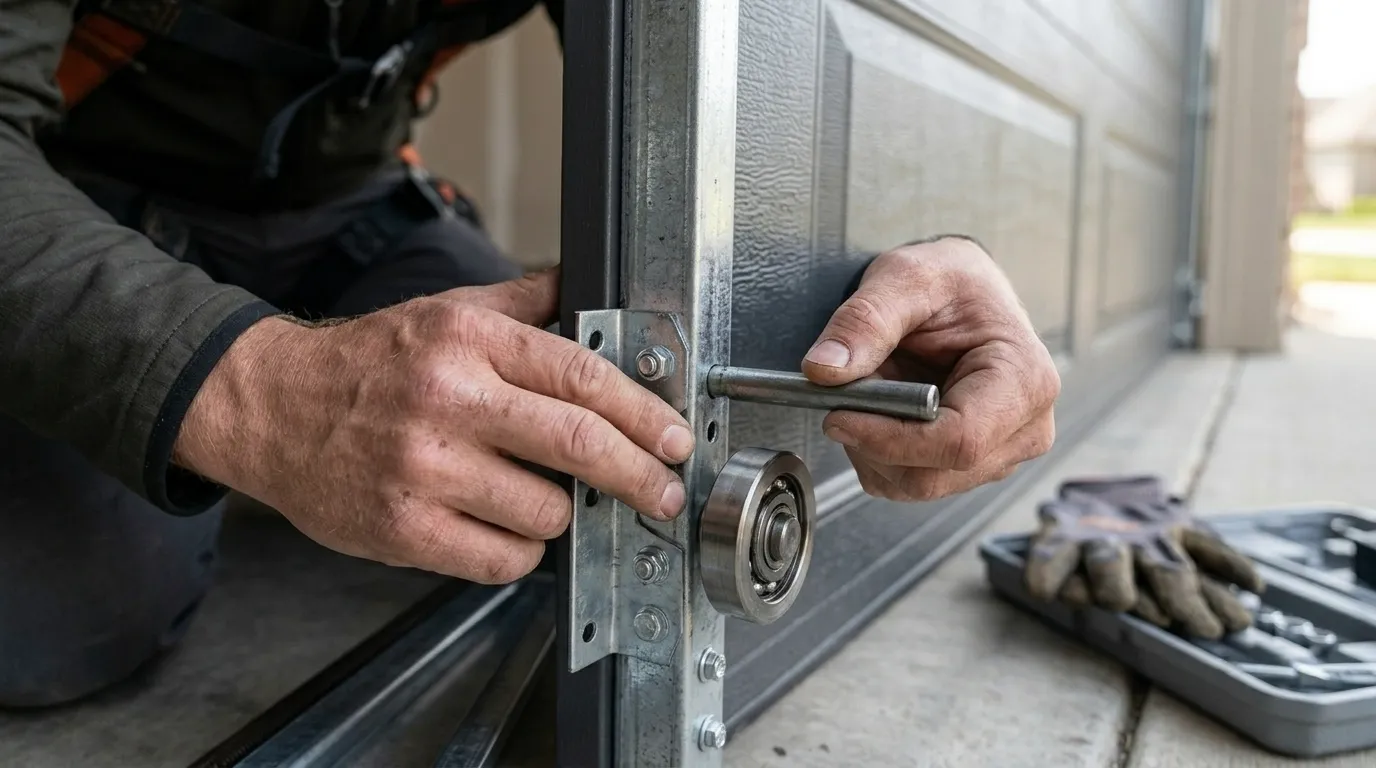
What that means in practice: when we're called to a 1964-built house, we're not guessing at what's behind the trim. We expect heavier gauge steel, possibly a single torsion spring undersized for today's insulated door weight if someone replaced the door without replacing the spring to match, and hardware that may not be a stocked size at every supply house. It's not a bad door, necessarily - a lot of these are still working - but it's not a like-for-like swap with what you'd find in newer stock down the road. We tell people this up front rather than quoting a job assuming the easy version of the fix.
When We Can Get There
We run out of Chaska, and Woodland is about 10 miles from the shop. That's on the longer end of our coverage - closer-in stops like Chanhassen, Carver, and Victoria are all around 4 miles out, and Shorewood and Jackson sit around 6. We don't keep a truck stationed in Woodland, and we're not going to claim a response time we can't back up for a stop this far from base.
What we can tell you is that distance alone doesn't usually decide whether we can fit you in same day - call volume that day does. A dead spring on a double door that's blocking a car in is a different priority than a noisy roller on a door that still opens fine. Be upfront about which one you've got when you call, and we'll be upfront about when we can get out there.
The Houses Here
Woodland is a small area - around 216 households by count, compared to roughly 102,146 households and 61,559 owner-occupied houses across the whole area we cover. Median household income here runs around $189,107, well above the $116,500 median for the broader service area. That income gap tends to show up in what people ask for: more full opener replacements with battery backup, more insulated steel doors instead of patch repairs, fewer calls asking us to squeeze another year out of a spring that's already stretched past its rated cycles.
We don't push replacement on anyone. If a torsion conversion and a new cable set will get another decade out of a sound door, that's what we'll quote. But we've noticed that in a smaller, higher-income pocket like this, the math on repair-versus-replace often lands on replace sooner than it would elsewhere, mostly because the labor cost is the same either way and the newer door buys more years.
How it works
From “it’s stuck” to “it’s fixed”
01
Tell us what’s wrong
Describe the symptom - won’t open, loud bang, opener runs but the door won’t move.
02
On-site diagnosis
A technician tests the door under power and by hand and finds what actually failed.
03
Clear, up-front plan
You get the fix that’s needed and what drives the cost - before any work starts.
04
Repaired & tested
The repair is done, the door is set true and tested, and the work area left clean.
Serving Chaska, MN - tell us what your door’s doing and we’ll take it from there.
No. We run out of Chaska and drive to Woodland, which is about 10 miles out. We don't staff a depot here, so we can't promise the same turnaround as a call closer to the shop, but we do make the trip for both repairs and full installs.
My house was built in the mid-1960s - does that change what's wrong with my door?
Often, yes. Homes from that era in this area were more likely to get extension spring setups than the torsion systems common in newer builds. Extension springs fail with a harder snap and need different safety cables. Tell us the approximate build year when you call so we bring the right parts.
Is it worth repairing an old door or should I just replace it?
Depends on the door and the damage. A cracked panel or worn spring on an otherwise solid steel door is usually worth fixing. If the door's original to a 1960s build and the track or header framing has shifted, replacement often ends up cheaper over time than repeated patch repairs.
How far out do you go for a same-day call?
We don't set a fixed radius, but Woodland is farther from our Chaska base than towns like Chanhassen or Carver, which sit around 4 miles out. Call and tell us what's wrong - a door stuck shut gets different priority than a noisy roller.
Ready to get your garage door sorted?
Tell us what it’s doing and where you are in Chaska - we’ll take it from there.